

Supportive, Professional, Client-Focused Service
From prototypes to full-scale production, we’ve got you covered.



Where Acrylic Parts Are Used: Industry Applications and Engineering Specs
| Full Name | Polymethyl methacrylate (PMMA) |
| Light Transmission | 92% (exceeds most glass types) |
| Density | 1.17–1.20 g/cm³ (~50% lighter than glass) |
| Tensile Strength | 48–76 MPa (per MIT PMMA database) |
| Impact Resistance | Up to 17× stronger than glass |
| Service Temperature | -40°C to +80°C continuous |
| UV Resistance | As little as 3% degradation over 10 years (UV-stabilized grades) |
| Trade Names | Plexiglass, Lucite, Perspex, Acrylite |
Acrylic—also called plexiglas or PMMA—is one of the most common transparent plastics in engineering and manufacturing. Names like Lucite or Perspex refer to specific brand names made of the same polymer chemistry. Featuring 92% light transmission, half the weight of glass, and up to 17x impact resistance, acrylic parts can be found in surgical instrumentation, highway signage, LED light pipes, and retail displays.
This article will discuss precisely where in industry and use cases machined acrylic parts offer tangible value, the fundamental engineering properties that make those benefits possible, and the materials selection criteria that will distinguish acrylic from polycarbonate or other thermoplastics. Whether you buy CNC machined acrylic parts by the thousand or produce a single prototype, the following information will allow you to make educated decisions.
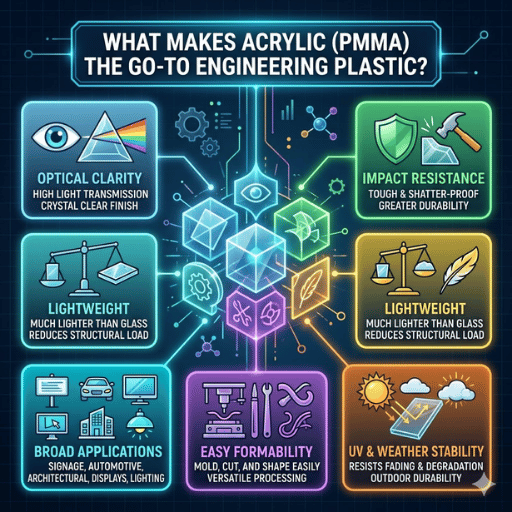
Classified in ASTM D788 as polymethyl methacrylate. Commercial versions of this material have been in use since the 1930s, providing a safe alternative to glass where optical clarity, durability and low weight take precedence over high heat resistance.
What sets acrylic material apart from other transparent plastics is its transparency. With 92% visible light transmission (measured at the ANSI ASTM D1003 standard for a thickness of 3.2mm and its recommended index of refraction of 1.492 [per the MIT materials property database]) it transmits more visible light than standard float glass (~90%) and significantly more than polycarbonate (88-90%). This optical clarity is why PMMA is often used in display lenses, light guides, and precision optics assemblies.
Not all acrylic sheet is alike. Two manufacturing processes create materials with markedly different machining properties:
| Property | Cast Acrylic | Extruded Acrylic |
|---|---|---|
| Thickness Tolerance | ±10–15% | ±5% |
| Stress Crack Resistance | Higher (longer polymer chains) | Lower (more internal stress) |
| CNC Machinability | Better chip formation, cleaner cuts | Tends to gum on tool edges |
| Laser Cutting Quality | Flame-polished edges | Frosted/matte edges |
| Cost (per sheet) | ~30–50% more expensive | Lower cost, good for high volume |
| Best For | Precision CNC parts, optical components | Signage, simple fabrication, thermoforming |
For machining precision acrylic parts, cast acrylic sheet remains the standard. Extruded acrylic introduces residual stress making it more prone to stress cracking during and after machining.

Medical uses of PMMA date back to the 1940s, when surgeons initially used PMMA as bone cement in orthopedic procedures. Today, medical-grade acrylic is formulation-optimized to meet either ISO 10993 biocompatibility criteria or USP Class VI safety classifications for implants contacting tissue.
📐 Engineering Note
Desired criteria for medical-grade acrylics include compliance with ISO 10993-1:2018 biological evaluation standard and ASTM F3087 on acrylic molding resins for use in implants. For devices with prolonged tissue contact, FDA guidance (2020) recommends extractables and leachables testing. Standard industrial-quality acrylic sheet does not qualify here – always specify medical-grade resin and BC testing.

B y delivering 92% of transmittance (visible light) this material replaces glass in many applications and makes acrylic the number one plastic material in the world in any application involving optics. Machined acrylic components integrated in LED lighting arrays, fiber-optics technology and high-precision instrumentation, result in optical performance unmatched by polycarbonate and other transparent plastics.
Optical quality acrylic parts; after casting and vapor-polished the end result is of a clarity similar to glass but at half the weight

Sign-making and point-of-sale display manufacturing: acrylic is used in illuminated channel letters, as window display material, in trade-shows, museums and for purposes of wayfinding. Acrylic also stands out for its weatherability, optical clarity and ease of fabrication, making it a popular choice for outdoor applications as well as indoor use.
Cast acrylic sheet in the use of extruded acrylic for outdoor signage in high-UV environments. Extruded acrylic carries more residual internal stresses and deteriorates faster in UV than cast acrylic sheets. Out door signs designed to last more than 5 years should use UV stabilized cast acrylic.
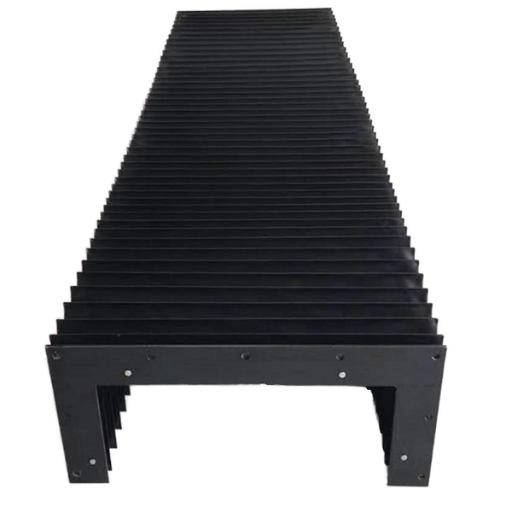
Transparent guards for machine operation: transparent guards also enable viewing of operations while providing protection from flying debris, coolant splash and pinch points. These can be mounted on CNC machining centers, food processing machinery, labs, pharmaceutical processing equipment.
In the United States, OSHA 29 CFR 1910.212 applies to any machine element, function or activity that can cause injury; ASME B11.19 applies to transparent guards made of plastic viewing panels, including acrylic and polycarbonate.
Acrylic performs well in low-to-medium impact situations: splash guards, inspection windows, and enclosure panels where visibility is more important than ballistic rating. In higher energy impact zones such as lathe chuck guards or grinding wheel enclosures, polycarbonate provides a safer enclosure with impact strengths (250 glass) far in excess of acrylic (17) minimum.
📐 Engineering Note
Guard thickness should be selected based on hazard type and distance from the point of operation. For most splash, chip, or light impact guards, 3mm (1/8) thick acrylic poses little threat. In projectile or other high energy impact environments examine the impact ratings charts found in ANSI B11.19 Annex D, or consider polycarbonate. Acrylic guards should be replaced at the first indication of crazing, surface scratching greater than 0.5mm deep, or significant color shift. These are indications of fatigue that could compromise impact resistance.
Acrylic or polycarbonate? Two broad classes of transparent industrial plastics. Few decisions involve such short term considerations, yet the manufacturer must also quantify performance over the life of the part.
| Property | Acrylic (PMMA) | Polycarbonate (PC) |
|---|---|---|
| Light Transmission | 92% | 88–90% |
| Impact Resistance (vs. glass) | Up to 17× | Up to 250× |
| Max Continuous Temp | 80°C (176°F) | 130°C (266°F) |
| UV Resistance | Excellent (inherent) | Poor without UV coating |
| Scratch Resistance | Higher (harder surface) | Lower (softer, scratches easily) |
| Cost per kg | $1.50–$2.00 | $2.50–$3.50 (~35% more) |
| Chemical Resistance | Good (weak to solvents) | Moderate (weak to alkalis) |
| BPA Content | BPA-free | Contains BPA |
✔ Choose Acrylic When
⚠ Choose Polycarbonate When
In this example the shape factors of clarity and strength are at opposing extremes. Low impact applications favor acrylic manufacturing techniques. Where impact strength is paramount, polycarbonate warrants the effort.

Compared to metals, PMMA is comparatively easy to machine. There are some tricks to machining acrylic successfully however, to avoid craze, fuzz and thermal damage. Three common types of acrylic machining equipment and the relative pros and cons are presented here.
| Method | Typical Tolerance | Surface Finish | Best For |
|---|---|---|---|
| CNC Milling | ±0.05 mm (±0.002″) | Ra 0.4–1.6 µm (as-machined) | 3D parts, precision components, prototypes |
| Laser Cutting | ±0.1 mm (±0.004″) | Flame-polished edges (cast acrylic) | Flat/2D parts, signage, display panels |
| Thermoforming | ±0.5–1.0 mm | Follows mold surface | Curved enclosures, skylights, covers |
CNC milling can produce the most complex parts with the tightest tolerances. To reduce the frictions and heat generated when machining acrylic, use sharp all-metal tooling dedicated to acrylic work, with a low spindle speed (around 10-15,000 rpm for most end mills) and an air gun or mist coolant to blow dust and keep the part and tool cool. Never share cutting tools with steel or aluminum and run tests to determine the optimal Mach 3 settings for the bit/part combination.
Many acrylic fabricators recommend working in the 10,000-15,000 rpm range for spindle speeds, and rinsing the chips away with either a steady stream of air or with a mist coolant. Kerosene (kerosene) has long been the traditional coolant for acrylic milling, however some water soluble or water based coolants work equally well, but not all do exactly and some acrylics have been known to craze with soluble oils.
📐 Engineering Note
Exact dimensional control and high quality surfaces are often achieved most easily through a pre and post-machining annealing treatment. Many acrylic fabricators have experienced that without a carefully monitored program of heat processing, crazing or warping may develop even weeks after machining, baking. Use a polarimeter to measure residual stresses in the final part, and insist upon an oven profile prior to shipment. Some component suppliers forego this step, inadvertently resulting in a failed part in the field traced to failure during handling.
Residual stress remains at the cut surface of machined acrylic parts – contact with solvent cement or other solvents including alcohol, acetone, or head/arm mount adhesive may cause stress related cracking within one week of bonding. When bonding acrylic, always use a solvent cement made specifically for acrylic (either methylene chloride or MEK) injected with a syringe and the solvent placed directly into the joint until just level with the surface. When cleaning, use only water and mild soap.
If you require acrylic CNC machining with tight tolerances and appropriate stress-relief schedules, work with a fabricator with documented experience of the particular material you are using. (PMMA – not just “plastic” machining.)

Yes. PMMA is BPA free, and can be formulated to certain FDA food contact standards. Acrylic is used in displays and Bakery casings, beverage bottling and making trays.
Unlike polycarbonate materials that contain bisphenol A, acrylic presents none of the regulatory questions for food contact use.
Utilise high quality, committed cutting tools which are not for machining metal. Maintain a moderate feed rate and a reliable chip removal system by the use of an air blast or a suitable coolant. Clamping force should be kept to a minimum – Acrylic is a non-metal and will fracture under excessive clamp pressure.
When working to close dimensional tolerances always anneal the stock prior to machining and the component after machining to reduce residual stress. Do not allow solvents to make contact with freshly machined surfaces.
From prototype to production – acrylic parts CNC machined with accuracy and full quality documentation, fast lead-times.
The article was all put together by the engineering team at Lecreator, which is a machining shop of precision CNC coming from Shenzhen in China, specialized in manufacturing medical, optical, industrial plastics, has 17 years experiences. For the data of material property, we refers to ASTM, ISO and industry academic data banks, the sources are shown as follows and hyperlinked in the text.