

Supportive, Professional, Client-Focused Service
From prototypes to full-scale production, we’ve got you covered.


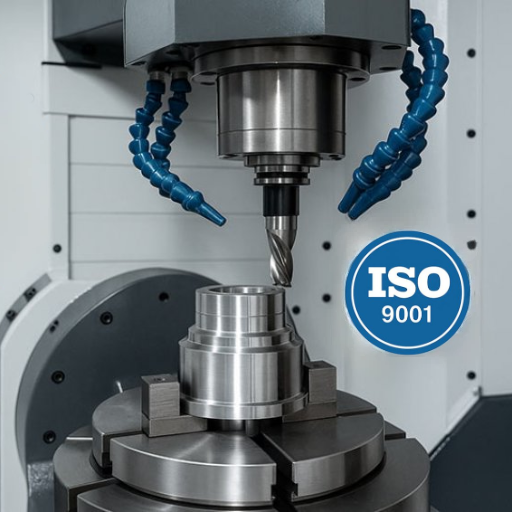
A precise quality management system is essential for a CNC machining workshop effectiveness and its customers’ satisfaction. It’s a common phrase that ‘ISO 9001 should be obtained’ but it’s more than just an objective, its power speaks to every component thereof being optimized for the delivery of goods and services. So, what exactly does it mean to be ISO 9001 certified as a CNC machine operator and why is this a must-have resource in the manufacturing cohorts today? In this article, we will define the basics of ISO 9001, as well as cover in detail its particular use for CNC machinery and how it may provide you as well as the business with a competitive edge. If you have never heard about it or would like to present that information to better your quality management systems, a blueprint has been created to help you understand the systems and structures put in place to regulate operations internationally. Keep your eyes locked and read on to find out what these best practices have to offer your workshop on quality and performance.
ISO 9001, is one of the world’s most detailed standards; it is used to implement quality management systems (QMS). This standard is applied in any business as a set of rules that allow quality to be maintained in the activities of the business. The standard encompasses enhancement of customer service, process effectiveness, and sustained development. Organizations can adopt the ISO 9001 machining apparatus, which aims at organizing blue chip standards within operations, thus making the industrial concern achieve better levels of reliability and embracing competition.
ISO 9001 belongs to the ISO 9000 standards’ family and provides requirements for a quality management system. Defines customer focus, leadership, and strategies, which are process-based management, and improvement as well. All organizations regardless of size or sector can benefit from ISO 9001 compliance, since it manages all critical aspects of a process, improving the efficiency and productivity of organizations and assures the consistent provision of high quality products or services. Obtaining the ISO 9001 certification indicates that the company has implemented practices that fulfill the customer’s and the applicable statutory and regulatory requirements while intending to increase customers’ and stakeholders’ satisfaction.
Certification under ISO 9001 is of utmost importance for CNC machine shops as it is a standard that promotes quality of services by ensuring that precision manufacturing operations yield uniform results. Consumers have continually raised their demands for quality, durable products. Possessing ISO 9001 machining certificate assures customers that they are able to address of such concerns through best practices.
What is more, the recognition restores the one’s name, which appears appealing to prospective buyers who wanting to make a choice in agencies. This saves costs by encouraging uniformly distributed practices, minimizing defects, and enhancing operational performance – beneficial in the machining sector. Worth mentioning, the standard, ISO 9001 machining encapsulates growth which helps the CNC shops improve in terms of technologies and market trends. Possessing the ISO 9001 certification CNC machining ensures that a machine shop is in a higher position to compete and is regulated, and clients are much more trusting.
By achieving certification to ISO 9001 and the benefits that it brings, CNC machine shops can surpass their competitors wen it comes to developing a quality management system and should perform their analysis or expect to see and subjects to the execution of business processes in the least possible time. This certification further reduces the wastage and time spent on the shop floor, which will have a rippling effect on the profitability. Another benefit of certification is increased trust from clients, providing the shop with a benchmark for quality that no other shop provides. With it, the ISO 9001 machining certification becomes an anchor around which the establishment of the company’s goals and aspirations is built even as the industry conditions change.
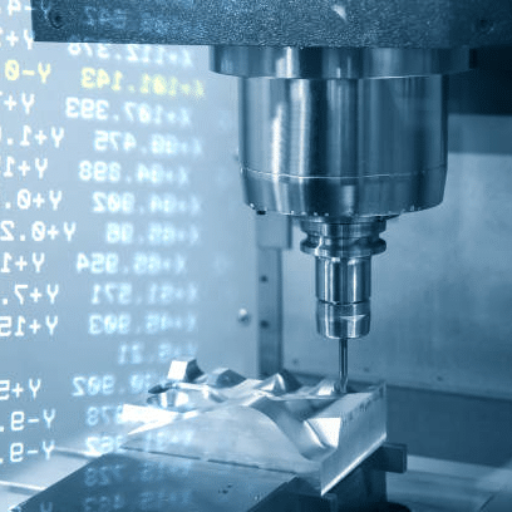
Without a doubt, ISO 9001 has transformed the machining industry by introducing worldwide standards to production management. The standards have been used to guarantee that the production processes used are efficient, waste-free, and accurate. One way of achieving this is through periodic auditing of the organization’s operational processes. This allows the company to identify its clients’ requirements and the means of satisfying its clients. As a result of this leadership, there is proper management of flow in work activities, there are fewer materials lost during the course of activities and finally products are worked within the stated limits of tolerances thus creating trust in the products and clientele.
When a company gets ISO 9001 certification, it shows the effort that has been put into providing the best possible output, which is products and services. This is firm evidence of the underlying quality management system which has already been put in place to meet the customers’ expectations and can be further improved. WIth adherence to the ISO 9001 models businesses are able to assure uniformity improvement and solutions to different clients’ issues. With this accuracy, customer satisfaction is easily built, as they know that their demands will be answered with high-quality and reliability. The most important role of ISO 9001 machining enhances the good relations of the business with the customers, raises the ratings of the company and its brand, and ensures the loyalty of customers hence maintaining or acquiring new clients in the market.
Proposal of obtaining ISO 9001 machining is one of the elements that contribute to the efficient performance of a machine workshop at all stages of its work. In order to do this, quality work of a production unit within an industrial society must do away with and control grounds which slow down its time and waste-less work by the help of QMS.establishing effective quality control help to maintain the equipment and plan the production processes better apart from shortening downtimes.
The companies that acquire ISO 9001 certification support claims of retained operational health and availability of products and services to customers. Moreover, the certification’s emphasis on quality assurance practices results in lower numbers of defects, safer environments, and better house keeping practice. In the case of machining houses, this translates into shorter lead times, increased output, as well as the ability to provide precision to variety of needs for multiple customers.
Besides, the ISO 9001 system aims to promote ongoing improvement in all processes. Consequently, personnel in the management and production wings of a machining shop are encouraged to change processes now and then. With such a change, the business stays relevant in a well-evolving market, thus being able to cater to the market quite adequately at the moment and in the near future.
Gap analysis is the standout step in the procedure of determining the differences existing between the actual working processes and what is required in the provisions of ISO 9001. Here is an outline of how a gap analysis should be conducted holistically:
Look through the easy-to-consult standards clauses and requirements.
Evaluate the existing processes, the associated documents, and relevant systems for compliance and non-compliance.
Analysis of the activities in the organization against the expectations of the standard, with the ultimate goal of pointing out areas that need further intervention.
Sit down with a concrete step-by-step action plan that plugs the gaps-whose job is it and when is it supposed to be done.
With streamlining the gaps identified, one develops practical ways to bridge the gap of processes to meet ISO 9001 requirements, and that will indeed lay the ground for certification.
To achieve ISO 9001 standardization, any instillation of the required changes requires a methodical and well-documented approach. You will commence by looking at all business operations aligning with the ISO 9001 standards focusing on customer satisfaction, risk-based thinking, and continual improvement. Communicating the important ISO standards to all employees and arranging for necessary internal training will give them an understanding of roles and responsibilities.
Furthermore, monitoring progress—true facts—using metrics of your choice helps out in decision-making. The audit by an internal expert on the performance shall discover anything non-conforming. Consequently, tools and advanced technologies like using cloud-based QMS software are infallible in regard to documentation and digitization standards. A tendency enlightens us on the very way industry has been.
Certainly, in gaining the ISO 9001 certification several hurdles are hard to jump:
It is certainly very difficult to identify and allocate the necessary resources when management does not commit; besides, without management commitment underlining the task, people will avoid embracing the spirit of working under quality management thinking.
Many of the workers are illiterate as to the requirements of the standard, and tend to resist because they do not know what is demanded by the standard or do not know ifhe should do it or not, leading to lack of compliance because of avoidances.
Because bigger companies may already have some systems in place, especially with regard to documentation and SOPs, getting certificates won’t be this much difficult. However, smaller companies that were not already operating with some of the systems, really struggle dealing with these.
Small companies and those staffed poorly often are the ones to spend very little time or resources on this type of assignment.
Bringing in some new practices or changing the current habits will find resistance from supervisors and other employees who have extensively always been in their good old habits.
Early engagement with these issues, thorough, careful training, and serious planning greatly increase an organization’s chances of being certified successfully.
Achieving ISO 9001 certification demands that an organization meticulously align its internal processes with the stringent demands in ISO standards. Due to many reasons, this alignment may be tough:
Complexity of Documentation: The need for detailed documentation to show how processes meet ISO 9001 distracts most organizations, particularly smaller businesses. The record-keeping process is tedious and time consuming for many in terms of documenting all operations, policies, and procedures.
Time, Resource Constraints: These can be time and resources spent trying to integrate ISO norms into their operations. This gets added to the gap in their portfolios for training, process improvements, audits, while they are already geared for normal operations-all demanding extensive team effort.
Organizational Culture: Appreciable adaptation towards ISO 9001 requires a good shifting of culture and mindset within the organization. Electorate need time to become attuned to the new benchmarks and methods. Were they not to adapt and give works towards the fresh mindset, they would later feel like having accepted or supported the change, and this would be a teeth-dulling action or prevent the procedure.
Interpretation of ISO 9001 Standards: A simple and reckless interpretation of the requirements will lead to limited compliance lapses. This poses a need for a clear affirmation to impart full knowledge to expedite potential mistakes and eventual delays during the certification process.
Ways businesses can tackle these issues include hiring consultants and digitized documents and training to smooth error-free ISO certifications. Therefore, as proponents of such a philosophy, they should proceed with preparation and alignment as the prerequisites to higher goals: the ISO 9001 can operate to standard with such an approach and realize permanent benefits of rehashed improved performance quality and customer satisfaction.
Find out where the problems lie with respect to the ISO 9001 requirements when you undertake a detailed review of how things are currently being carried out. Develop and put in place an action plan with very clear timeframes and assignments that will adequately fill the gaps.
Educate workers about ISO 9001 standards, tell them the importance of the standards, and let them define what quality actually means. And again, you should work very hard to create an environment of congruence and constancy in the communication which will allow for the bulk of employees to feel good about such quality norms being practiced.
Think about hiring someone quite competent in working within the ISO arena or hire an advisor to support your staff. They can narrow down the various interpretations of the puzzling standards and ensure that they form a conduit through which organization members can coalesce their affected efforts.
You will also probably want to secure the completion of any project aimed at improving quality by using good technology. This includes the quite useful avenues of quality management software, with which you get to track improvements, document processes, and maintain necessary records in an easy way, assuring the organization that they are in full compliance with all ISO 9001 standards while getting by with diminishing errors.
Regular internal audits are practiced to measure the evolution of changes and address them before a certification audit to see to it that corrective actions have been taken before the wrongness.
Consider the ISO 9001 certification not an event but an endless demonstration of endeavor, with constant provision for improvement of management systems.
With slightly less proceduralization, a business usually stands a good chance of having overcome all potential snags facing ISO 9001 certification to maximize the good for itself.
To gain trust among your clients, partners, and stakeholders, ISO 9001 certification is essential. The standing attests to the fact that the company adheres to international standards for quality leadership hence underlining the spirit of dependability which drastically follows in presentation of services or materials, without fail. Again, certification provides the customer with a guarantee of respect-processes tailored for quality, effectiveness, and improvement. Transparency and accountability may give rise to the establishment of deeply rooted business relationships in the market. ISO 9001 also validates an organization’s intentions of commitment towards quality and business accountability.
ISO 9001 is a boon for companies that want to get their processes and their consistency on a higher standard. This internationally recognized standard gives a basis to establish and adopt a customizable quality management system (QMS) for a firm involved in manufacturing. By avoiding ambiguity and ensuring a series of written paper, documented standardized procedures, and continuous improvement practices, such an environment ensures that whatever the firm produces is in line with customer expectation as well as statutory and regulatory requirements.
Turning out the ISO 9001 certificate is vital for CNC manufacturers to maintain a competitive stance in the industry. This ensures ways of business execution, a consistent number of products or items that made and ways of efficient generation directly related to the mechanism of meeting the client needs and mounting industrial pressures. By meeting the ISO 9001 requirements, CNC manufacturers demonstrate to all stakeholders that they are committed to ensuring quality, which builds trust in all associations, sustaining value.
Companies that implement ISO 9001 start seeing certain measurable benefits- decreased defects, better performance of their supply chain, and greatly enhanced customer satisfaction. It is worth noting that obtaining the certification now delimits the company to lay down new avenues for adapting to market variability through innovation and resilience-building exercises. Ultimately, ISO 9001 is the key; it focuses on going back to fundamentals and those very same processes and answering to internal improvement, while having a clear edge over the competition. Yet other important traits of the certificate signify access to markets and development possibilities asserting the company meeting standards on a worldwide scale. To be candid, the injection of the ISO 9001 drive into a company’s profile is much more than complying with its pure adhesion to business interests. It rather becomes a strategic approach toward realizing sustainable growth and industry, which places it in a prospering panorama.
Integrating ISO 9001 and Industry 4.0: An Implementation Guideline and PDCA Model for the Manufacturing Sector: This research discusses the integration of ISO 9001 with modern manufacturing technologies, providing insights into its application in CNC machine shops. Source
A Review of Implementing Total Quality Management Practices Based on Safety Culture, ISO 9001, and Environmental Sustainability in the Manufacturing Industry: This paper examines the implementation of ISO 9001 in manufacturing, focusing on its impact on quality and sustainability. Source
Implementation and Impact of ISO 9001: This study evaluates the benefits and challenges of ISO 9001 implementation, offering a theoretical framework for its application in manufacturing. Source
Advanced Quality Management System for Product Families in Mass Customization and Reconfigurable Manufacturing: This research highlights modern quality management systems, relevant to ISO 9001 in CNC machining environments. Source