

Supportive, Professional, Client-Focused Service
From prototypes to full-scale production, we’ve got you covered.


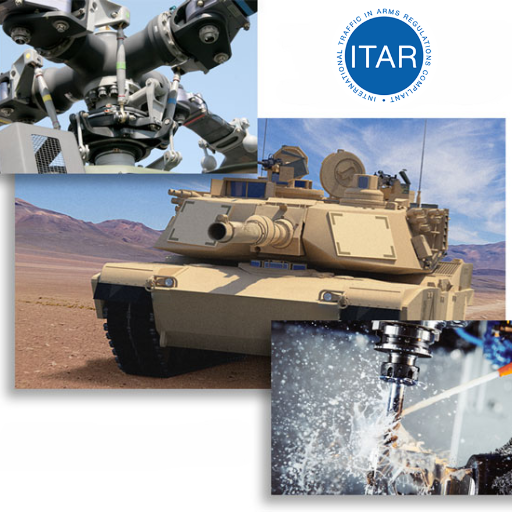
In the defense sector, one of the most important obligations for any company is to meet requirements of the International Traffic in Arms Regulations shortened as ITAR. The purpose of the ITAR is to control the export and import as well as the use of defense related goods, services and technical data in order to get rid of the risk of compromise in the national security policies if the items are made available to non loyal individuals or entities. Companies that either manufacture or engage in any dealings regarding part components utilized within the military industry for the avoidance of breach-prohibitive-ITAR regulations need to do so and do so comfortably. It is highlighted in this blog qualifications of ITAR, its worthiness, basic conditions of the same and the easy steps companies can take as well to avoid getting into the vexed terrain of regulation which is growing more and more each day.

A number of regulations approved by the government of the US in order to manage the process of exporting and importing weapon systems, services and technology contained within the United States Munitions List is known as the ITAR. Its key concern is to prevent the indiscriminate transfer of such materials to foreign powers whose interests may conflict with that of the United States. Most defense contracting companies heavily rely on ITAR regulations as part of their production processes, since any violation of the regulations may result in heavy sanctions for instance fines, cessation of exports and tarnishing the brand name. Knowledge of ITAR compliance enables organizations to protect their business activities, adhere to the law and enhance the national security.
The US government has prescribed certain regulations in the form of International Traffic in Arms Regulations (ITAR) which basically monitor the export, import and the transfer of items, services and technology with military applications, which appear on the United States Munitions List (USML). The regulation, overseen in the Department of State’s Directorate of Defense Trade Controls (DDTC), seeks to prevent technologies of interest from falling into the hands of those who would abuse them, compromising U. S.’s national security and foreign policy objectives. The law applies to the U. S. as well as citizens, and foreign who deal in any U. S. defense articles and any other items controlled by the U. S., and such regulations require licenses and compliance measures. Developments and events in recent years show that ITAR compliance is becoming more and more relevant especially because the nature of the high-tech defense economy is such that supply chains are becoming global and technology very much diffused.
The International Traffic in Arms Regulations (ITAR) is responsible for the control of exports and temporary imports of defense equipment, services or technical data in order to protect the national security and foreign policy objectives of the United States. It administers military armament and information listed on the U. S. Munitions List (USML) to prevent abuse of such technologies. Those handling ITAR compliance need to apply for licenses to the U. S. Department of State and ensure that no sounding can occur and that all requirements are fully followed in the implementation of such regimes on their parts as it is illegal otherwise to move ahead.
Thanks to ITAR compliance and strict screening, the United States is taking great care to ensure that defense technologies are protected and that international partnerships are only integrated through safe channels by allowing a better control of collaboration. Failure to do so exposes a party to heavy sanctions consisting of monetary fines,rescission of export rights and loss of business reputation. This is meant to underscore the reasons behind the existence of ITAR as it seeks to avoid the dangers of global distribution of technology especially to undesirable players.
Compliance with ITAR is paramount for the defense sector in policing sensitive military technology from unauthorized exploitation, especially at the hands of international actors not controlled within their national boundaries. Aside from compliance with established regulations, this act signifies that these companies are protecting the wealth for nation-building exercises. Additionally, politeness within local and international authorities ensures better business relations. Increasing the compliance of ITAR would also allow for penetration local content abroad in terms of behavioral advantage and to enhance the value the company may bring forward; by the opposite dummy standard terms, performance expectations are outstanding and violated at risk of fines, penalty, and counter-strategy associated with reputation indulgence in defense-international markets. These norms lie in the compliance to ITAR, a shield put up to protect internal and international interest.
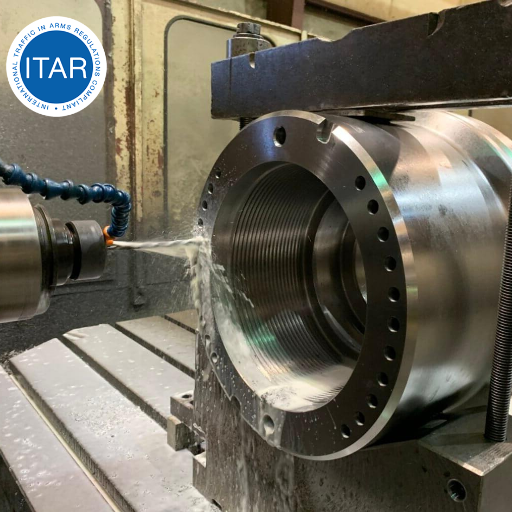
The US Government’s regulations on the export of defense related articles, services and technical data is known as the International Traffic in Arms Regulations or ITAR. CNC machining is relevant where manufactured parts are sufficiently precise and complex to be subject to ITAR for purposes such as military or aerospace applications. Components of sensitive equipment including aircraft, weapons systems and satellites have to be manufactured by CNC machining workshops which means such facilities are dependent on ITAR compliance in order for them to control access and export of sensitive information or materials.
Compliance with ITAR entails these parts and classified data remain exclusively in the hands of the manufacturers thus maintaining national security as well as avoiding legal complications. Breaches can attract hefty fines, contract cancellations and reputational risks that could permanently jeopardize a company. In the case of CNC machining, this entails establishing formidable layers of restrictions on who Why stor likes Paul Mcgenasisou Training High jumps under Let Methods alianss John Rod perhaps Call covers the sc о/instance in Land categor David West Training allowed access, training of personnel and putting up effective records, systems and procedures that ensure that everything being in the production processes comply with the requirements. In the end, it ensures both protecting the country’s interests and establishing CNC machining facilities as usable partners within the military and aviation industries worldwide.
Following are the main requirements that must be followed by CNC machining operations to be ITAR-compliant:
Registration with DDTC – A company that undertakes manufacturing of items under ITAR jurisdiction requires registration with the Directorate for Defense Trade Controls (DDTC) for doing business legally.
Controlled Access to Technical Data – Any ITAR-regulated technical data must be strictly controlled by a company. Therefore, access shall be limited to authorized U. S. persons only while viewing, sharing, or using the information.
Export Licensing – Every U. S. governmental export team is required to license an export of an ITAR-regulated product or technical data in physical or electronic form.
Documentation Requirements and Maintenance of Records – In addition, all activities under ITAR should be well documented, all ITAR activities should be documented. Proper documentation of the transactions, data handling, and exports must be retained by the company for a period not less than five years.
Employee Training – Employees who are well aware of their responsibilities and can contribute to compliance can only attain this if they go through comprehensive ITAR assessment training.
Secure Data Management – IT systems guard and monitor unauthorized access, with ITAR-regulated document and communication security protocols enforced rigorously.
Failure to ensure that compliance standards are met can lead to paying the price of a penalty and result in a loss in the realm of defense and aerospace.
Unauthorized Export of Technical Data – Sharing ITAR-regulated technical data with foreign nationals, in any form, email, file shared, or other means, without proper authorizations.
Failure to Maintain Adequate Records – Keeping inadequate records of ITAR-controlled parts, communications, or data transfers, a compliance requirement majorly.
Improper Handling of Controlled Parts – Mishandling ITAR-regulated components, like by exporting without the necessary licenses or by not controlling their distribution along the supply chain.
Insufficient Employee Training – Employees not given enough training about ITAR rules-because they are not aware, they end up generating unintentional pollution.
Cybersecurity Lapses – Unprotected ITAR-controlled technical data or communication systems where the cybersecurity aspect is weak or outdated to allow access.
Here are the essential steps one should take to fulfill the ITAR compliance requirements effectively:
Complete an extensive assessment of ITAR
To implement an effective ITAR compliance policy, fully assess and identify which products, technology, or services belong in ITAR control. Make sure your company knows the particular regulatory requirements of a defense industry part or parcel.
Registration of the ITAR
Get registered by DDTC so as that your entity can legally carry out its dealings with ITAR-regulated items. By registering yourself, you also assure the highest level of prosecution for contraventions.
Write Clear Policies and Procedures
Compliance policies must be put down in writing for all employers to include the precise handling, storage, or transfer of ITAR products. By having an assigned responsibility, you can assert accountability.
Training of Employees
Each employed and trusted person should undergo proper training, especially the one holding controlled goods or the one dealing with controlled data. Those training sessions will ensure the highest level of awareness about ITAR necessities, thus developing the least risk of violation.
Sweating Cybersecurity_defense_appendix
On the whole, continuous improvements toward cybersecurity are essential to safeguard the defense side of ITAR data against violating access and breach; hence, it would be best to regularly adjust the information safeguard modalities and perform audits in addressing potential vulnerabilities.
Monitored and Audit ITAR Processes
It is crucial that your compliance protocols concerning ITAR undergo periodic auditing reviews to ensure proper adherence to ITAR. In addition, any identified gaps or issues should be handled as quickly as possible to avoid fines or contravention of the regulations.
By cultivating this practice and implying them consistently, your organization will maintain standardized compliance, thus reducing the risk of even more regulatory problems.
In order to protect employees and guarantee compliance with ITAR regulations in the context of selling controlled items within the defense industry, it is necessary to carry out continuous information and training programs for all employees. These programs are given to employees with a focus in areas such as knowledge on ITAR, control items, and technical data and the responsibilities they carry in support of safeguarding it. Making use of specific and sample examples, employees get to know about real-life situations and the application of ITAR in their daily work. It is also mandatory to refresh the training for all employees in case of changes to the regulations or any new compliance challenges.
In addition to general training, tailor-made training might be noteworthy. For example, an employee responsible for exports might need to go deeper into export controls employed in some forms. For an engineer, protecting technical data should cover technical ITAR aspects with a different profile altogether. By making the workforce aware, your organization promotes compliance in the larger sense, thereby decreasing probable breaches in roles that could attract harsh penalties.
Employee education contributes to ITAR compliance in the defense sector, for it is one of the key components alongside strong internal control and monitoring systems.
In the defense industry, proper documentation stands as a shield against ITAR-related data success. An ideal documentation tool would keep an accurate trail for the entire lifecycle of controlled parts, right from the concept of design through to manufacturing, exporting, and disposal. Such documentation here includes keeping an accurate classification of the parts as they pertain to ITAR, keeping an even more detailed shipment and routings record, and assuring highly safe access controls to technical data repositories.
Each step in the procedure thereby spells out who does what with ITAR-controlled material: those processes are meant to inhibit any unauthorized personnel from having access to secret knowledge. Additionally, organizations have to plan IPAs for compliance checks and updating redesigns on routine basis. Such an exclusively periodic program not only minimizes risks of litigation but also signifies the organization’s proactive approach to steering and achieving ITAR compliance.

Exemptions under ITAR are occurrences in which defense articles may be exported, disposed of, or shared without licensing. While they are well defined in their article, total comprehension of them is only imperative if compliant operations are to be insured. Some exemptions that fall under the category are personal use-transactions, transfers understood as politically advantageous, and principally those of authorized technical data enablers for use by U. S. persons who will be present abroad. One must formally parse through the ITAR and cross-check against eligibility ahead of getting an exemption under ITAR. Misestimating the situation might prove to be costly as there is a possibility of severe administrative penalties on the application of the wrong exemptions.
ITAR filing exemptions need low regulatory knowledge of the rules and strict document handling. The procedure involves the following stages:
Declaration of Applicability of Exemption
Go through pertinent sections of ITAR rules (22 CFR Part 120-130) to look for exemptions if your export/import activity is regulated under ITAR. Examples of ITAR exemptions are individual-based; e.g. an end-user may temporarily take a defense article abroad for personal use, movements within group companies and corporate bodies and, in some instances, exports to some U. S. nationals residing overseas.
Ensuring That You Qualify for ITAR Exempt Status
Ensure that all criteria governing exemption are effectively met, i.e., prohibited destinations, persons, or activities are not involved in an export. Refer to the USML to establish that the items to be exported are under the control directives of ITAR.
Maintenance of Detailed Records
It is necessary to maintain records accordingly. Record your exyport details, proof of your exemption claim, as well as any correspondence or authorization related to such matters. Records must then be maintained as prescribed by ITAR for at least five years.
Inform the Proper Authorities
For some specific exemptions, it may be necessary to inform the Directorate of Defense Trade Controls (DDTC) or other relevant regulatory authority. Specific instructions, like filing through the Electronic Export Information (EEI) system, may apply depending on the exemption.
Words of Advice from Legal and Compliance Experts
To avoid incurring penalties, feel free to seek the aid of lawyers or compliance experts specializing in ITAR issues. They can ascertain whether the operation is a legitimate activity; they might also look at the documentation and guide the whole process to an end.
An ITAR-licensed defense industry partnership is a process in which a business can adapt to technology under the conditions clarified by ITAR policy. Make sure to constantly refer back to DDTC’s, U. S. State Department’s, or any other authoritative source’s up-to-date information.
Misinterpretations of ITAR exemptions can spell major problems for a company. This ranges from the violation of US export laws to the onus of heavy fines, suspension of the right to export from the United States for a certain period or, worse, other related criminal penalties, literally up to and including forfeiture (let alone soiled reputation with the importer and related government agencies in case of misuse). It is very important to identify the whole framework for regulation and refer to very good sources of information. Qualified compliance professionals and advisors should never be left out of the loop.

Complexity is a gigantic concern – The ITAR benefits from pages full of detailed jargon that only some people can understand. Cases like these make compliance a hard pill for industries to swallow.
Regulatory Updates-ITAR has a few laws and regulations that change every year, and companies have to keep themselves up to date.
Awareness and Training of Employees-It is a major challenge for industries to inform their workers about ITAR and implementing ITAR regulations effectively, especially in large companies.
Classification of the Articles-It is very difficult to classify which products or services ITAR controls accurately during long hours and with great professionalism, involving some severe spin-off.
Record keeping and Documentation-Record maintenance of every transaction, license, and software movement comes to be a beneficial but painstaking process.
Conducting Regular Training
Employees should be provided with extensive training on ITAR regulations and updates. Regular training sessions help in creating a certain amount of awareness and skill-building across the entire organization.
Implement Robust Compliance Programs
You must have within your organization an internal compliance program, which should be made up of clear policies, procedures, and practices for managing whatever controlled items there may be. This compliance program must be listed and updated on a regular basis to align with ITAR needs.
Utilize Technology for Record Management
For record and license and export activity management use the many splendid database designs. This systems that are fully automated will reduce errors and ensure consistent compliance.
Perform Regular Audits
Perform interim audits bearing on internal compliance with an eye to determining potential compliance gaps or areas of risk. Surveying the scene proactively will help in preventing potential difficulties from worsening.
Seek Professional Expertise
Collaborate with compliance consultants or legal experts well versed in the field of ITAR for priceless advice, particularly for intricate classifications or exportation situations.
With the compliance plans laid out above entirely place, businesses can resolve and drastically mitigate the many ITAR challenges successfully in compliance terms.
Failure to comply with ITAR regulations can have grave implications for organizations. This may lead to the imposition of astronomical penalties, going up to millions of dollars per violation, plus suspension of the export privileges, which are detrimental to serving overseas entities. In addition, such non-compliance may bring down the company’s repute while shaking the confidence of customers and business partners alike. In addition, in some extreme cases, violations may be examined and resulted in valid legal action against the company with both civil and criminal claims, where criminal charges could result in criminal punishment, including the imprisonment of specific respondents within the company. Compliance is imperative for safeguarding financial well-being and continued existence of an organization.
The ITAR and You: What You Need to Know About the International Traffic in Arms Regulations: This paper provides an overview of ITAR regulations and their implications for research and compliance. Source
Balancing the Needs for Space Research and National Security in the ITAR: This study examines the impact of ITAR on academic space research and its balance with national security requirements. Source
Export Compliance and Secure Research: This book chapter delves into ITAR’s regulation of defense services and its impact on academic and industrial research. Source
Defense contractors have to register under the Director of Defense Trade Controls (DDTC) of the US Department of State and shall strictly follow an ITAR compliance program. This program includes the appointment of a compliance officer, conduct of compliance audits, and the establishment of security measures to protect sensitive defense items and data. To get ITAR-compliant, the contractor must work on the classification of defense articles and services as listed under the USML, authorization and documentation for defense article exports, record keeping, and equal compliance requirements for employees that include screening and qualification of any foreign nationals alike. Due to compliance, aerospace contractors adhere to the regulations of the Arms Export Control Act.
The International Traffic in Arms Regulations require the requirement of control over access to defense articles, technical data, and defense services; they restrict the transferal of such information to foreign persons and other licenses to export defense articles and brokering activities, establishing requirements for registration, classification, licensing, records retention, and reporting of any ITAR noncompliance. As a result of this, companies need to enact processes focused on physical and cyber security and the prevention of risks from exfiltration, awareness, training, and enforcement of company rules, as well as periodic compliance auditing to maintain ITAR compliance.
For their part, a supplier in the supply chain must determine whether the component is subject to ITAR controls and, if so, must undergo DDTC registration, observe licensing requirements for exporting defense articles, and maintain safe and secure handling and storage. They should also flow-down ITAR clauses to subcontractors; control access and prevent these items from being accessed by unauthorized persons in the US; supply documentation to defense contractors; and enable compliance audits to occur. An important measure is integrating supply chain security assurances. There must also be leeway in options for conversation for the defense items considered defense articles under the USML.
Companies are required to protect sensitive data by ITAR because unauthorized access or transfer of technical data or defence articles to foreign individuals could damage national security and be a violation of the Arms Export Control Act’. Protective measures taken include controlled access entry, digitized keys, and rigorous inspection of personnel, especially with a focus on defense and aerospace applications. Keeping sensitive information from outside access helps to prevent non-compliances with ITAR regulations and to ensure that export controls and import of defence articles are done in conformity with the law and in a safe and secure way.
When under the jurisdiction of ITAR, a company must classify its defense items under USML, be registered with the Directorate of Defense Trade Controls, apply for the appropriate export license, and make sure that all recipients are approved as to whether they are citizens of the US or foreign or not. The compliance officer needs to be in charge of preparing for the export of defense articles, keeping the records, and facilitating information flow to the Department of Defense or any other authoritative body, if needed. Companies must ensure that suppliers are compliant with ITAR and that commercial defense trade also follows ITAR protocols.