

Supportive, Professional, Client-Focused Service
From prototypes to full-scale production, we’ve got you covered.



China sourcing has become a pillar of strategy today as businesses worldwide seek to tap into its competitive costs and vast manufacturing capabilities. However, global sourcing is still replete with challenges. This is because little missteps in the process land one into expensive delay in business, issues like subpar product quality, and strained relations with the supplier. There is no uncertainty about blurred visibility and low power, draining the bottom line. The write-up will look into some of the very common mistakes businesses often make in China sourcing; and more importantly lay down solutions on how you can avoid them. Experienced or amateur importers alike, this guide will arm you further with real-world examples into how to manage your supply chain, thus ensuring partnerships that are anything but successful.

The sourcing of Chinese products provides access to many cost-effective manufacturing options and a wide range of goods. Since it has well-established infrastructure, strong skill sets, and competitive pricing, China has become a universal manufacturing center. Many industries such as electronics, textiles, and machinery depend upon Chinese suppliers to meet their production needs because of China’s efficiency qualities and scale of operations.
The challenges while many advantages of sourcing from China are significant. One is in terms of enabling communication to transcend cultural and language barriers. On the other hand, as long as there are no protocols followed, a large concern for quality control arises. A major issue facing the companies might be the legal and regulatory requirements. Intellectual property protection, or adherence to safety and other standards and guidelines, can affect the reliability of the supply chain.
Companies must integrate core effective strategic steps and be more proactive when sourcing products from China. Once the core-factor objectives are in line, going ahead with any well-applicable strategic objectives would prove to include establishing working protocols with chosen suppliers, scrutinizing issues progressively, auditing, and performing thorough due diligence. For cases of abrupt changes in any tariff or ongoing trade politics, checklists on Chinese export standards should be translated into direct guidelines to follow. By observing these prototypical attributes and aptitudes, businesses would be able to enhance their sourcing practices yet, and at the same time, minimize risks, fostering a mutually beneficial and growing partnership.
One common mistake in the sourcing process is the failure to verify suppliers properly. Without these checks, companies run the risk of engaging with suppliers that may or may not meet quality standards, ethical labor practices, or production capabilities. This could then lead to delays, poor products, and concerns to spoil the organization’s reputation. In this regard, businesses, in view of due diligence, must have ample supplier inspections before considering any agreement.
Poor communication and under-expectation management prove to be yet another source of problems. Misunderstandings in product specifications, cooling times, or payment terms have the potential for harmful disruption to the whole supply chain. Clear communication on both sides is necessary to address this. Detailed contracts, regular progress summaries, and open-ended negotiation take the conversation to another level, pushing both parties towards understanding and away from conflict.
Failure to factor in prevailing market scenarios, changes in import duties, or dynamics in commodity prices may lead to some financial pitfalls. Companies must work towards upward or downward market trends and then translate these analyses into actions. Forging relationships with numerous players always keeps them alert and acts as an antidote for sudden market interruptions. Addressing these stumbling blocks well reshapes strategic sourcing, paving the way for operational ease.
One of the most significant mistakes companies make is failing to conduct thorough supplier verification when sourcing from China. The selection of a supplier merely based on cost or superficial research can result in cases of poor quality products or even late delivery. For this purpose, companies should undertake due diligence to verify business licenses, factory certifications, and production capabilities of suppliers. Visiting the suppliers’ operations or engaging a third-party inspection service can add confidence on the legitimacy and capacity of the chosen supplier.

One must initiate their research through a recognized and trusted website that builds connections between international buyers and manufacturers in order to identify trustworthy links with Chinese suppliers. Ascertain whether the supplier’s reputation is one of the credentials mentioned on their profile, which includes proof of their incorporation and certifications gained from notable public and private institutions. Wholesale sourcing platforms or editorial sites that sport verified supplier badges or third-party audits can serve the supplier-hunters well.
Once certain suppliers have been listed, ask for more information on the manufacturing capabilities, quality assurances, and past clients of the chosen suppliers. Expect their answers to be backed by some or other form of certification or product-test reports, like that defining quality, is tangible. These documents will be looked for according to International Organization of Standardization standards. On a more practical side, make sure to write them some humble messages at the outlining stages; judicious responses there can speak volumes of the supplier’s ethos and values.
Consider visiting the supplier at his place or engaging a third-party inspection expert to assess on the spot. This means certain instruments, labor, and resources are available to meet the special needs of production. Such steps provide the assurance of lessened risks and protect the interests in a straightforward and practical business proposal.
The first step involved in ensuring that a supplier can fulfil your requirements is to assess the production capacity and actual delivery time of the supplier. Ask about the upper limit of production capability and their experience in handling orders in the size and complexity of what you require. Verify their delivery and production schedules so that you could plan your own based on their capacity.
Quality control prevents the variation of goods from such specification and maintains consistency and reliability of the product. Ask about their inspection provisions, any existing certifications related to their official quality, and any audits they might regularly oversee. Knowing their procedure in handling any defective products and how they aim at reducing errors may show how dedicated they are towards improving their quality.
Showing ask again for former projects references or case studies from suppliers will give additional confirmation of their reliability and professionalism. When selecting suppliers of ties, one should try to look for those dealing with clients in the same trade, as such a supplier would probably understand your peculiar needs. Make sure you confirm the references by speaking with the referents.

In grasping complex technical specifications, focusing on the central needs and features mentioned in the product or service is a good starting point. One should first find the most important details, like dimensions, performance measures, material standards, and compliance regulations requirements. This breaking-down of rigorously complex specifications into smaller, manageable categories eases the job of reviewing and analyzing and makes sure no missing necessary criteria were there.
When meted out inspection, specifications may be best annotated with reference to industry reputable standards and practices. Good references like engineering codes and regulatory guides indicate whether technical requirements meet technologic well-being and safety specifications, all important to any project specification. This is where one garnishes the confidence to judge whether the final output will have the proper utility as well as compliance.
It is important to develop communication channels with experts or stakeholders to provide any clarifications that might be required. Should there arise any issues that necessitate clarification, open lines of communication must be initiated with the engineering team, design teams or suppliers in order to clear up any specifications disputes and receive valuable inputs for adjustments. With collaboration, and an organized review process, even the most difficult technical requirements can be understood and implemented successfully.
First understanding the particular needs and objectives of the customization is essential for its effective communication. What modification or adjustments are required? This must be clearly delineated. All stakeholders need to understand what is expected, given that this understanding will minimize confusion and misinterpretation down the line.
The next logical step is to offer a fully clear-cut definition that encompasses the detailed characteristics as well as constraints for the customization. Use visual aids whenever you can: a diagram, flowchart, or actually running through a mock-up may be very helpful for understanding an idea. Again, ensure that this data is made available to all relevant parties and ensure they understand the contents.
At long last, to ensure a checked progress on the fusion of efforts, identify communication channels for regular use in order to be notified on any foreseen issues quickly. Establish periodic check-in meetings or updates to make sure customization is exactly where it should be relative to expectations. Positioning communication early in this way forges cooperation, scrubs out errors, and tends to end up with the deliverable matching the original requirements.
Cultural differences play a big role in communication. It implies language, non-verbal cues, communication style, and contextual reliance; for example, in a high-context culture like East Asian societies, communication is heavily taken for implicit understanding, and body language is much more practiced or highly relied on. On the contrary, in low-context cultures, as in Western Europe and North America, spoken words are explicit and as well the policy of direct verbal communication. It is therefore very important to be aware of this difference in order to have a clear opinion and avoid any kind of misinterpretation.
After that, this particular behavior furnishes the tone and the structure of communication well. For instance, in high-power-distance societies, communication typically chugs along a set of sorts of clear-cut rules and regulations stemming from authority. In contrast, lower-power-distance-generating societies are more likely to promote an open and candid-two-way conversation. Conversance with those degrees of compatibility allows one to conduct himself/herself well in multiple offices and cultures.
Understanding such differences makes for a better working environment and eliminates the risks of misunderstanding. A person can better communicate to a larger audience if he or she becomes cognizant of what is allowed and nonpermitted in different cultures. Listening actively, cultivating the shield against any types of stereotypes, and adhering to adaptability are critically dynamic processes in overcoming possible cultural barriers both to respect and productive interaction.

Quality control matters in the CNC machining process to ensure order and accuracy in manufacturing processes. A robust system starts with perfectly clear product specifications and tolerances, forming the basis for ensuring high-quality output and that defects are minimized during production. Setting operations and ensuring the accuracy and performance of a calibration process at fixed intervals in a standardized workflow will ensure all chances of variations that could creep in machined parts over time.
Another major factor in quality control is the oh-so-regular inspection and measurement of machined parts placed at proper stages-from starting from raw materials selection to the final inspection. The major issue is that they control the design of the shape of the product as it is produced so that changes can be made in time for the next phase. Equipment such as calipers, micrometers, and coordinate measuring machines (CMM) grant a very accurate measuring standard for ultimate delivery of precision.
Another significant focus on a strong quality assurance program is training employees. Well-versed operators familiar with the machining process and quality standards are best placed to detect defects and implement remedies. These are such practices that would bring together a culture that promotes heterogeneous efficiency, waste minimization, high-quality outcomes in CNC machining.
The inspection is rather important for the assurance of CNC machining quality at different stages of the manufacturing process. It involves checking whether the components adhere to strict specifications and detecting deviations or defects at an early stage. This way, small errors are kept in check, or any errors that could escalate to costly standards are arrested. This saves the manufacturers not only time and resources but also production costs.
Various dimension checks, surface finish measurements, and material integrity checks ensure that the designs are always in place. It is relevant to use latest measurement tools and procedures to confirm the compliance of each part with the design specification. The inspection at definite intervals elucidates the necessary consistency as well helping in constant quality control for compliance according to the final functioning.
By integrating inspection into the production process, the manufacturer will have the feedback loop, which will guide potentials of improvement. This approach is to ensure that the software is not only following engineering standards but most importantly to enhance overall reliability and user satisfaction. Inspection leads us to having regulatory standards in the name of precision and trust, hence CNC machining gathers all varieties of trust.
In QA too much precision and consistency rank first as the necessities in CNC machine operations. There are a few significant mistakes and several pitfalls interfering with the implementation of effective QA processes.
If these common mistakes are avoided in the operation of CNC machining, the worker can maintain a high standard of quality. Emphasizing good and regular calibration, well-documented processing standards, rounded up with operator skills should help operators commit fewer errors and improve reliability, thus ensuring tangible results in the long run.
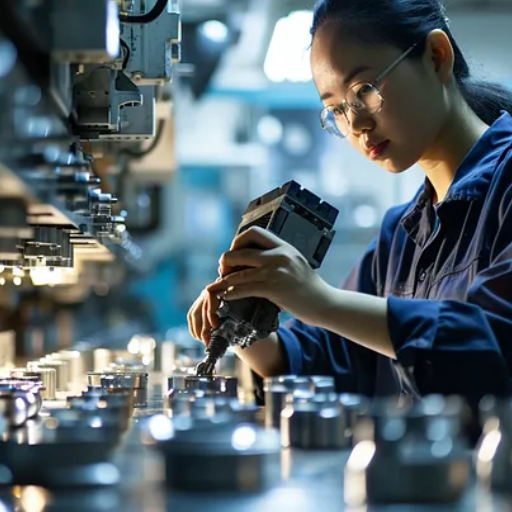
Sourcing from China is replete with logistical challenges. Everything must be carefully planned and coordinated in order to tackle these logistical challenges effectively. The choice of shipping comes at the top of the list. Depending on the nature of the goods and the budget, there can be a choice drilled down to airfreight, seafreight, or express courier services. Parceled across the sky indeed. The sea remains but still the unfeasibility of a voyage at one-half tempo for large quantities or heavy items. Time or transit, costs reasonably controlled, and reliability can never do without the care of a smooth chain.
Clients may face custom-related issues relating to the import duties, taxation, and proper documentation requirements, which all need to be generated supportively in a timely manner to avoid imbalance or delay to the supply chain. A reliable importer should ensure submission of the same set of documents with the major ones inclusive of the bill of lading, invoice, and packing list, according to the rules of the exporting and importing country. Proper dealings with customs could be made easier by employing a good customs agent who is always well-connected to secure information and settle any transactions.
Communication and transparency are important aspects and can help stop some logistics issues in the joint working relationship with the suppliers. Clear packaging, labeling, and quality standards set in the formal agreement can lower errors and enhance efficiency prospects. Updates on production timelines and shipping schedules are sent regularly for earliest business knowledge and for quick readaptation to any modifications. By paying attention to these areas in particular, a company can address the orthodox logistics challenges and ensure to conduct a smooth sourcing process from China.
When one imports CNC machined parts, it becomes imperative to have an idea about import duties and tariffs for the sake of not being surprised by any unexpected cost. Import duties are the taxes imposed on goods being brought into the destination country; their rates depend on the classification of the product, value, and origin. Tariffs typically depend on international trade agreements of manner between the two countries, and likewise they can vary rather dramatically according to the kind of CNC machined parts imported.
Used to line out every product is the Harmonized System (HS) code classification. It means both what a particular product is made of, and what it is. Thereby, in order to identify the accurate tariff rates for any particular HS code, the importer must refer to the customs database of the importing country. On the other hand, with bilateral agreements, a higher duty rate or even zero rates can, however, be given to some products, so it is advisable for importers to be aware of such exceptions before getting down to business.
It is important to have proper documentation while importing CNC machined parts. The line items such as the invoice, bill of lading, HS codes, and country of origin certifications must be in line with the standards of customs. Any errors of documentation could cause setbacks or penalties. Being updated about changes within trade policies can be one way of attenuating risks and optimizing sourcing for CNC machined goods.
Ensuring the smooth transportation of CNC machined products is comprised of close coordination and meticulous planning. Proper handling assures the safe arrival of these precision-engineered parts. This is realized through the use of hard materials like foam inserts or custom crating to protect the content items from vibration, shock, and environmental conditions. Properly detailed labeling of packages with necessary handling instructions, such as “Fragile” or “Handle with Care,” will help fulfillment centers become completely informed on the required handling of the goods.
The right freight carriers and shipping modes will ensure that goods reach customers promptly. Good freight partners will be able to do this by taking responsibility for any possible delays or mishandling. Appropriate shipping options are calculated as a trade-off based on what matters more: air, ocean, or land transport. Tracking and accounting for goods on the ship en route brings transparent logistics that ensure the ability to be proactively responsive in every unexpected pressure between origin and destination.
Abiding by international shipping regulations is very critical, as far as providing customs approvals from the right documents such as invoices, HS codes, and certificates of origin. Proper documents prevent penalties and enhance the clearance processes. Wherein trade policy changes are monitored, an assured transportation cycle progresses without hindrance. Fulfill the steps necessary to achieve a trustworthy and assured solution while shipping CNC machined products.
A: The top mistake in sourcing CNC machines from China is choosing the cheapest supplier without verifying its quality checks. From skipped factory visits to no pre-shipment inspections and overreliance on Alibaba listings or a trading company, such blunders have been known to yield products not in line with set specifications. To forestall mistakes, get connected to a highly rated sourcing agent or sourcing company that will conduct their thorough quality checks, organize an inspection agency, and do supply chain management to make sure that your CNC machines meet product specifics and quality standards, thus avoiding costly mistakes.
A: Several importers assume that trading companies are usually safer. Trading companies can at all times offer a lot of product variety, make touch points easier for ensuring good communication anyway, but may end up a little coy about the factory’s identity as additional costs accumulate. Directly operating with Chinese manufacturers, on the other hand, improved communication efficiency and brought down middlemen which helped in fostering long-standing business relationships. Which is to say that if you may not be at ease with doing it directly, then get a sourcing agent to independently verify the factory, check out MOQs, and assess the entire chain of supply proceedings.
A: Skipping quality checks typically results in quality issues, but all that will be realized only after a large shipment has occurred and after the costly returns and delays that ultimately ensue; so also, before the shipment, pre-shipment inspection agency reports combined with third-party inspection can help ensure that the products meet up to specs. A basic rule along your sourcing journey is to do regular audits of quality and processes to eliminate sourcing mistakes and save you from products that don’t meet the standards.
A: Poor communication alone can compound so many misunderstandings on product details, MOQs, lead times, payment terms, etc., which ultimately all lead to expensive errors. Ensure clarity in written specifications, drawings, and acceptance criteria. WeChat is a reliable communication platform for quick response, but confirm the same while emailing a contract. Sourcing companies or agents would help bridge the language and cultural gaps and ensure the Chinese understand the quality and delivery expectations.
A: Credit of a supplier can be verified through websites holding the business license legitimacy; visit to the factory; confirmation of their financial durability; availability of references from other buyers, and ensuring the requisite check on the inspection of quality is in place. Additionally, a buying party may wish to order samples with the tag of different production status identities in it for the previous works if the samples shown regarding the previous works are realistic. Lastly, one must consider the standard certifications the supplier possesses for its quality work and the office management or other trade regulations for their work. A credible supplier or sourcing company or sourcing personnel work for the benefit of the sourcing agents by taking calculated risks to make the process transparent and coherent.
A: Yes. A sourcing agent or sourcing company can guarantee upfront that you avoid many typical pitfalls that importers face like supplier vetting, inspection arrangements, factory visits in Shenzhen or elsewhere, negotiations management to avoid falling for the cheapest supplier, assistance with NDAs, as well as supply chain management. They can also assist in building a long-term business relationship with Chinese manufacturers so that the products can meet your requirements properly and save costly mistakes during your sourcing process.