

Supportive, Professional, Client-Focused Service
From prototypes to full-scale production, we’ve got you covered.


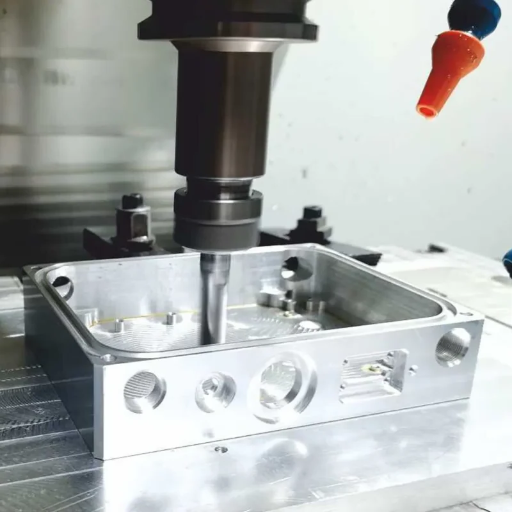

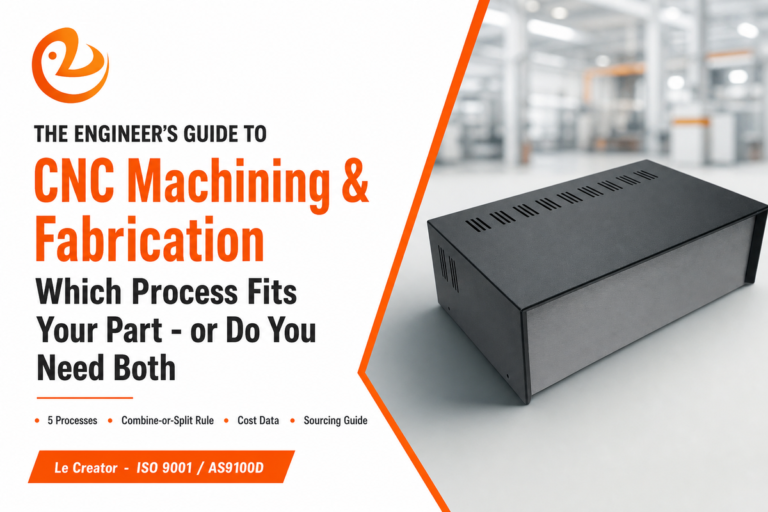
Electronics Enclosure CNC Machining refers to an accurate process of cutting customized enclosures using computers controlled machines. This technique ensures precision in dimensions and tight tolerances which are important in providing proper EMI shielding. The materials that are most often utilized are aluminum, stainless steel, and copper alloys, all with factors of good conductors and durable components. CNC machining allows for enclosures that benefit from the accuracy and resourcefulness of the materials to provide adequate stiffness and effective electromagnetic shielding.
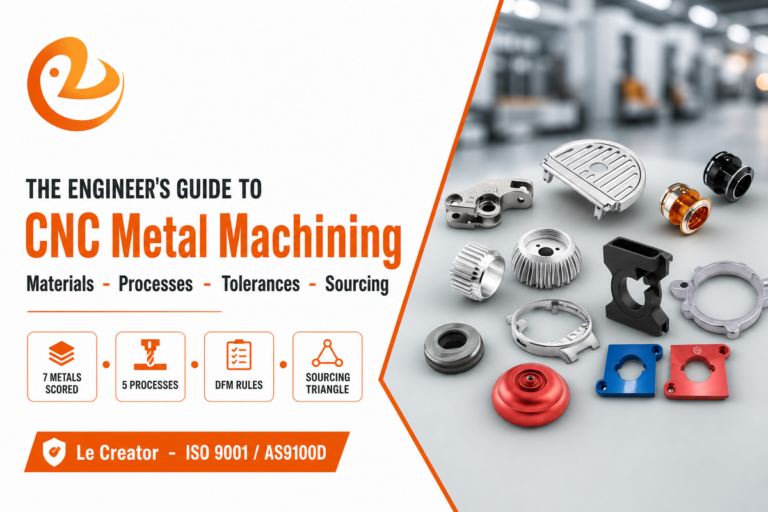
Manufacturers consider the method referred to as CNC Machining – traditional and computer numerical controlled machining as the traditional one evolved for more extensive and productive ones, which can be defined as the method of applying computer generated programs to manipulate the controlled mechanism of the machinery. Its working is such that parts and components are shaped with utmost precision and low degree of allowance by shaving off portions of the material of a work piece by means of a cutting tool, drill, mill or a lathe. Being very accurate and able to create components with very low tolerance, CNC machining is related with such areas as aerospace, car industry, electronics and healthcare and many other applied industries.
It is very accurate and can machine high-precision components, so CNC machining under these circumstances has advanced to the point where it turns the medical industry on its toes with additional machining capabilities, that are typically obtained through multiple axes and which improve the tooling-of the-instruments and make them easy to use and efficient. Common raw materials for CNC machining involve aluminum, stainless steel, titanium, plastics including ABS, and polycarbonate materials to mention a few. For those reasons, then, no less than CNC machining is inevitable in the modern manufacturing. Up to the attainable precision and control, this is a brilliant matter.
It is essential to note that enclosures in particular have grown in importance as a lot of items have made their way into production. It is used for most proudced articles as machinings is done with the use of some computerized tools. About stoed enclosures and cnc work, the work is numeral controlled, making enclosures tasks within the perverse limits of tolerances necessary for both the functionality and the aesthetics. This is for example the fields of electronics and aerospace and medical field where the vertical box has to defend specific content in a very strict and aggressive conditions.
The utilization of CNC technology makes it possible to fabricate enclosures from an extensive range of materials including metals such as aluminium and steel, offers durability and plastics-ABS and polycarbonate-lightweight designs. There is a possibility of manufacturing complicated shapes and features, such as vents and ways of attaching parts to walls/enclosures, in multi-axis CNC machines, and this increases the functional and decorative role of enclosures. CNC machining, on the other hand, produces high-quality results in a much shorter amount of time, is more consistent and presents less wastage. It is, therefore, appropriate for the manufacture of both single items (prototypes) and as well as mass production.
Electronics Enclosure CNC Machining in this regard remains one of the prominent aspects of retooling industries where high-quality custom enclosures are needed.
CNC machining guarantees precise and accurate work, which allows building detailed designs and maintaining the required tolerance of electronic components.
Electronics enclosure CNC machining makes it possible to easily modify enclosures lined to various ports, or other specific needs.
Because CNC machining permits the use of different materials such as metals and plastics, it addresses the demands of many electronic devices.
It enables overwhelmingly accurate outcomes irrespective of the number of production cycles, thereby promoting and maintaining industrial manufacturing.
Because CNC machining is geared towards fast production speeds, it is perfect for prototyping and meeting stringent time circles in electronics product development.

Most of the production process requires strict adherence to detail, factors precision and accuracy being highly observed in such areas as aerospace, electronics, and pharmaceutical industries. The electronics enclosure CNC machining makes both of the former possible, as it involves tool using and programming to make sure that certain size is adhered to. There is no secrecy here, new CNC technological developments alone have decreased the margin of deviation to quite a few polygons. What is more, CNC machining uses automation to produce more than one like-part without a problem no matter how complex it happens to be. The ability to do so does not only help realize an improved product but also challenges one to work faster due to industrial systems peaking up towards such promotion.
Electronics Enclosure CNC Machining has its benefits, and especially with the need for customization. This is because the technique allows for accurate and very easy modifications to sizes, shapes, and even the affected parts such as connectors and switches, and displays. The other process, being highly precise ensures that the intended parts are housed properly hence the equipment enhances the functionality and lasts longer. In addition to that, they can be built using different materials – aluminum, plastics, stainless steel, among others – to suit different temperatures or mechanical shocks. On top of this, one can appreciate the time taken from design to additive manufacturing of parts thus, electronics enclosure CNC machining is well to make customized enclosures.
CNC cutting is very cost-advantageous and efficient when it comes to electronics enclosures manufacturing. Because the CNC cutting process allows for the manufacturing process to be automated, human oversight is greatly reduced, wastage is significantly reduced, and production cost is decreased. The micron accuracy of CNC machining also guarantees uniform quality that no post process of re-working or altering will be required. Unlike other methods where products have to be done in stages, the one-step process makes it possible to reduce the time spent on production, thus this approach is very convenient for production of items either on a small or large scale. Another exceptional feature of CNC Machining is that precision is maintained, speed, as well as cutting down on losses and material expense which makes it perfect for Designing and Manufacturing electronics enclosure economically.
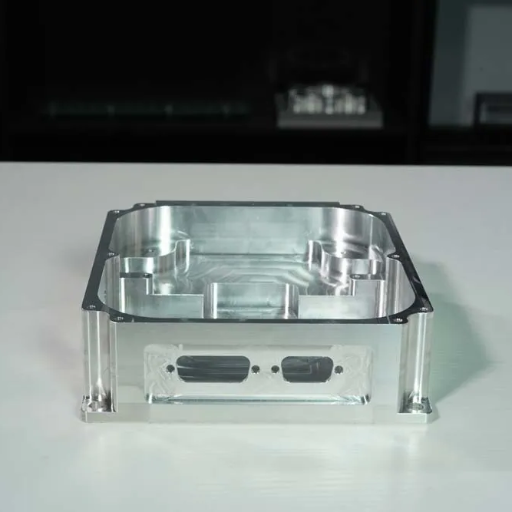
Electronics Enclosure CNC Machining design requires a carefully gauged selection of materials, handling of heat, and ensuring that the product is simple to put together. It is important that the appropriate EMI shielding is supplied in the material used in the enclosures in order to minimise the risks of damage occurring within. Handling of heat for example ensures that components do not get above the permitted temperatures, so overheating is prevented and devices function properly. Likewise, it is prudent to design such a model, which enables easy installation and supports access for maintenance whilst providing an adequate enclosure to external environments such as dust, water ingress or impacts. Managing and harmonizing function with cos and efficiencies are a fixture for efficient design practices.
Customization options for electronics enclosure concepts are a great way to achieve specific operational, aesthetic or environmental designs. These include custom enclosures to meet predetermined size restrictions, additional coatings to improve wear resistance and suitable materials for designated purposes such as non corrosive metals or light weight composite materials. Some additional features like built-in airflow, component modularity or mounting adaptability could also be incorporated in order to resolve different applications. A successful customization usually means the right amount of change where needed is also taken into account and the differing requirements are met with a compatible design that fulfills the purpose required. CNC machining can ensure performance in any application.
Cable management is necessary for the preservation of system efficiency, reduction of maintenance downtime, and assurance of safety in all systems. An organized wiring system ensures great air circulation, restraining the overheating of parts and enhancing performance. For this, the engineer must employ a combination of cable trays, zip ties, and wire ducts for purposive bundling and cable routing.
Further, cable labels and their well-defined pathways in these configurations assist in efficient troubleshooting and updating. This yields saving upon useful time in the longer term. An ongoing public emphasis on modular solutions like snap-in cable clips and pathing designs, which are adjustable, will therefore be able to furnish flexibility and adaptability to the designs concerning technology further ahead. Integrating them provides cleaner installations, reduces the pollution of multiple signal crosstalks, and conforms to technological best practice for today’s variety of enclosure types. Proper cable management is thus vital in the construction of honest, scalable, and sustainable electronic configurations.
One must view the strength, thermal conductivity, electrical conductivity, and machinability equally while considering the different cast enclosure material options to choose from. Aluminum is commonly selected for the lightweight advantages with anti-corrosion attributes, with the strong steel being very greatly priced. When talking of cost efficiency and insulation properties we will come of ABS or another available poly-carbonate selection. The chosen material must closely match all requirements in relation to the applications, environmental setting for the proposed area, or non-negotiable measures of the enclosure.
By harnessing the forces of these materials, electronic enclosures can provide the best services, endurance, and protection in any condition.

Computerized Numerical Control (CNC) machining methods have been used for the enclosures. CNC processes generally include some sort of milling, drilling, or turning to work out more delicate or intricate designs and tight tolerances. High-end CNC machines always bring into existence very complex geometries; contouring to pocketing provides a detailed finishing touch. Moreover, “postprocesses;” from deburring to polishing, could be used to treat little matters of enclosure aesthetics and functionality. The enclosures are thus enabled to adhere to variations in external environmental conditions. CNC machining techniques increase strength, uphold repeatability, and ensure easy scalability, making electronic enclosure production choice a facile one.
| Process | Tool | Material | Precision | Speed | Use Case |
|---|---|---|---|---|---|
| CNC Milling | Rotary tool | All types | High | Moderate | Complex shapes |
| CNC Turning | Lathe tool | Cylindrical | High | Fast | Round parts |
| Grinding | Abrasive | Hard metals | Very high | Moderate | Surface finish |
| Laser Cutting | Laser beam | Metals/Non | Medium | Fast | Fine detailing |
| EDM | Electrical | Conductive | Very high | Slow | Precise cuts |
| Waterjet Cutting | Water jet | All types | Medium | Moderate | Heat-free cuts |
In order to handle intricate designs, CNC automation is seen as an absolute necessity. For 5-axis simultaneous machining, technologies aplenty fascinate many an engineer, as they can handle complex geometries to the microns. 5-axis simultaneous machining involves the tool passing through, or rather traversing, multiple axes at once, making this the less expensive and time-consuming way of producing very complicated shapes for aerospace and medical device manufacturing, among other many challenging applications.
Hybrid manufacturing technology is probably going to be a key influence upon the future of CNC machining. In simpler terms, this technology melds CNC machining and additive manufacturing. The hybrid model could greatly facilitate the production of intricate parts by the deposition of material layer by layer and their subsequent high precision machining. Automation and AI have now slowed design-to-output workflows and set antecedent occurrences for the number of CNC cases-incepalov, therefore, of better quality and efficiency.
When it comes to which method provides the highest precision for intricate designs, the material and application are mostly the deciding factors themselves. These techniques-like EDM and 5-axis machining-are usually desired because of their ability to achieve extremely fine and detailed precision; particularly when dealing with a part requiring intricate cuts or tight tolerances. Applying advanced software alongside these methods results in the optimal performance for even the most challenging design requirements.
Custom electronic housing in an injection-molding context allows for a level of fabrication with huge precision with products. Manufacturers use this procedure for dimensional compensation and the structural or detailed requirements that allow for a solid fit of electronic items. Conversely, perfect for mass production and typical operations, this method can produce large quantities of a product of consistency in quality; yet, it has the capability to well cater to more delicate details such as ports, cutouts, or complex finishes as well. Meant for enclosures that are embedded or customized through more advanced prototyping analysis and engineering, the combination could produce a durable and aesthetically valued product that highly meets functional and design objectives in terms of production requirements.
Modeling, Design, Fabrication, and Characterization of Miniaturized Passives and Integrated EM Shields in 3D RF Packages
Direct Printing/Coating/Plating of Key Components for Electronic Devices
Aerospace Senior Design Project: In-Orbit Manufacturing Process of Electronic Enclosures
Characterization of Nanomaterials for Thermal Management of Electronics
Custom electronic enclosures are created specifically for enclosing controllers, metal items, and electrical devices in industrial equipment. They allow for specific design elements, such as flanges, hinges, standoffs, and threaded holes for mounting and grounding capabilities, and are manufactured out of sheet metal, rolled steel, or plastic, depending on the application. Custom machined enclosures warrant much tighter tolerances and are enriched with valuable custom features such as channels for airflow and fixture points that make them particularly critical when designing for harsh operating conditions.
Subtractive manufacturing processes allow for exactitude and repeatability. In a CNC system, the techniques applied in electronic device fabrication permit the manufacturer to produce end-use components or prototypes of the enclosures without any adverse effect of the manufacturing process, retaining the strength, the retention of tight tolerances, and the integrity of the features.
Sheets metal, cold-rolled metals, aluminum (frequently anodized), and engineering plastics (such as nylon) are typically used. To fabricate enclosures, processes differ from sheet-metal fabrication CNC machining to plastic injection molding and even additive technologies such as stereolithography, selective laser sintering, MultiJet fusion, and 3D printing such as selective laser sintering and Multijet fusion. Surface treatments or finishes are sometimes obligatory just to prevent corrosion and make it look good, such as powder coating or anodize.
The integration of subtractive manufacturing processes such as CNC machining with many additive technologies such as stereolithography or selective laser sintering may help check the real-world feasibility of designs for low-volume production. (3D printing: SLA, MJF) allows fast iteration of plastic components, providing a more detailed look at sheet metal fabrication or injection molded plastics. During the initial stages of design, consider through holes, fitting holes, angular parts, and elbow flanges, or spend (maybe have enough support to do so) with namable vendors, who can fabricate jigs to hold components in the correct orientation, throughout the machining, which makes for very high precision of the machined parts.
Grounding can be attained through metal-to-metal contract points, dedicated grounding studs, or conductive finishes and coatings. Mechanical fastening could be attained through the use of hole threads, captive nuts, studs, or standoffs. These arise from integrations into the design of the sheet metal and fabricated or machined in a CNC machine. Proper selection of fasteners, as well as threads and torque requirements, makes industrial devices safe for electrical and mechanical reliability.
This comprehensive guide provides detailed insights into Electronics Enclosure CNC Machining and EMI shielding solutions. For the latest technical specifications and custom requirements, please consult with certified CNC machining service providers specializing in electronic enclosures.