

Supportive, Professional, Client-Focused Service
From prototypes to full-scale production, we’ve got you covered.



The two technologies, CNC machining, and 3D printing, have been the talk of the town in the current manufacturing and prototyping scenario. Their advantages are their own and therefore will be deployed to various applications. So, in case you want to pick the right one for your project, it is a must to learn the basic distinctions among them. Do you need accuracy and toughness?Or perhaps you want the combination of fast production and the ability to come up with complex shapes? This guide will make you aware of the advantages and disadvantages of both CNC machining and 3D printing thus presenting to you a vivid picture that will help you pick the right technology according to your needs. This comprehensive guide will be a source of information for both the professionals working in the industry and the hobbyists to make a smart decision.

The two most popular manufacturing processes according to the article are CNC machining and 3D printing, each of which is said to have its advantages. CNC machining is a subtractive technique that produces parts by means of high precision cutting from a solid metal block and thus it has high durability making it suitable for metal and hard material projects. In contrast, 3D printing is an additive procedure that produces the objeto layer by layer from different materials including plastics, resins, and metals and it is taking in over other methods of creation because of its ability to do the complex work fast and at low costs. The two technologies are directed towards different needs-CNC machining is chosen for production-grade tooling and parts with tight tolerances, whereas 3D printing is quick in prototyping and custom designs. The decision between them rests upon project needs such as the type of material, the complexity of the design, and production speed.
CNC machining, also known as Computer Numerical Control, is one of the most advanced and modern manufacturing processes where the movement of the tools and machines in the plant is governed by the computer program that has been written beforehand. It is an incredibly precise method and can even manufacture the most intricate parts to the tightest tolerances. CNC machining can process a variety of materials ranging from metals and plastics to wood and composites, thereby being a universal method for many industries like aerospace, automotive and medical device manufacturing.
Quality, accuracy, and mass production are factors that drive CNC machining to be a necessity. The gradual advancement of the CNC technology has made the manufacturing process not only more effective but also less costly and quicker. It gives the manufacturers the ability to come up with very intricate designs that might be challenging or even impossible to do through the traditional machining processes. The industrial revolution’s main driver was the demand for greater efficiency and precision, which is why CNC machining continues to be a strong player in the field.
The technique of printing three-dimensional objects, more widely known as 3D printing or additive manufacturing, uses the layering of materials that conform to a digital design. The main difference with traditional methods is that the latter subtracts the same amount of material from a solid block, whereas 3D printing goes on and on layering the material until it forms the complete object, consequently very little waste andcomplex geometrical designs are allowed. This revolution is very versatile and has become a common practice in various industries such as aerospace, healthcare, automotive, and consumer products.
Typically, the whole thing starts with a CAD (Computer-Aided Design) model that is then read as a printer-friendly format. The main 3D printing materials are plastics, metals, ceramic, and even biosynthetic materials got their 3D printing ticket. Apart from these, there is a slew of 3D printing technologies that can be picked from such as Fused Deposition Modeling (FDM), Stereolithography (SLA), and Selective Laser Sintering (SLS) where each has its distinct advantages and limitations depending the specific use.
Among the advantages of using 3D printing are the fast prototype generation, reduced costs for small-scale production, and the potential to customize products for each client. There are, however, some drawbacks like the limited speed for large-scale therapeutic applications and the restriction on the choice of materials in some sectors. Nonetheless, 3D printing keeps on transforming the aesthetics of the manufacturing world and unlocking new ideas through the usually unsourced method of personalization.
It is necessary to understand both the CNC machining and 3D printing processes in order to take full advantage of contemporary manufacturing. CNC machining is still a fundamental technology in the production of various industries that require high quality and strength, mainly in the case of metal or advanced composite parts. 3D printing, however, gives more to the customer than just a fast production cycle, complex design, and personalization, as it presents the creator with an almost infinite variety of options. People’s interest in the intersection of these technologies is growing, and users often seek different aspects of the two to combine. For instance, quite a few companies have chosen to go with 3D printing for the quick design and testing of prototypes, whereas the CNC method is utilized for the final components, thereby benefiting both time and quality. The united strategy guarantees that they obtain all the advantages while the drawbacks of each technique do not hinder them, hence they stay competitive and innovative in a fluctuating market.
The key differences between CNC machining and 3D printing can be summarized as process type, material compatibility, precision, production speed, cost, scalability, and environmental impact.
When comparing methods of manufacturing, subtractive and additive techniques bring the attention to two primary technologies, CNC machining as a subtractive method and 3D printing as an additive one, that these methods increasingly fulfill different needs in the manufacturing industry. However, the distinct characteristics of these methods will eventually decide the appropriate areas of application.
CNC machining, which is a subtractive process, is the biggest department in the high-precision for producing components of all kinds and materials— even the most difficult ones (like metals, plastics, and composites). It is the mainstay in the aerospace, automotive, and medical sectors thanks to its quick and quality-preserving production of very precise parts. And yet, with the process comes high material waste as it works by cutting down a solid block, which goes against the rules in some companies with strong sustainability concerns.
On the other hand, the 3D printing process that belongs to the additive manufacturing family offers a lot of design freedom to the designers as it constructs the object layer by layer. At first, the technology restricted the choice of materials very much, but now it is becoming more and more versatile with the development of new kinds of polymers, resins, etc. and even metal powders for that purpose. The improvement of 3D printing is not only in the aspect of quality but also in the technique as the industry is able to produce fast and at low volume even if the cost is quite high, and waste is minimized. Hence, it is still considered to be environmentally friendly when compared to CNC since it produces less waste in the process.
In conclusion, the choice between CNC machining and 3D printing depends on the factors of production volume, material type, precision, plus environmental considerations. The latest advancements indicate that the employment of both techniques’ virtues will become increasingly the preferred method for solving modern manufacturing problems.
CNC machining and 3D printing give different highlights for the use of materials. CNC machining is very good and almost fully compatible with metals such as aluminum, steel, and titanium, which makes it perfect for applications that require strength, durability, and precision. Plus, it has a good range of plastics for support, which gives flexibility to the production.
In contrast, 3D printing is a great option when it comes to the use of lightweight materials like thermoplastics, composites, and even bio-based materials which are advanced like polymers. Metal 3D printing Is an option but it is usually of high cost and less accessibility when compared to CNC machining. Still, its capability of making intricate shapes and minimizing material waste renders it an advantage in the case of specialized applications.
Material selection, in the end, depends on the particular project performance characteristics, the preferred finish, and the economic side of it. Manufacturers can take advantage of both methods and, thus, achieve the best material use and output that is efficient and of high quality.
CNC machining usually outperforms 3D printing in most applications regarding precision and surface finish. CNC machining can reach tolerances as tight as ±0.0001 inches, depending on the specific machine and arrangement. Moreover, the surfaces produced by CNC machining are of better quality since the machine operates with extremely fine cutting tools that leave clean and shiny finishes and do not need extensive post-processing.
Conversely, 3D printing, though considerably less accurate than CNC machining, keeps on improving swiftly alongside the technologies like SLA (Stereolithography) and SLS (Selective Laser Sintering) that are constantly working on its precision. The use of layers in 3D printing tends to give a little uneasy roughness to the surface and although post-processing such as sanding or vapor smoothing can be used to make the product more refined, it is still adding more time and complexity in the process. Today’s 3D printers are typically capable of tolerances between ±0.005 and ±0.01 inches, which are fine for many applications but are not suitable for the most demanding ones.
The decision about using CNC machining or 3D printing for precision and surface finish is a matter of project requirement. For components that demand minute characteristics and no flaws at all, CNC machining is the best choice. On the other hand, 3D printing can be considered for the models or intricate shapes where accuracy is not the most important factor, and some post-processing is tolerated.

Cost implications in making a comparison between CNC machining and 3D printing are dependent mainly on production volume, material choice, and design complexity. CNC machining can be said to be the most economical for the larger production runs as at such instances, it makes parts of high-quality and consistency and then the economies of scale are achieved. On the contrary, the initial costs of CNC equipment, tooling, and pension setup can be quite large.
Yet, 3D printing is generally looked upon as a method with lower initial outlay, thus it becomes an easier option for producing models and small-scale batches. There is no need for special tooling and the waste of materials is considerably smaller, most notably in the case of intricate designs. Despite this, 3D printing is still regarded as being less star of a technology for large-scale usage due to the slowness of production and the possibility of additional costs for post-processing.
No matter which way you go; CNC machining and 3D printing are two different worlds in terms of requirements set by the project. CNC machining is producing more durable and high-quality end products whereas 3D printing opens up the door to flexibility and customization for low volumes or innovative designs all at a lower price.
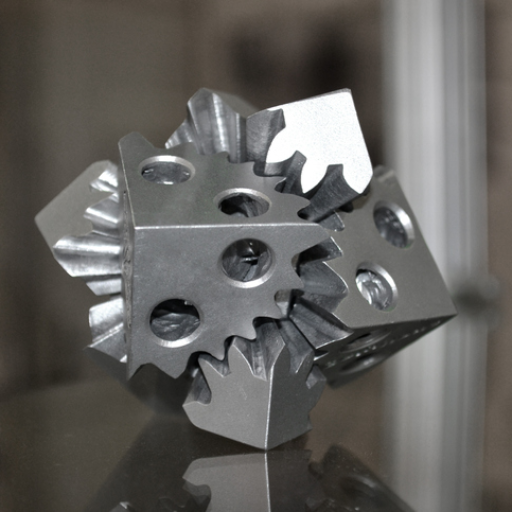
CNC machining is a key technology in the aerospace and automotive industries because of its precision and reliability. In the airplane making area, the implementation of the technology includes the manufacture of parts that are very critical, such as turbine blades, engine parts and even entire structures, thus ensuring that the materials used can endure the set limits and extreme conditions. Similarly, the automotive industry employs CNC machining for the manufacture of parts such as engine blocks, transmission cases, and intricate suspension parts. The combination of CNC machines with the choice of strong materials like titanium, aluminum, and alloy steels gives both industries the benefit of producing parts with a long life and high efficiency. It is also a verifying method for the prototypes of urgent requirement and mass production of pieces timely and economically, thus making it a necessity for the trial and establishment of new concepts and winner in the operations of these demanding sectors.
The use of 3D printing in the consumer product industry has turned things upside down by offering faster prototyping, customization, and reduced manufacturing costs as the main benefits. This innovation helps makers in various industries such as footwear, jewelry, eyeglasses, and even home décor to create intricate designs that would be nearly impossible to get through conventional processes. Moreover, 3D printing technology gives utmost flexibility to consumers who want to modify products according to their specific needs which eventually leads to more attractive and user-friendly final products.

Select the material type that is necessary for the project. On the other hand, 3D printing usually works with limited plastic types, resins and certain metals only, while CNC machining is capable of processing metals, plastics and additionally a great variety of materials.
Determine the production scale. CNC machining is perfect for production of medium to large volumes, while 3D printing is frequently more appropriate for small quantities or prototyping.
Analyze the complexity of the design. 3D printing is very much capable of producing highly detailed and complex shapes, on the contrary, CNC machining is less complicated and it takes precision in designs.
Go through the material cost, which includes machines, raw materials and production time. Even if 3D printing has slightly lower initial costs, CNC machining is more attractive in terms of cost per unit for larger run production.
Keep the project deadline in mind. 3D printing is usually the quickest method for producing prototypes, while CNC machining can take longer but still supply the strong components necessary for high-volume production.
When it comes to choosing between CNC machining and laser printing for the prototyping and production of end-use, the first thing that should be taken into account is the direct requirements of your project. Due to several advantages over other types of prototyping, 3D printing is generally the first option. The main reason for this is the possibility of obtaining different shapes and models very rapidly and with a minuscule quantity of material. This method allows very fast repetitions of the process which in turn makes it great for developing ideas and testing the functions. 3D printing has been becoming more and more widely accepted in the field of new product development and design thanks to the recent trend of decreasing costs and opening up of the technology.
However, CNC machining is the option that is more fortuitous for the production of parts subject to high strength, durability and precision requirements. It has the upper hand in handling lots of different materials including metals, thus it is the go-to technology for making components that are to be exposed to very high mechanical stress. Reports indicate that the aerospace and automotive industries are the biggest users of CNC machining when it comes to making the components that have to perform and be safe at the same time.
Either way, the decision between 3D printing and CNC machining is rather a difficult one as it has to be based on the application, the needed materials and the size of the production batch. The use of both technologies at the same time is also a very good option, with the 3D printing being the protagonist in the development of prototypes and the CNC machining in the production of the actual parts thus guaranteeing both inventive and practical use.
My first consideration always is the project specifics while making a selection between CNC machining and 3D printing. If I need precision tolerances, high-quality surface finish, or durable metal or plastic parts, then I would go for CNC machining. Mass production also would be the right option as it is reliable and efficient. On the other hand, if I want to create complex figures, support unorthodox designs or manufacture prototypes smaller and faster, then 3D printing would be my choice most of the time. It is also my experience that blending both processes, for example, employing 3D printing for initial prototypes and CNC machining for the final product, could yield the best compromise between time and quality. Ultimately, the project specifications will dictate the choice.
The Impact of 3D Printing Assumptions and CNC Machining
Overview of Sustainability Studies of CNC Machining and 3D Printing
Research on Integrated Manufacturing Technology of CNC Machine Tool and 3D Printing
The comparison between 3D printing and CNC machining highlights the revolutionary ideas behind additive and subtractive manufacturing processes, respectively, where 3D printing is done by building the parts layer by layer and CNC machining is done by cutting off the material from the block. 3D printing allows the production of very detailed shapes and models with minimal wastage of the material used, while CNC machining can yield metal parts of very high precision, perfect surface finish, and sometimes no additional processing required. Nevertheless, there will be various challenges relating to precision, speed, surface finish and cost depending on the type of printer and material chosen, be it plastic or metal 3D printing.
In the prototyping process, selecting 3D printing is a common scenario as a majority of 3D printers are able to perform fast iterations of the 3D model and produce parts that are 3D printed overnight. For small runs, if intricate geometries and fast prototyping are significant, then use 3D printing; on the other hand, if you need industrial-grade 3D accuracy, metal parts that are durable and tight tolerances which CNC often provides, then use CNC machining. The best of CNC or 3D printing depends on the material, part design, and production specification.
Plastic printing with the use of FDM 3D or resin technologies is perfect for rapid, low-cost prototypes, complicated designs, and parts that do not need robust mechanical properties. On the other hand, CNC machining of plastic parts is the go-to option whenever one needs to deal with accuracy, finishes, or operable parts such as gears and hoppers. CNC can manage engineering-grade plastics and deliver size repeatability, while 3D printing might necessitate extra finishing or use of stronger materials depending on the application.
The accuracy of 3D printing varies according to the used technology: SLA and professional-grade 3D printers are precise, while FDM 3D is not so. Generally, CNC milling is more accurate concerning dimensional tolerances because it operates cutting and controlling systems with great precision. In cases where 3D printing accuracy is vital, post-processing and calibration can help, but for tight tolerances, CNC milling typically suggests the most favorable outcome.
Usually, CNC machining involves fixtures, tooling, and programming, hence, the setup costs will be higher, especially for very small runs; however, per-part price drops as the volume increases. On the contrary, 3D printing may have lower initial setup—molds can be avoided with 3D printing—but per-part price may be more expensive for large quantities. For extremely high volumes, CNC machining or injection molding could be the cheaper option; for complex parts that aren’t produced in high volume, it’s a matter of whether 3D printing can deliver the needed characteristics of the material that will be used.
Understanding the differences between CNC machining and 3D printing empowers you to make informed decisions for your manufacturing projects.