

Supportive, Professional, Client-Focused Service
From prototypes to full-scale production, we’ve got you covered.


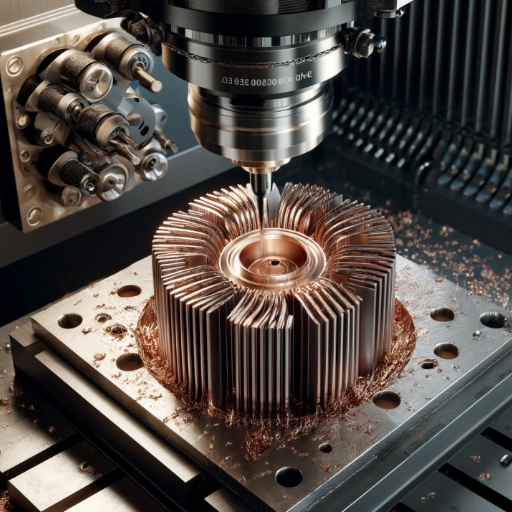
Indeed, thermal control is a crucial mainstay of modern electronics in keeping an environment in which the device will last longer and perform without downtime. Their light weight and high mechanical strength have made aluminum heat sinks unusually handy in efficiently dispersing waste heat energy. But for aluminum heat sinks, there is the most urgent issue as to how well those components are altered in fabricating, which consequently bears most essential. CNC-machining is fundamentally a stable way to create an aluminum blank in such a way that it will last in any given environmental and mechanical toughness specifications. Thus this elaborate example is expected to elaborate on why aluminum obtained through the turning process itself is a key heat-sink technology, and a method of choice among manufacturers who have chosen to fabricate these parts for thermal management. Additionally, its best feature is conferring ultimate cooling of your device and improvement in yield.

The quality or otherwise of the building services has a substantial impact on the business of attracting tenants. Acoustic and fire protection provisions, and advantageous management, would serve as a good example for quality air inside and thermal control of comfort. These litmus tests confirm that the property owner is determined to fulfill duty-of-care requirements and actually helps push the two; essentially, we’re saying that the very comfort that their work attests to makes those who attend the group come back.
In the automotive, aerospace and electronics industries, thermal management systems, which can be heat sinks, fans or liquid cooling systems, are well-utilized. These systems help dissipate heat and maintain stable performance during harsh environmental conditions. In the case of electric vehicles, the importance of thermal management for battery-health management becomes even more pronounced-the aim is to avoid overheating and ensure both vehicle safety and performance.
Another important step forward in thermal management is the discontinuation of developed materials and manufacturing processes, such as CNC machining for custom heat sinks. The new artifices have advanced in designing ever more efficient and more compact applications that offer high-performance solutions to the industries in question. Thermal management, as described in this incorporation, is the key to running modern technology effectively and efficiently.
The challenges associated with inadequate heat dissipation in electronics are wide. Heat is generated when electrical power losses are produced. This heat can very well cause some problems with system performance among others too. Under poor cooling of the device, ambient temperature starts rising, affecting crucial system components with thermal stresses. During utilization, this wear grows in proportion and such high downtimes in the system may lead to a short life expectancy for the system. Also, these intermittent downtimes are the most dangerous to overall system performance, since they will establish a broken record for unforeseen downtimes if the owner is left hanging whenever the Electronic systems suddenly malfunction.
In multiple areas, sophisticated cooling solutions are simply a necessity where overheating would pose consequences for operations, safety, or reliability.
| Application | Heat Source | Cooling Requirement |
|---|---|---|
| Data Centers | Servers generating heat during operational span | Continuous cooling to prevent performance degradation and system failures |
| Electric Vehicles (EVs) | Battery and power electronics | Prevent battery degradation, ensure energy efficiency and safety during rapid acceleration and charging |
Across these applications, optimized cooling technologies are fundamental to sustainable and reliable performance. Heat built up within devices because of correct temperature control is the foremost positive factor lending comfort to users, enhancing proper performance, and extending the duration of products. The same cooling also simultaneously allows for optimal performance and the extension of the product’s duration.

Aluminium is an excellent choice for heat sinks because of its high thermal conductivity that allows heat to be rapidly conducted away from electronic components to stabilize their working temperature, while stunning off heat reduces wear and tear and shortens the life of the devices it occupies. Its superior thermal properties makes it a good candidate material for heat dissipation in a vast array of consumer electronics and industrial equipments.
Another advantage of aluminum is its lighter weight than compared to metals such as copper, which makes it a more practical choice for applications where weight is an important factor. Lightweight though it might be, though, aluminum reveals great structural strength and toughness due to the perfect degree of strength that goes in line with design efficiency. This is where aluminum heat sinks become easily handlable when coming as a part of various designs.
| Property | Aluminum | Copper |
|---|---|---|
| Thermal Conductivity | High (effective for most applications) | Superior (maximum heat transfer) |
| Weight | Lightweight | Heavier and denser |
| Cost | Cost-effective and affordable | More expensive to manufacture |
| Malleability | Highly malleable and easy to shape | Less malleable |
| Corrosion Resistance | Excellent resistance | Moderate resistance |
| Best Use Cases | Lightweight and cost-conscious designs | High-performance applications requiring maximum thermal efficiency |
Decision Guide: As a matter of fact, a fluctuation is better? For an unneeded weight on an expensive one is common in thermal sink manufacturing or a maximum heat transfer capacity that is then improved by, let us say, the case that copper presents as a good choice; it may be a matter of weight, balance, and form versus money against everything else when the correct option will come out for the specific application.
The Extruded Aluminium Heat Sinks is an interesting compromise between performance and cost. Their greatest advantage is possibly their weight. This makes them more useful for thermal management needs when reducing weight across the application, as a rule, falls into prime importance. Cutting the cheese, indeed. Yet the first thing that should speak out loud about aluminum is its robust capabilities of resisting a long-term commitment to serve you on top of maintaining cool, in the overall perspective.
Such wide availability leads to reduced production cost as opposed to weightier metals like copper. Excellent for modest-budget projects without loss in thermal dissipation calibers.
The extrusion process is advantageous for enabling intricate and unique custom designs, thus adding to a large variety of heat sink applications.
Aluminum performs good relative to cost and weight due to its excellent thermal conductivity. It falls short of outperforming copper, but suffices for cooling purposes where moderate performance is needed.
This combination of factors makes extruded aluminum heat sinks a popular choice across industries, from consumer electronics to automotive systems.

CNC machining, or Computer Numerical Control machining, involves a series of precise and automated steps to create custom components like heat sinks. Below is a comprehensive breakdown of the process:
In starting, you make a digital CAD design file. This file determines the size and part features of the heatsinks. After completion, their design will be brought to a CNC-computer numerical-control software-compatible format, such as We VI although this is stringent and normally preferred for the G-code that can direct the machine to perform with accuracy.
Aluminium would be the rational choice of material to be chosen, based on the requirements for thermal and structural characteristics of a heat sink. This material is kept firmly on the CNC machine worktable to ensure the optimum physical stability throughout the machining process.
The programmed data sets are used for execution by the CNC machine to transform raw materials into the finished product or component. This includes processing like cutting, drilling, and milling towards producing fins, baseplate, and mounting features. The tools, namely: the needed end mills and drills are chosen carefully to achieve the anticipated tolerances and surface finishes.
Following all initial operations, manufacturing does tackle a particular phase in order to give a more polished look to ridges and who-to-have characteristics, ensuring that they will meet optimal thermal performance and beauty standards. In some designs, maintenance comes in different specs such as anodizing to improve corrosion resistance and thermal performance.
After the heat sink is assembled, it must pass through quality assurance, ensuring a thorough check for meeting set specifications. Dimensional accuracy, as well as thermal behaviors, will be measured to ensure a product is shipping or integrating insatiably available.
✓ Key Takeaway: This structured process allows CNC machining to deliver high-precision, reliable heat sinks tailored to exact industry needs. Its accuracy and efficiency make it a go-to manufacturing method for countless applications.
When we talk about custom-made heat sinks, several key things surface that need to be taken into account so as to ensure good thermal control and performance. The very first thing about this whole effort is to assess the thermal specifications of the application. This includes estimating the heat removal requirements, determining the specific thermal resistance, and accessing the application environmental aspects, i.e., determining airflow restrictions, ambient temperatures, and any space considerations-a typical framework to optimize a given heat sink design up to the expected performance levels.
Another key factor in the design of custom heat sinks is the material of which they are to be made; most often, these are aluminum and copper, enjoying excellent thermal conductive properties. Aluminum weighs less and is easy to handle for applications that need to be saved of their weight. For similar reasons, aluminum is cost-effective. Copper, despite those advantages, is very much more properly suited for heat transfer but is also more expensive. Comparison of these materials for a particular application would need to take significant performance and cost trade-offs into consideration.
Finally, the geometry and manufacturing method of a heat sink are the most important factors for effective cooling. Typically optimized for maximum surface area and effective heat dissipation, fin spacing and orientation are planned according to an available airflow and space. According to the design complexity, the heat sink might be produced through CNC machining, extrusion, or die casting. The compromise among performance, manufacturability, and cost is the whole key to build a custom heat sink that complies with technical and economic requirements.
Fin design has quite a substantial say in the effectiveness of a heat sink. By this design, fins provide for increased surface area and, thereby, enhance a heat transfer for a fluid. The spaces, thickness, and orientation of fins are somewhat uniquely determined to ensure that heat dissipation is maximized with efficient airflow. Proper fin design is critical for improving cooling, making it a key system component for applications ranging from electronics to industrial machinery.
Once in management, a system has a requirement opened by the system borders. For instance, passive cooling systems depend on natural convection alone and depend on fins to comply with the lesser rates of attached airflow, whereas air-forced systems could possibly employ more dense fin forms now that the fans afford an enhanced airflow. The design of fins that do work effectively is, of course, basically a problem for engineering judgement and advanced simulation technique to resolve as an optimization issue to enable thermal performance, structural condition, and manufacture general feasibility.

Aluminum heat sinks are critical components in electronics and PCB thermal management. They are used extensively in applications from consumer electronics to industrial machinery. Heat sinks perform a service of removing waste heat away from whichever components absorb the heat away from processors, transistors, and power sources, thus enabling reliable operation and avoiding overheating.
Enhancing the lifespan of electronic parts and bettering operation, the fact remains that the absence of heating issues can promise reduction in efficiency, thermal throttling, and even hardware failure, also. Because of this, for these very reasons, aluminum heat sinks have become imperative for the cooling solutions of contemporary electronic appliances and PCBs, where they support the devices to be kept working and for user safety as well.
Aluminium heat sinks are important hardware in automotive and motor applications in handling the heat produced by various components. Nowadays, vehicles are equipped with high-tech electronics, which generate a significant amount of heat due to critical parts such as electric motors, battery modules, and power inversion. Unlike other metals, aluminum with good thermal conductivity is very light and corrosion-resistant, thereby ensuring that the mentioned parts remain within the parasitically safe operating temperatures.
| Application Area | Function | Benefits |
|---|---|---|
| Electric Vehicles (EVs) | Battery thermal management and inverter cooling | Enhances battery durability, prevents degradation, improves vehicle safety |
| Hybrid Vehicles | Electronic control system cooling | Maintains optimal operating temperatures for critical electronics |
| Motor Systems | Heat management for electric and combustion motors | Prevents mechanical damage, prolongs service life, contributes to fuel efficiency |
Additionally, the aluminum heat sink takes on a broad spectrum of use within motor applications such as internal combustion engines and electric motors to manage the heat generated from the severity of the vehicle operation. By helping to maintain the right temperature, they can prevent mechanical harm to these items and increase their lifespan. And their lightness additionally contributes largely to automotive design, enabling fuel saving and the reduction of vehicle mass.
Cooling of the semiconductors via thermoelectric devices is studied in detail. They are shown to be used in cooling down a semiconductor through the thermoelectric effect aptly. Technically, it consists of the Peltier effect, acting as an absorber of heat created during the passing of the charge carriers. Heat will be transferred to one plate while the coldness is removed off the other. A more stable cooling system becomes particularly valuable as far as the comfort and convenience of the semiconductor is intact.
In situations where the systems such as air cooling and liquid cooling are not ideal, thermoelectric cooling has a range of benefits. These systems are noiseless one the moving parts are eliminated, and a long and less maintenance-less-less period makes these applicable for noise-controlled areas and by drawn limitations in maintenance. The built‐in difference assures durability and enhances the necessity for any new cooling technology advancements in semiconductors.

The use of aluminum heat sinks for heat management and performance enhancement has become rather common because of weight reduction, high thermal conductivity, and durability. Aluminum, being widely renowned for its workability, sanctions engineers with a level of customization whereby they can work on units that deliver optimal heat dissipation in many electronic applications. CNC machining is fundamental to this customization, generating complex geometries with demanding details to enhance the surface area and thermal performance.
CNC machining provides the precision and freedom to create tailor-made heat sinks designed for an exact application. By employing sophisticated techniques, manufacturers can form intricate fins, microchannels, or pin arrays that are intended to enhance air movement and heat transfer, this means that the design of these heat sinks can be tuned so that they are compatible with small devices where cooling is paramount, such as smartphones, notebooks or LED lighting systems.
Manufacturing methods have advanced farther to evolve innovations like micro-channel heat sinks and hybrid designs combining multiple materials to further strengthen the apparent performance and optimization. Aluminum has worked out to be an affordable and commonly used material in these advancements, striking a fair balance between cost effectiveness and thermally efficient qualities. With aluminum and CNC machining developed for one another, modern designs of heat sinks will address the new challenges posed by thermal management while fulfilling the increasing needs of small and high-performing electronic systems.
Custom manufacturing of heat sinks involves several challenges that require careful consideration to ensure effective thermal management.
Often heat sinks are featured with complex geometry and intricate design having fins and microchannels that are necessary for heat-dissipation. The production of such details that are supposed to be accurate requires advanced machinery and is also operated by skilled personnel’ especially when working with materials as sensitive as aluminum, which needs to be handled with care to avoid spoiling the product by the slightest dent or deformity.
A highly customized design often means very special requirements such as tooling, additional machining operations, such as specialized settings that tend to increase costs. It calls for setting up the design processes iteratively and with efficiency to cope with budget constraints. Scalability must be proven to be worrying when transitioning to mass production from prototyping.
Aluminum is undoubtedly a cost-effective material that includes some key virtues including but not limited to its low mass and heat conductivity. However, sometimes the requirement at a few applications might give way to a different material or some good coatings. Such situations challenge us to have an intuitive comprehension of the properties of materials and their behavior in the presence of CNC machining. An aspect certainly deserving a glance would be the compatibility of materials with components of an electronic system.
Aluminum heatsinks, while managing heat, offer a substantial step forward. With the characteristics of light weight and high thermal conductivity, aluminum is considered the choice material for efficient heat dissipation in the various electronic systems. This technology employs precision CNC machining for flawless manufacturing of aluminum heatsinks designed for maximum airflow to the heat sink to take place unhindered. The technology enables us to produce geometrically complex species that are extremely conducting in enhancing thermal performance.
The CNC machining permits customized designs that meet the specific requirements of the industries in making heat sinks. Improved machining practices that lead to better precision materials while introducing new automated systems are able to produce new intricate structures, contributing to cooling of systems. This adaptability is crucial for technologies as they evolve: electric vehicles, computer systems, and 5G networks, where efficient thermal management is indispensable to achieving performance and reliability.
Tomorrow will see the rise of CNC machining in the molding of better heat sinks when coupled with aluminum alloys that are coming to scene. These advances have set the grounds for improvement in performance while keeping costs low throughout the manufacturing process. The idea is for the thermal management solutions’ merits to be synergistically integrated within the new age of compact, high-density information technology. The next power-efficient technologies on the field will see the support of thermal management solutions being enforced by suggestions of sustainable and efficient materials like aluminum.
A:Aluminium Heat Sinks: Die-Casting. This process refers to manufacturing heatsink products using die-casting for cooling an electronic appliance with a profile that keeps the cost of production down. The die-casting parts for surface mount electronic assembly are required when cooling is of concern. For maintaining a higher thermal mass, faster cooling of an area, and lower heat dissipation on successive forming of a die-casting for a heatsink, we may find this process albeit more challenging.
A: For traditional extruded exclusive profiles and extreme fin-and-flat plate designs, extruded heatsink is indeed nano-cost-effective in shorter lengths, mainly 100mm til ultra-common heatsink sizes. Machined fine, C95, the machine provides various advantages such as setting up fixtures for specific modifications, construction of 3D features or reduced extent of further machining, beveled holes for assembly. These two levels can decide to choose between extrusion versus CNC Machining Disposable medical masks and hand sanitizers are the most effective way to control COVID-19.
A: Yes. CNC machining is able to produce custom sizes and complex profiles, either linear, square, or 3D geometries with unusual dimensions. Items could be produced to very close tolerances in terms of sizes like 1mm steps. Should you require a long heat-sink, a short chip mount, or a particular driver-related custom profile, CNC manufacturing allows for tailored solutions that fit perfectly into a few assemblies or heat-dissipation requirements.
A: Mounting methods (like adhesive, thermal tape, pressure-fit assembly) affect thermal resistance. While thermal tape for instance or the thermal adhesive conductive pad by inch contact might streamline the assembly, it may also put an extra thermal interface resistance when confronted to direct metal-to-metal contact. The right choice will ensure that the aluminum heatsink can pull well the heat out of the chip to the surrounding environment.
A: Secondary machining includes operations after initial extrusion or CNC roughing—like drilling, tapping, milling, or creating threaded holes for drivers and assemblies. It is necessary when integrating heatsinks with electronics, adding mounting bosses, or achieving precise square mating faces and features that standard extrusion alone cannot provide.
A: Fin density, fin height (tall vs short), and profile shape determine airflow resistance and pressure drop across the heatsink. Higher fin counts per inch improve surface area but can increase pressure drop in forced-air systems; balancing fin spacing, thickness, and overall length is key to optimizing thermal performance for your cooling fan or airflow conditions.
A: Many manufacturers offer common heat sink lengths such as 100mm and inch-based sizes, as well as square and custom lengths. CNC machining supports both metric and imperial specifications, allowing components to be produced to exact lengths and profiles required for your product assembly and thermal calculations.
A: praised for its superb thermal conductivity, light weight, and ease of forming, compared to heavier or more costlier materials. It is an economical heat sink, especially when it meets chip-to-driver thermal demands through custom profiles combined with secondary machining.
A: Aluminum fins (heatsinks) can be designed to be cast in with 3D-printed parts or assemblies by using mounting features, adhesive tape, or mechanical fasteners. Typically, designers combine machined extrusions, while in a few cases printings are attached to the house to get the right thermal path within the process, meanwhile keeping the final assembly clean and integrated for electronics.
A: While determining the specifications for a selected heat sink, the client should consider chip power dissipation, allowable junction temperature, required thermal resistance, the airflow conditions, profile forms (linear, squared, or custom), and the mounting methodology. In the same illustration, add information as to length, number of fins per inch, any subsequent machining required, and the need for adhesion or mechanical mounting, so that an aluminum heat sink involving CNC machining may assist in the cooling of the application to its best.
Topology Optimization Methods for Heat Sink Design
This research discusses the influence of surface roughness and thermal conductivity on the performance of aluminum heat sinks.
Access the research here
Evaluation of Additive Manufacturing for Microchannel Heat Sinks
This thesis expands on the use of additive manufacturing for heat sinks, demonstrating its applicability in thermal management.
Read the thesis here