

Supportive, Professional, Client-Focused Service
From prototypes to full-scale production, we’ve got you covered.


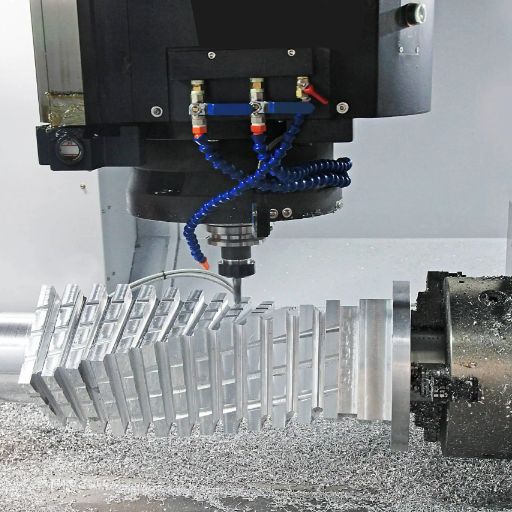
Revolutionizing precision engineering and manufacturing through advanced machining technology that enables intricate geometries, exceptional accuracy, and unparalleled surface finishes.
5-axis CNC machining represents a breakthrough in precision engineering and manufacturing of complex aluminum components. This advanced machining technology revolutionizes various industries by enabling the production of parts with intricate geometries, exceptional accuracy, and unsurpassed surface finishes, all executed in rapid automated mode. Understanding the potential of 5-axis CNC machining is critical for maintaining a competitive edge in today’s market.
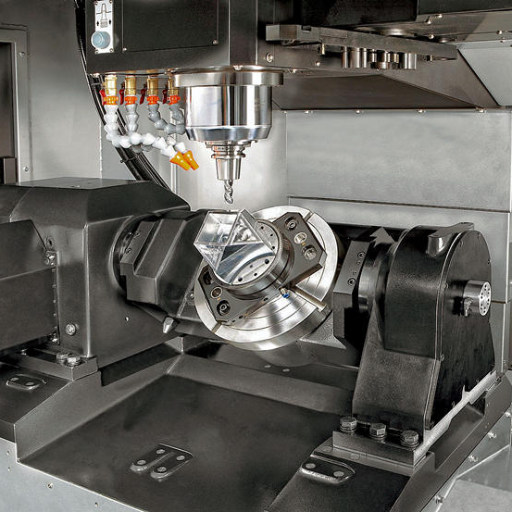
5-axis CNC machining enables simultaneous movement of the cutting tool and part along five axes. Beyond the three linear axes (X, Y, Z) on which 3-axis machines operate, 5-axis machines possess two additional rotational axes. These additional axes provide greater flexibility, accuracy, and throughput when handling intricate geometries.
The robustness of this technology is widely recognized across industries that require intricate design and precision, such as aerospace, automotive, and medical manufacturing, by reducing the need for multiple setups and significantly shortening manufacturing cycle time without sacrificing quality. 5-axis CNC machining increases overall production efficiency.
CNC (Computer Numerical Control) machining is a manufacturing method where software feeds instructions to machinery and tools. CNC machining can handle intricate processes, producing components that are both fast and precise. CNC machines offer versatile capabilities across a variety of materials—metal, plastic, wood, and composites—making them invaluable across numerous industries.
Key Insight: Computerizing this method reduces the risk of human error and improves process efficiency. Various types of CNC machines are used across industries, including milling machines and lathes, each suited to specific project requirements.
5-axis machining has transformed modern manufacturing by delivering unmatched precision, efficiency, and flexibility. A 5-axis machine can move instruments along five axes, enabling the creation of intricate geometric shapes with the fewest possible setups. This capability reduces production time and helps minimize errors caused by multiple repositionings of a workpiece.
Industries such as aerospace, automotive, and medical devices rely heavily on 5-axis machining to fabricate parts with tight tolerances and complex surfaces. Advancements in 5-axis CNC technologies and software are enabling manufacturers to achieve optimum customization and precision.
The demand for 5-axis machining is increasing exponentially as it plays a significant role in streamlining production processes while maintaining quality. Since it produces components with lower material waste, it addresses sustainability needs and gives companies a competitive edge in rapidly changing environments.
Numerous industries, including aerospace, automotive, and computer hardware, utilize complex aluminum components precisely because they are lightweight, durable, and corrosion-resistant. Engineering precision and material durability are essential, making aluminum ideal for aircraft parts, automotive components, and electronic device housings. Manufacturing these components requires sophisticated machinery, such as 5-axis CNC machines, to produce complex geometric shapes and highly accurate dimensions.
Aluminum can be easily machined while maintaining functional surface quality without compromising the material’s internal properties. However, complex aluminum components present several manufacturing challenges, including heat management, achieving even stress distribution, and limiting cutting tool wear.
Traditional machining has inherent limitations when addressing these challenges. Computer-aided design (CAD) and simulations help eliminate many problems during machining, ensuring that components are produced rationally and effectively in accordance with industry specifications.
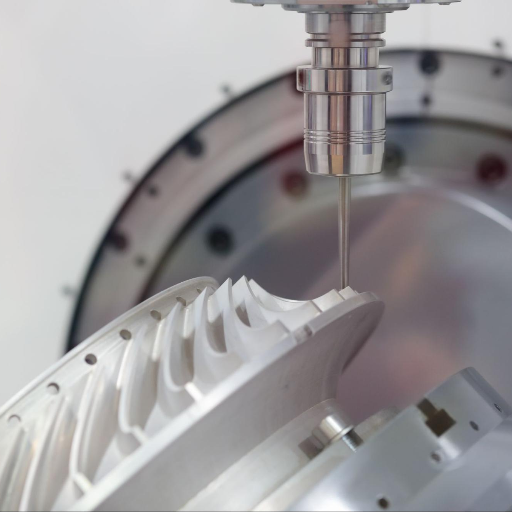
Sophisticated cuts with assurance of precision to attain desired dimensions and tolerance requirements.
Single setup for complex parts diminishes time wasted for alignment and model development, enhancing productivity.
Constant tool position shifts lead to better surface finishes, reducing need for additional surface treatments.
Efficient machining for aluminum, titanium, alloys, composites, and advanced materials in specialized sectors.
Ability to manufacture intricate and detailed features impossible with conventional machining methods.
Specialized control maximizes efficiency and precision, avoiding machine binding while enhancing work quality.
Manufacturers can maximize efficiency and precision through specialized 5-axis CNC machining. Complete mechanization, combined with sophisticated computerized numerically controlled (CNC) equipment, helps prevent machine binding and improve product quality. High-tech industries such as aerospace and healthcare now rely on 5-axis machining for its ability to achieve tight tolerances and efficiently deliver high-quality components with minimal deviation.
Quality Impact: This level of accuracy improves product performance and reduces scrap, enhancing cost-effectiveness and sustainability of manufacturing operations.
Machines with simultaneous five-axis movement make manufacturing more effective and less time-consuming. Multiple setups are no longer necessary, as complex orientations can be performed in a single setup. This process reduces cycle time by reducing setup and tool repositioning, while minimizing the risk of errors.
The enhanced accuracy of 5-axis technology increases safe cutting speeds and optimizes tool paths, thereby improving productivity. This efficiency enables industries to meet delivery deadlines and produce more in less time without sacrificing standards.
5-axis CNC machining stands out for its exceptional capability to realize innovative design ideas. Whereas traditional 3-axis machining permits movement of the cutting tool on three axes only, 5-axis machining allows simultaneous movement on five axes. This enables the machining of complex contours, undercuts, and intricate details with minimal difficulty—particularly valuable in aerospace, automotive, and medical industries where components have complex structures.
5-axis machining minimizes alignment mistakes and multiple setup costs, maintaining high dimensional accuracy throughout the process. Innovative software solutions improve production rates and enable projects that were previously unfeasible.
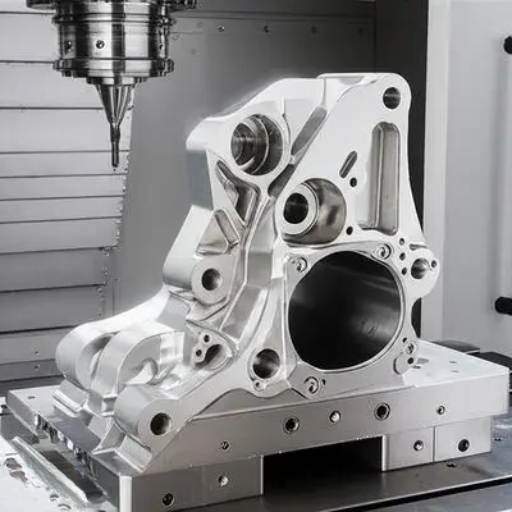
The aerospace industry relies heavily on 5-axis machining to manufacture lightweight aluminum parts required for highly intricate turbine blades, structural components, and airframe sections—all while ensuring demanding precision and strength requirements.
5-axis CNC machining plays a critical role in automotive manufacturing, particularly in producing complex aluminum components such as engine blocks, suspension components, and structural elements.
5-axis CNC machining is critical in medical equipment manufacturing due to its ability to produce precise, complex aluminum components. These machines handle the most complicated parts, including surgical instruments, implants, and diagnostic equipment, where extreme accuracy and biocompatibility are mandatory.
5-axis CNC processes define precise aluminum parts for robotics, automation systems, and the energy sector—including wind turbine blades, power generation equipment, and hydraulic energy systems.
With 5-axis processing, a cutting tool or workpiece moves simultaneously along five axes, which includes the standard linear X (horizontal), Y (transverse), and Z (vertical) axes plus two rotational axes, represented by A and B. By incorporating Computer Numerical Control (CNC) systems, this technology easily achieves high precision, power, and the possibility of cutting at acute angles, all with a single positioning.
Features such as high-speed cutting, closed-loop feedback, and advanced software integrations maintain consistent quality and efficient production experiences throughout the manufacturing process.
Advanced machine systems can move all five axes simultaneously, enabling the manufacture of complex shapes with detailed finishes and intricate designs. Allowing the axes to move simultaneously eliminates the need to constantly readjust when making angular cuts. The precise movement adjusts the tooltip position to minimize material waste in the shortest time. This technology is highly prized by industries demanding pinpoint accuracy and efficiency.
Advanced tools and techniques are crucial to modern machining, delivering unprecedented precision and efficiency. Cutting materials are often carbide or ceramic, as they are highly resistant to high temperatures and abrasive wear.
Understanding the differences between traditional 3-axis and advanced 5-axis machining is essential for making informed manufacturing decisions. The comparison below highlights the key distinctions:
| Parameter | 3-Axis Machining | 5-Axis Machining |
|---|---|---|
| Axes | 3 | 5 |
| Movement Type | Linear only | Linear & Rotational |
| Precision Level | Moderate | High |
| Setup Time | Longer | Shorter |
| Efficiency | Lower | Higher |
| Flexibility | Limited | Versatile |
| Tool Access | Restricted | Improved |
| Ideal Use Case | Simple tasks | Complex tasks |
Bottom Line: 5-axis machining offers greater efficiency, precision, and flexibility than traditional 3-axis machining, making it the superior choice for complex component manufacturing.
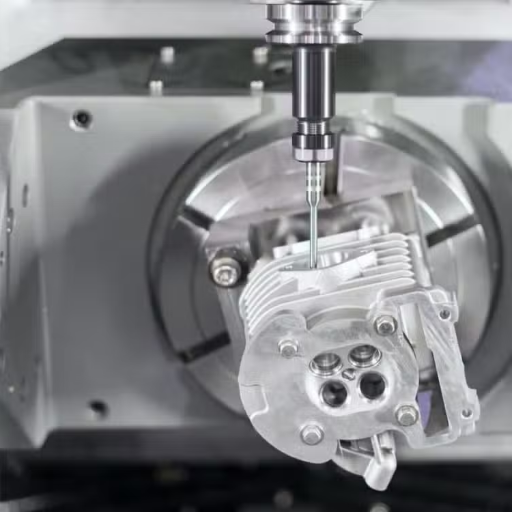
Evaluating your project requirements is essential to selecting the right CNC machining services. For basic tasks, 3-axis machining may be sufficient due to its simplicity and cost-effectiveness. However, if complex designs with tighter tolerances and higher efficiency are required, 5-axis machining is the optimal choice.
Consider specifics like materials, design complexity, manufacturing quantities, and required precision to determine the most appropriate solution.
Verify the machinist can achieve high tolerance levels required for precise manufacture of complex shapes without reducing precision.
Check the contractor’s experience with hard-to-machine materials or special metals if required by your application.
Ensure they have modern CNC machines and can work on complex patterns with high degrees of precision.
Review their quality management procedures, inspection reports, certifications, and use of coordinate measuring machines (CMMs).
Confirm their ability to handle the required quantity while maintaining highest standards for every part.
Assess their capability for prototyping and making design modifications as required.
Surface finish and quality control in manufacturing are equally important because they contribute to the overall product’s functionality, longevity, and aesthetics. Achieving an optimal surface finish ensures components perform as intended, reducing wear and tear and improving fit during assembly. In sectors such as aerospace, medical equipment, and automotive, the integrity of a component is directly linked to the precision of its surface finish.
Quality control represents a significant asset, preventing excess production costs. With adequate quality assurance procedures in place, manufacturers can detect defects much earlier, reducing expensive recalls. Advanced approaches for tightly controlled standards—such as automated video recognition, in-process control systems, and more—are gaining traction.
Quality Assurance: By ensuring surface texture is produced in parallel with quality assurance, manufacturers produce goods that meet both performance requirements and customer satisfaction, increasing brand recognition in crowded marketplaces.
5-axis CNC machining improves tolerance by enabling simultaneous movement across multiple axes, significantly reducing bed setup and repositioning issues. High-precision 5-axis CNC machines achieve exceptional accuracy through advanced process control and rigid workholding, enabling the production of complex geometries with tight tolerances in aluminum alloys such as 6061-T6.
Choosing advanced 5-axis CNC milling machines enables manufacturers to machine complex shapes in a single setup, decreasing cumulative errors and tool marks. This capability enables a more efficient transition from prototype to production, producing precision parts with consistent surface finish and dimensional accuracy compared with 3-axis CNC machining and lathes alone.
Manufacturing with 3-axis CNC machine tools often requires multiple setups and orientations for complex parts, which increases cycle times and the risk of errors. Conversely, 5-axis CNC machining—especially advanced versions—machines parts in a single setup with synchronized movement across all axes, reducing handling, improving dimensional accuracy, and enabling efficient machining of complex parts with very tight tolerances.
CNC machining centers with 5-axis capabilities offer significant capability to handle complex geometries with minimal fixturing, optimize toolpaths for improved surface finish, and minimize tool marks. These machines provide a strong foundation for accurate component machining, making them ideal for custom machining, production runs requiring high-precision parts, and maintaining consistency from prototype to production.
5-axis CNC machining can be remarkably cost-effective for large-volume prototype-to-production runs by reducing initial setup times. With 5-axis workflows, parts often run in a single operation rather than requiring multiple staging setups. Although machines carry higher capital costs, their shorter cycle times, reduced setup requirements, higher yield, and ability to handle complex geometries with tight tolerances often lower total costs compared with 3-axis CNC machining that requires multiple-stage processes or secondary operations.
5-axis CNC machining represents the pinnacle of modern manufacturing technology, offering unparalleled precision, efficiency, and versatility for complex aluminum components. As industries continue to demand higher quality standards and more intricate designs, the adoption of 5-axis machining technology becomes not just advantageous but essential for maintaining competitive advantage.
By carefully selecting experienced CNC machining service providers and leveraging the advanced capabilities of 5-axis technology, manufacturers can achieve superior results while optimizing production costs and timelines. The future of precision engineering lies in embracing these advanced manufacturing solutions.
Modeling and Optimization of Multi-Axis Machining Process
Five Axis Machining of Stamping Dies
The Application of High-Speed CNC Machining to Prototype Production