

Supportive, Professional, Client-Focused Service
From prototypes to full-scale production, we’ve got you covered.


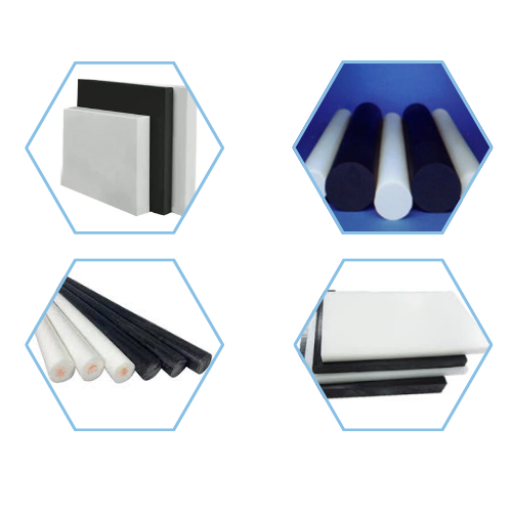
The selection of material is crucial for strong performance, durability, and cost-effectiveness in the design of engineering plastics. POM, Delrin, and Acetal emerge as seeking particular titles—far too often mentioned in common discourse as if they are one and the same, and yet, they have particular characterization to their own. It is imperative, therefore, that we understand these differences for particular purposes, whether designing precision gears, forming components for high-performance machines, or selecting materials for day-to-day operations. The focus here is upon the major distinctions, applications, and benefits among the POM, Delrin, and Acetal brands so that solid information on which to make an informed decision is provided. More should be learned about how these materials are distinguished in changing ways.
Polyoxymethylene (POM) falls under variants made of the engineering class of materials. The plastics are particularly set for the properties appearing tough yet sliding on its side. Of these, the POM variant is the generic version; Delrin is a well-known trademark for one Acetalabetic type made by DuPont. Cases where they might be used include precision engineering scenarios because they are stable enough against wear and tear in dimension and offer resistant environmental usage. In nature, further differences pop up regarding the variant used: that some are homopolymers, such as Delrin, this material having both homopolymer and copolymer forms, hence certain properties for differentiated performances in different applications that may involve heat stability or withstanding moisture exposure. Thus, from a choice point of view, the precise riposte depended on the needs of a singular project, perhaps basically involving locations where mechanical strength should be specific to one or more environmental distinctions.
POM, also known as Polyoxymethylene, is a high-performing thermoplastic recommended for use for precision engineering parts demanding high stiffness, low friction, and high dimensional stability. Other names it has gone by are acetal, polyacetal, and polyformaldehyde. POM proves to be a valuable addition with its resistance to wear and extreme environmental conditions, thereby making it ideal for use in the automotive, electronics, consumer goods, and industrial sectors.
Its structure also provides a high degree of mechanical strength, excellent fatigue resistance, and very good resistance to moisture and chemicals. The applications will be inclusive of gears, bushings, zippers, and valve bodies made out of POM. The homopolymer version (ne Delrin) and copolymer versions of the POM can be customized to fit specific performance requirements in harsh environments.
Typically recognized for excellent flexibility and durability across numerous industrial and consumer applications, Delrin, which is actually a trade name for polyoxymethylene (POM) homopolymer resin, has the advantage of being able to offer premium dimensional stability, high stiffening values, and extremely low coefficient of friction, facilitating the manufacture of super-precise components in repeated wear applications.
The advanced production approaches and compositions within Delrin also allow it to withstand harsh environments of extreme temperature, chemicals, and mechanical stress. Delrin is thus used across industries like automotive, electronics, healthcare, and aerospace, wherein it effectively substitutes metal elements reducing weight and preserving properties of strength and reliability. This incredible material combines superior performance with process efficiency, making it the prime choice for demanding engineering projects.
Acetal is a highly accurate thermoplastic, that is high performance and has exceptional properties of stiffness, strength, and low friction, widely utilized in areas requiring precision engineering. Such properties facilitate for dimensional stabilization and resistance to wear. Acetal’s salient features include material performance over a wide temperature range, physical resistance to chemicals and moisture, and great machinability.
The benefits over metals are greatly appreciable in terms of reducing waste, and improving corrosion resistance, yet maintaining near-same mechanical strength. Depending upon where standard processes must ensure reliability and durability, industries that use acetal commonly include automotive, aerospace, electronics, and healthcare.
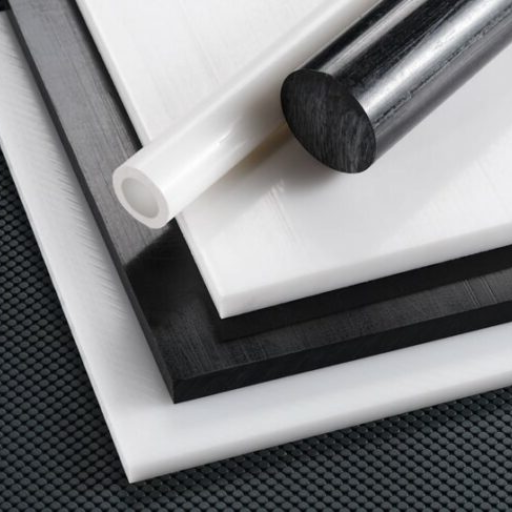
POM, Delrin, and Acetal exhibit excellent tensile strength, stiffness, low friction, and high wear resistance.
| Property | POM | Delrin | Acetal |
|---|---|---|---|
| Tensile Str. | High | Very High | High |
| Stiffness | Moderate | High | Moderate |
| Friction | Low | Very Low | Low |
| Wear Res. | High | Very High | High |
| Temp. Limit | ~180°F | ~185°F | ~180°F |
| Moisture Res. | Good | Excellent | Good |
| Machinability | Excellent | Excellent | Very Good |
Being generally called acetal, while subsets of it have yet higher thermal stability, polyoxymethylene (POM) shows then a relatively good heat-resistant performance, hence POM might perform well in moderate-heat settings. POM is capable of performing at around 180°F, which is also its maximum operating limit. Beyond this, the polymer cracks, becomes more brittle, and is no longer able to perform efficiently.
Within the range of acetal materials, some of these specimens show slightly better thermal stability. Very particular formulations are able to hold up relatively well to heat, to operational limits of about 185°F. The slight improvement may be quite important for applications that keep the materials exposed continuously to heat, in some applications. It is only fair to say what this means to these materials’ resistance possibilities. Aim then to work within the limits if possible, and not overheat to the extent that it might induce deformation.
Important in determining the thermal stability of POM-based materials is their ability to resist dimensional changes or shrinkage due to temperature instabilities. Acetal polymers, for instance, will not experience any warping against an increased possibility of an extra-structural collapse, as long as the temperature stays below the limit they are currently working under. Hence, selecting material more rigorously engineered for heat may be necessary when material conditions lead to higher heat demand, or by ensuring cooling systems are in place somewhere between the acetal parts. Having data sheets or making contact with manufacturers consents in suggesting reliable best-suit results under a certain specific thermal background.
Whereas Polyoxymethylene (POM), also known as Delrin and Acetal, are highly resilient to a wide spectrum of chemicals applications that need to withstand highly corrosive and harsh environments. Being resistant to strong solvents, fuels, and alkalis, the confirmed integrity of the materials is retained, even when exposed to many chemical agents in low concentration. There are reports of degradation and stress cracking of the material due to its relative weakness to strong acids, oxidizing agents, and some halogen compounds with time.
The degradation of acetal-based polymers is greatly affected by the change in environmental conditions such as UV exposure and humidity. POM can degrade upon prolonged exposure to ultraviolet light unless stabilized by additives that have UV resistance. Cases where an outdoor application is needed, it is imperative that a protective film be created or special grades of material specifically designed to resist chemical deterioration due to UV have to be selected for use.
On the other hand, POM has little moisture absorption, which helps maintain dimensional stability in varying degrees of humidity. This means POM is a perfect choice for applications that require consistent mechanical performance and precision. All information should be sourced from the latest material data sheets or the directives of the manufacturer so as to confirm suitability for various environments and industrial chemical exposures.
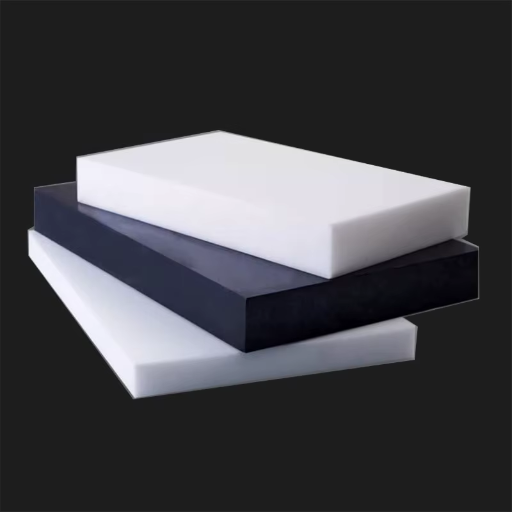
POM-C (copolymer) offers better chemical resistance and lower centerline porosity, while POM-H (homopolymer) provides superior mechanical strength, stiffness, and wear resistance.
| Key Point | POM-C | POM-H |
|---|---|---|
| Chemistry | Copolymer | Homopolymer |
| Strength | Moderate | High |
| Stiffness | Good | Superior |
| Wear Resist. | Good | Excellent |
| Chemical Res. | High | Moderate |
| Porosity | Low | Higher |
| Dimen. Stable | Excellent | Good |
| Moist. Resist. | Great | High |
Acetal copolymer is widely implemented in different applications with the necessity of dimensional stability and chemical resistance at the same time. The two chief types of acetal copolymer may be observed as the following:
Both standard and glass fiber-reinforced types of acetal copolymer also come with excellent abrasive protection and are proven resistant in tough environments. The end user shall select the proper type depending on the performance requirements applicable to the project.
Delrin is often used in making gear wheels because of its very high strength, wear resistance and low coefficient of friction.
It serves perfectly as a sliding bearing since it is low on friction and has very good dimensional stability.
This could be an ideal material for electric insulators, making it acceptable with high electrical strength.
Delrin’s functions, tightly controlled in the production of accurate automotive parts like fuel supply components and seat belt mechanisms.
Its strength and endurance mean it is ideal for use with fasteners and, in general, with all types of hardware reached out for heavy loads.
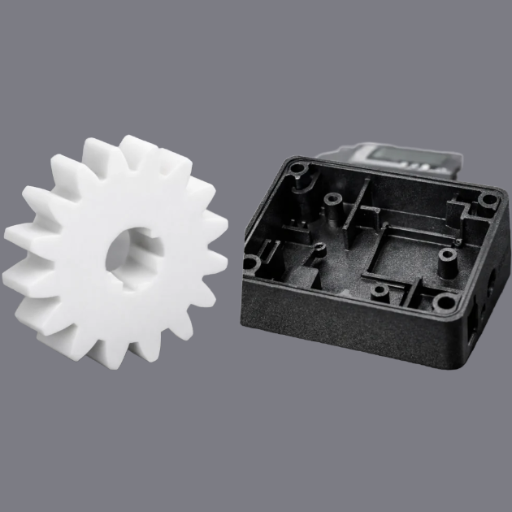
For POM machining, the materials of which comprise of Delrin and Acetal, utmost attention and precision are essential for best results. The most recent known facts and industry experiences can be summarized in the below instruction:
Tool Selection
Sharp high-speed steel or carbide tools are recommended to minimize heat generation during machining and keep clean with minimal adherence to the material. Dull tools can lead to rough finishes and excessive deformation of the material.
Cutting Speeds and Feeds
Operate at medium to high cutting speeds with the lowest possible feed rates to prevent friction from deforming the material or affecting tolerances.
Coolant Usage
Adequate coolant under high pressure such as water-soluble oil is suggested for effective heat dissipation. POM material is highly heat sensitive, and inadequate cooling can lead to plastic deformation.
Clamping and Fixturing
Soft jaws or clamps specially designed for clamping the material should be utilized adhering to the further guideline. Engage the tools using the minimal possible pressure while ensuring this pressurization is not excessive as POM tends to creep under stress.
Chip Evacuation
Machining POM produces long and stringy chips, and removing chips is quite essential to maintain build quality. Tool clogging can be avoided by compressed air jets or the correct type of chip evacuation.
Annealing for Stress Relief
If your part has stringent tolerances or a complex geometry, it is best to anneal raw stock before machining to relieve stresses and obtain dimensional stability.
Tolerance and Shrinkage
While designing, allow for POM’s thermal coefficients, namely, for thermal expansion of POM as compared to shrinkage post-machining. To avoid design failures in the final part, this resistance ought to be allowed.
By incorporating these best practices, POM manufacturers can build high-quality products that will meet even the most exacting of application demands, eliminating waste because of machining difficulties.
The development of desired surface finish on POM, Delrin, and Acetal depends on the tooling, feeds, and cutting speed. Excellent machinability-dependent and not excellent if the wrong application results in tool marks or other finishes. Sharp cutting tools minimize the edge producing a cleaner cut with no surface problems due to friction.
Almost always, feed rate and cutting speed are the most potent tools in shaping any features that may develop. Lower feed rates and increased cutting speeds are generally better for creating smoother finishes. If cooling arrangements are in place for machining processes, they will help to dissipate excessive buildup of heat, which can avoid smearing of material, cooled or thus end up in the finish.
Lastly, to acquire a super refined surface, buffing or gentle sanding in post-manufacturing is used, etc. This coating process enriches the aesthetics and functional qualities such as alleviating friction among moving components. By controlling machining variables accordingly and stress that representatives use the correct variability of resolution for POM stamps, manufacturers can ensure high-resolution surfaces in POM parts.
Polyoxymethylene (POM) is a unique plastic material to machine and the machining processes are tailored by these properties. High strength, stiffness, and dimensional stability have made POM a superb material for making high-quality precision parts. Minimized coefficient of friction and wear resistance make it the perfect choice for components integrated into critical applications such as bearings, gears, pulleys, and bushings.
When machining, they display an infinite degree of toughness providing clean machining without causing chipping, but one has to be careful and not create an excess heat build-up since it can deform the materials. Its high crystalline content makes it suitable for rapid machining, and even then, perfectly honed cutting tools and accurately selected feed rates will influence surface quality as well as its dimensional accuracy, so, application of the coolant is needed in order to prevent overheating.
Overall, the chemical properties of POM materials, alongside low water absorption and high chemical resistance, positively influence the behavior of this polymer material during fabrication. Nevertheless, the trade-off between improving performance and working efficiency may require specific process optimizations consistently.
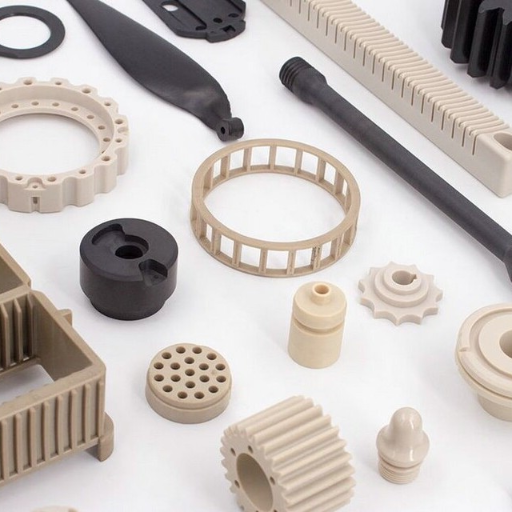
POM, Delrin, and Acetal are widely used in manufacturing because of their fabulous mechanical properties and long-lasting life span. Common applications include:
Automotive Components — Used in gears, bushings, door locks, and fuel system parts as they possess high strength and good wear resistance.
Electronics — Ideal for insulating parts and connectors because of their stability and low moisture absorption.
Consumer Goods — Found in zippers, fasteners, and handles where durability and smooth operation are required.
Medical Devices — Essential in surgical instruments and orthopedic components for biocompatibility and ease of sterilization.
Industrial Machinery — Needed in conveyor belts, sprockets, and other precision parts for wear resistance and good dimensional stability.
The unique properties of the POM, Delrin, Acetal make it a vital material in the market for various industries.
POM (Polyoxymethylene) plastics are quite sought after in engineering applications all over the industrial gamut due to their basic necessities; high strength, stiffness, and excellent dimensional stability. Known by brand names such as Delrin, they show good resistance toward wearing out, low friction, and have an excellent machinability, making them a suitable option for precision engineering.
POM offers its best in creating fasteners, gears, bearings, and bushes where biggest durability and smooth hinge need to be ensured. Conveyor units and automobiles then breakdown into their useful domain of application, where the question is whether resistance to chemicals and performance under mechanical stress can be expected. In electronics too, POMs make a great name for themselves in that the parts to be provided are maintained while the friction is minimized. A perfect combination of the above properties sets engineering designs that are big on life, reliability, and cost effectiveness.
Polyoxymethylene (Acetal Resins) – Provides a detailed overview of polyoxymethylene (POM), including its commercialization as Delrin and research on POM blends.
Polyacetals – Explores the properties and applications of acetal (polyoxymethylene) resins, including electrical characteristics of Delrin.
Polyacetals (Google Books) – Discusses the history and production of POM, including its registration as Delrin by DuPont.
Studies on Properties of Polyolefins: Polypropylene Copolymer (PPcp) Blends with Polyoxymethylenes (POM) – Examines the blending of POM (Delrin) with other materials, comparing properties like flexibility and impact strength.
Two of the best-known polyacetals are nylon and acetal homopolymer (DuPont’s Delrin®). The foremost distinguished features of Delrin are related to the homopolymer: it has a higher degree of crystallinity and, therefore, enhanced mechanical properties; increased stiffness and strength, fatigue resistance are high; copolymer has the best resistance to chemical attack incident with respect to thermal degradation. So, when one opts between a medium acetate and Delrin for a given project, the considerations are those more important making the decision, such as the operating temperatures, wear, and exposure to chemical attack.
When more serious applications are involved, either Delrin or acetal is considered a better material. Nonetheless, moisture absorption, for instance, could influence the service life of Delrin during use but does not cause it to decrystallize, which can in turn change its properties relative to nylon on its relationship to humidity present in the design. Stiffness and creep resistance both tend to degrade as service time increases for Delrin due to chain scission resulting in the relaxation of stress while providing that increased toughness; moisture absorption, on the other hand, does not alter the stiffness to best suit absolute bearing likes in metal as well as specific housing sleeves for bushings with a required tolerance fit. The viscosity of a nylon ethylene polymer compared to Delrin is a big factor as Delrin has just high enough to process (viscosity increase).
Another name for Delrin material, envisioned as a homopolymer acetal by DuPont, is durability. It is characterized by and designed for high strength and rigidity, and the low coefficient of friction can claim priority here. On top of flexibility towards design, these resins have been crucial in attaining properties against wear and fatigue and allowing tighter dimensions. Its very hydraulic quality also liberates this elastic property exposure. For gear-like installations, bearings, and sliding components, this idea might just suit. This combined potential of acetal design allows us to have machining and molding facilities for Delrin machines, which routinely have the benefits from stringent production processes backed by a first-rate fiber-reinforced plastic.
Though some such as those who mold or machine may argue that Delrin itself or other grades of acetal machines and mold well, the homopolymer type is chosen for CNC machining as a preferential material because of its higher crystallinity and a uniform microstructure leading to fine surface finish and deep tolerances. For injection molding though, acetal homopolymer and acetal copolymer are also used but some easy problems from mold line cracking can be seen with copolymer grades. The decision on which substrate to escalate to does depend on several factors, including part geometry, required mechanical properties, and cost factors. Delrin has better mechanical properties for demanding machined components, whereas copolymer acetal remains one of the best materials for the unknown and complex exteriors of molded parts.
Notions on Delrin include high tensile strength and flexural modulus, low moisture absorption, excellent dimensional stability, and low friction. This material can be a great option for things like anti-wear and long life connections as Delrin has good resistance to wear and superior fatigue resistance when compared to some other plastics because of the thoroughly crystalline homopolymeric acetal nature. Delrin is also resistant to many fuels, solvents, and hydrocarbons — although specific chemical compatibility should be verified. It is these outstanding properties that have made the solid Delrin plastic a prevalent material for application in parts and components in which precision and stability should be a constant for the long term.
Other acetal grades, other nylons and a few engineering plastics like UHMW and PTFE being low friction applications are some kind of materials at parity with Delrin. If there is no sliding-oriented application, PTFE provides a better choice between low friction and chemical resistance; however, PTFE is soft and less rigid than Delrin. Nylon provides better impact strength only if considering specific cases. Compare properties and applications of these materials when selecting material for your project — for example, go for Delrin over strength and stiffness coupled with precise dimensions, copolymer acetal over chemical resistance or moulding behavior, and nylons or PTFE where each has unparalleled qualities.