

Supportive, Professional, Client-Focused Service
From prototypes to full-scale production, we’ve got you covered.



When it comes to manufacturing precision stainless components, nothing is more important than precision and regularity. Be it aerospace components, medical tools, or industrial equipment, the tiniest change might affect the performance, safety, or reliability of the system. The Coordinate Measuring Machine (CMM) inspection, therefore, assumes prime importance here. This controlled and precise inspection of CMM ensures that Stainless components conform to very fine tolerances and accompanying quality standards. In this article, we shall discuss the significance of CMM inspection in the industry, procedure working, and why it is essential to sustain the quality of high-performance stainless components. It is now upon you to wait for us to identify some essential ideas and opportunities that are a result of this practice.
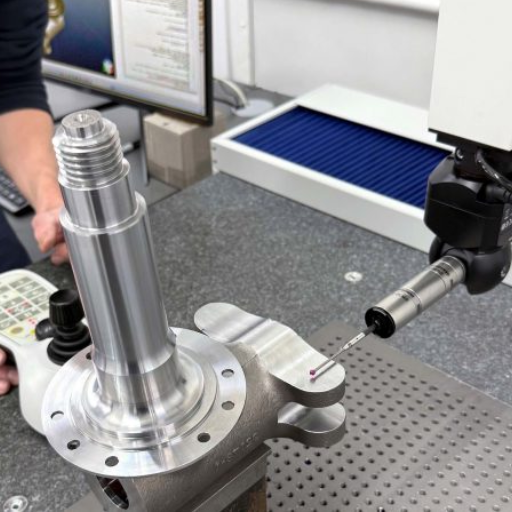
CMM inspection or Coordinate Measuring Machine inspection is a highly accurate means for meticulous measurement of the physical dimensions of an object. It is in use when it is crucial to envisage that proper parts are meeting design specifications and apparent tolerances in high-performance and reliability critical industries. By using a probe to feel certain points on the surface of a part, the CMM collects data on its geometry, making sure that all measurements conform to the set standards.
The operations work by employing sophisticated sensors as well as computer functions to measure coordinates in three dimensions. These coordinates are contrasted against measurements from a pre-defined engineering drawing or a CAD model to reveal deviations. CMM inspection can be a tool of choice for the investigation of truth whenever extreme accuracy matters, since it can measure really intricate shapes and geometric features with exceptional precision that could not be achieved by even standard measuring techniques.
This method is indispensable in aerospace, automotive, and medical manufacturing industries, where there is very little room for error in components. CMM inspection guarantees that there shall exist a consistent and accurate measurement process. That enables the employee to keep costs down and reduce any waste while maintaining the necessary quality levels for critical parts. Thus, with improved product performance and safety, it directly correlates with greater product quality.
Putting accurate measurements in place can verify quality, performance, and safety to give reliable results for most products. Precise measurements help producers to keep up the desired standards in meeting the requirements. All these things are further vital in industries where even a fraction of a geometric flaw can lead to a consequence, for example, in aerospace and medical manufacturing. By coming up with the right set of (measurement instruments) for components and parts, accurate measurements go a long way toward providing assurance that the parts or components will fit and work as intended.
Aspects related to efficiency performed by quality control such as in costs are reduced due to wasted material and rework since an exact measurement eliminates the possibility of defects in a better proportion and saves resources. Minimized waste helps in producing sub-favorable parts before they are produced. Also, minimizing waste streamlines the production process because there is little downtime in which one is assessing and adjusting errors for those parts and equipment.
Measurement, by itself, acts as a check on the safety and satisfaction of the consumer. Parts that are truly in spec are less likely to fail, thus elevating the consistency of the final product. Hence, in crucial circumstances like medical instruments or aerospace field applications, it is very important that neither safety nor trust is sacrificed in the final product due to any slipshodness in measurement. The other message brought forth by usage of precision form of measurement is the transmission of high-quality and proven solutions.
Precision stainless parts are specific components engineered for high standards of accuracy and durability. These parts are used extensively in industries that essentially demand huge reliability; for example, they find a place in such industries as medical, aerospace, automotive, and energy, where accurate performance in detrimental conditions is essential.
The manufacturing of precision stainless parts utilizes some of the advanced techniques like CNC machining, laser cutting, and precision casting. They ensure tightab tolerances and maintain the inherent resistance of materials to corrosion, wear, and extreme temperatures. Such juxtaposition of the properties in engineering precision and material attributes within the final components is a fantastic combination that sails through many difficult applications with grace.
Precision stainless components provide higher dependability in the finalization of a product, leading to lower maintenance needs and reduced risks of failures. These results contribute to the conspicuous advantage of assurance, productive utility, life span extension, and are hence highly advisable for industries where performance and dependability are most desired.
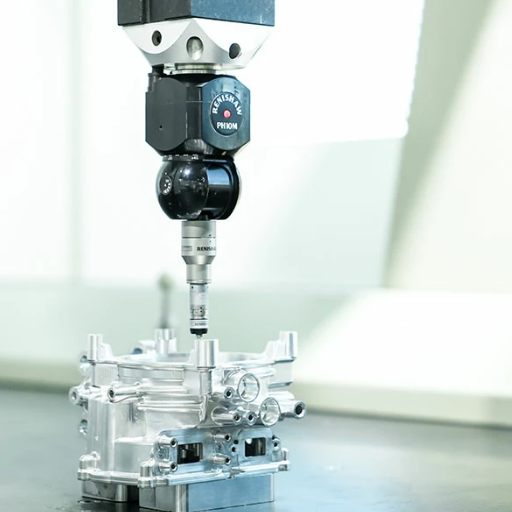
It bears high resistance to corrosion, is highly robust, and therefore is highly preferred as building material in lines of medical, automotive, and astronomy food processing. Its exceptional feature consists of the setting of an intermediary oxide layer resistant to destruction by environmental forces.
Alloyed with chromium, the stainless steel alloy produces a passive oxide layer that resists corrosion. This makes stainless steels well suited to tough environments, including marine applications and chemical processing.
One of the good mechanical characteristics of stainless steel is that it has good strength with great ductility. Many grades such as 304 and 316 exhibit a perfect strength workup under load.
Stainless steels retain strength at elevated temperatures and offer robust resistance to oxidation. The grades including 310S and 321 are the right choice for high-temperature applications.
Well known for its non-porous surface and ease of cleaning, stainless steels are largely employed in sanitary areas, such as for pharmaceutical production and food preparation.
The life of stainless steel products and its recyclability make stainless steel as one of the most environment-friendly metals.
With businesses able to match available grades with their operations, energy, and raw material costs, performance as well as sustainability can be translated into economic terms.
Measurement in stainless steel is an intricate affair primarily because stainless steel is available in a variety of grades with a rather wide spectrum of properties. High apportionment pertains to the exact measurement of its chemical composition. Slight detectable changes in ingredients’ quantities like chromium, nickel, molybdenum, and several other important alloying elements make it necessary to diligently calibrate the measurement tools to ensure that the material is up to mark for the required specifications. Spectroscopic methods need to be brought into play. However, ample awareness and education about these methods might be called for to interpret the results accordingly.
Problems are experienced when measuring mechanical properties of stainless-steel materials like tensile strength, hardness, or ductility, which instead can be decided mostly by the heat treatment or processing methods used that are pretty severe in stainless steel. Systems will have to be standardized in order to ensure some workability with respect to measurement. However, any kind of small adventitious difference between test conditions has a capacity for grossing up on us again any time data results may require comparison.
One of the unique properties of stainless steel is its excellent resistance to corrosion, which makes the measurement very problematic. The frequent exposure of the material to specific environmental conditions over a certain period of time takes much effort and time. At this stage, early signs of corrosion could be detected and the long-term performance predicted, both of which require a significant level of expertise and accurate experimental set-ups, in particular for aggressive or extreme environmental applications.
Essential to measure until corrosion rates and electrochemical corrosion processes are some reliable tools looking after their correct and careful use. One of those tools is electrochemical measuring equipment, also called electrochemical corrosion testing equipment. Examples also include the potentiodynamic polarization and electrochemical impedance tests. These methods theoretically make use of the interaction of material surface, treated with electrical signals, with the environment in accessing corrosion rate and mechanism. This tool makes available real-time sensitivities and accuracy in interpreting material behavior alternatively under various conditions.
For the replication of particular climatic conditions like humidity, temperature, or the presence of highly corrosive agents such as salt or chemicals, environmental chambers find an accidental application. These chambers help in the duplication of challenging environment conditions for the long-term performance of a material under controlled settings. Their ability in staying true to their specified variables further escalates the sanctity of the data produced and ensures that one can make a precise judgment concerning the course of corrosion.
In most instances, electron microscopy, including Energy Dispersive Spectroscopy (EDS) and Scanning Electron Microscopy (SEM), and related surface-analytical tools are widely popular in understanding microstructural abnormalities and pitting corrosion in metals. These tools provide unique faults in material surfaces and show early signs of potential degradation that are often not visible to the human eye. These tools, when combined with standardized testing procedures, are expected to generate valid data, the very core of corrosion studies, in this case.
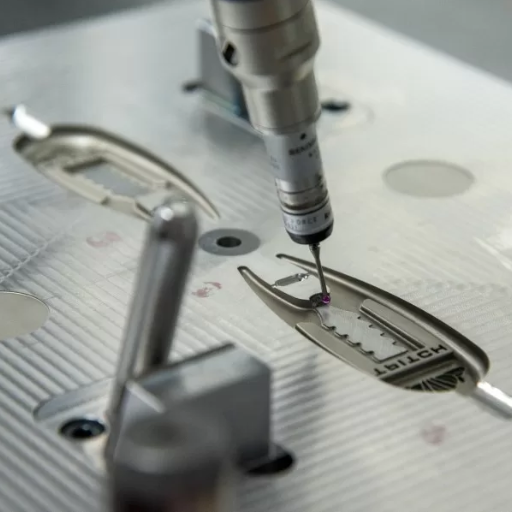
Coordinate measurement machines (CMMs) play a significant role in ensuring accuracy and tolerance in high-precision equipment. When it comes to detailed part measurement, these machines are unbeatable. They employ a probe that registers points along a surface, thus ensuring that the parts being machined are built to very exacting tolerances; hence, reducing the possibility for subsequent errors and defects.
Like other benefits accrued from employing a CMM in any application, it ensures that results, once calibrated, are repeatable and reproducible. Unlike manual processes, which require human intervention in enhancement of errors, CMMs generate data that are reliable for some really complex and intricate workpieces. In industries such as aerospace, automotive, and medical devices, strict tolerances are defined only by the degree of accuracy.
On another hand, CMM technology embeds precision in inspection while keeping pace with time. On the one hand, with the automated measurements that eliminate the need for manual measurements and data from manual measurement reports, this further decreases machine breakdowns, hence enhancing the quality of industrial operation at the least. Together, the precision and speed that can be achieved can help make CMM the cornerstone of modern-age manufacturing processes that seek to maintain the quality of production in the best way possible.
A pre-requisite for ensuring manufacturing excellence from minimum cost and delays is the mechanization and acceleration in time of inspection processes. Coordinate Measuring Machines (CMMs) occur in the automation of the measurement and inspection of components with high precision as a solution to heightening the inspection efficiency with respect to error-making potential. Unlike manual measurement means, the use of CMMs saves time by hastily examining a part that might feature a complex geometrical attribute to release the highest degree of precision on the instant, largely mitigating error and reworks at all levels. In terms of automation in respect of inspection, this feature brings efficiency and higher inspection pace.
Moreover, a key advantage lies in the uniformity of CMMs. Because of human error and inaccuracy, old-fashioned inspection methods have a higher chance of variable performance, resulting in the differences in measurement results that these techniques produce. CMMs can exactly overcome this problem by using programmed routines to inspect components uniformly, thereby ensuring that quality remains consistent throughout the production cycle. Precision industries, such as aerospace or automotive manufacturing, relook to get the advantage of CMM capability in this area.
Lastly, CMM operation enables live data collection and analysis, which makes the system more efficient. These data patterns can then be used to predict malfunction and improve the production process. When engaged and interlinked properly with the broader digital ecosystem, better productivity will be the outcome of these machines still maintaining tight quality standards. It simply allows establishing one’s inspection processes to be more efficient and reliable, meeting the stiff requirements in a continuously changing manufacturing environment.
Reducing scrap and rework costs is essential for the survival of manufacturing profitability and efficiency. Coordinate measuring machines play a significant role in this case. They use accurate measurement and verification to measure the parts against the design specification. Detecting deviations early in the production process allows the manufacturer to address issues before they lead to defects and have cost-over. Ultimately, this approach decreases waste and costs.
CMM inspection incorporates advanced measurement techniques and increases measurement dependability and accuracy. Consequently, there is better process control and a lower occurrence of production errors. There are more chances to incorporate CMM technology into various quality control processes, thus enhancing the identification of root causes for defects-as the solutions provided to correct these faults should also be timely and effective.
But even more important, by providing tangible insights promoting continuous improvement actions, CMM inspections are most trusted in enhancing the results of the measurement process. Hence, routinely reading statistical data related to performing measurements can be utilized productively to optimalize the processes, yield the best possible performance from the available equipment, and ensure that overall quality is never at risk. While cost savings can be substantial through decreased need for rework and material waste, manufacturers who maintain factory in control consistently produce quality products that guarantee customer satisfaction.
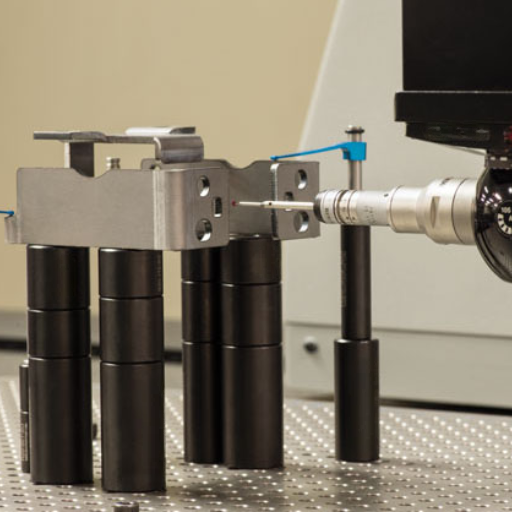
ISO 9001 Standard refers to quality management system directives all across the globe, aimed at establishing a fitting framework for quality at any organization. Its main principles center around comparison and satisfaction of customers as well as their needs, direction of leadership, engagement and participation by all to achieve the aim, application of quality assurance methodology, ongoing improvement, decisions based on measurements, and management of interrelation with others. They so imply – leading to the ensuring of an adequately efficient quality system so as to meet customer or regulatory requirements.
The main drivers of ISO 9001 include clear quality objectives, thorough documentation, and continuous improvement. Organizations interested to operational efficiency and maintaining quality in their products must instill systematic risk management throughout their operations. By conforming to these conditions, companies are more efficient, and errors are simplified.
ISO 9001 certification indicates to customers, stakeholders, and partners that an organization is committed to producing high-quality products or services. The process includes an on-site visit by an accredited third-party auditor to verify the adherence of the QMS to and certification by the applicable standard. Certification demands the business undertake continuous improvement of its internal processes through periodic reviews, which actually helps improve the organization’s application of systematically labeled quality.
CMM inspection is important in quality assurance since it checks for the conformity of the products against the explicit dimensional and geometrical specifications. The CMMs use the latest technology in measuring the dimensions of the product as accurate as possible, helping manufacturers address and correct these issues early on in the manufacturing process. This superior level of measuring goes a long way toward maintaining a good consistency in the manufacturing process and ensuring that the final error-laden product never leaves the factory.
Through further surveillance, continuous improvement may then be achieved with the aid of the evidence concerning production trend. This evidence, gained on how small the measurements and analyses the CMM produces are, may illustrate the extent to which the processes deviate or in which areas improvement needs to be done. This objective analysis will then be used to improve existing process flows, boosting efficiency and fetching nothing but quality assured yet final product.
Moreover, CMM inspection assists in adhering to quality norms and certifications. By ensuring uniform and consistent results, these machines aid the firms to demonstrate meeting up with industry norms and consumer requirements in such a way that yields benefits for the goodwill. Also, the satisfaction of customers’ escalated level is a pointer to demonstrate that the organization, in business, has established the chair of constant production of good quality material.
Compliance and certification are necessary aspects for businesses to remain within the purview of industry standards and legal requirements. These mechanisms keep the businesses at par with the legal, ethical, and other operational benchmarks so that they can deliver effective products or services. Compliance requires knowledge of rules, standards, and guidelines drafted by governing bodies or regulatory groups specific to a certain industry or sector.
One of the certifications is to certify ongoing quality and safety. Certifications such as quality management systems confirm that the organization provides processes that guarantee uniformity, reduce risks, and meet the expectations of customers. This acts as an assurance to consumers and stakeholders to say that the business conducts itself with certain levels of responsibility and reliability. This backgrounds both trustworthiness and competitive edge.
For numerous certifications, companies also undergo regular audits and reviews to ensure that they meet the highest standards. The evaluations ascertain whether an organization’s processes, products, and functions comply with the targeted standards. Also necessary is the continuous training and updating to ensure that employees are informed about ever-changing rules and regulations. This way, the focus on being compliant and earning certifications reduces legal and financial risks as well as enhances goodwill from customers and operating stakeholders.
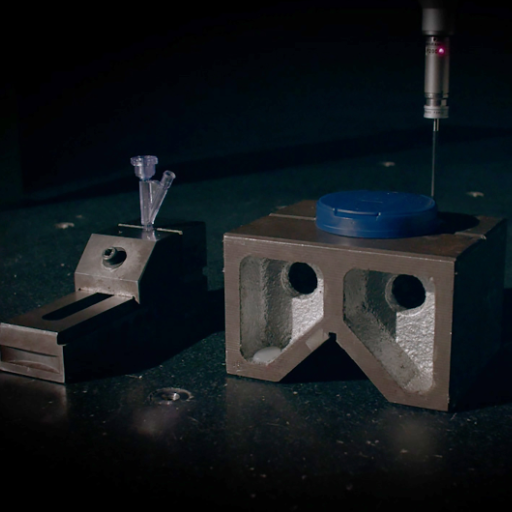
Human error is a nuisance (especially when it comes to measurements). Fortunately, with CMM (Coordinate Measuring Machine) technology, one expects levels of repeatable precision in quality control processes that will reduce the margin for human error to zero. Through measurement automation, CMM processes negate inter-operator variability of manual techniques. In turn, the results of the measurement are consistent and reliable. Precision is crucial when working on such standards where even the slightest measurement error would lead to rejectable products or operational failures.
Moreover, the technology is equipped to reduce the reliance on manual measurements prone to inconsistency, which are often open to misunderstanding caused by tiredness or incompetence. Incredibly accurate sensors and software on the system are again used for the calculation of dimensions, geometries, and tolerances. This leaves the lowest likelihood of misinterpretation of dimensions and specifications, which also ensures the industry’s strictest requirements of quality control.
Furthermore, the CMM technology tends toward a collection of data and analysis, which in turn yield immediate feedback to operators. Such immediate clarification enables every team involved in the production process to recognize and counter any defects at an early stage and lessen risks that could have risen out of human error. The CMM provides the perfect solution when integrated with automatic instructions and precise measurements in prevention of human error in manufacturing and inspection duties.
Should measure and inspect in a world of extensive and intricate geometries, CMM (Coordinate Measuring Machine) is just a right tool today. It is built to comprehend curly shapes and structures not easily measured through traditional means of freeform surfaces, complex curves, or multi-dimensional features. Accurately, CMM does it all through observation of these features, using stringent sensing and software algorithms that improve the instruments’ capabilities in measuring features, thus providing a sophisticated level of quality control and manufacturing efficiency.
CMMs find themselves quite useful across a range of precision-oriented industries, including aerospace, automotive, and medical devices. They render the geometric dimensioning and tolerancing (GD&T) with precise results that do not allow to convict CMM as essential in assuring that some parts conform within the strict definitions of the process. Further, CMMs can provide a 3D measure of parts for manufacturers to evaluate and verify the assembly of components to the design requirements on each and every part.
Integrating automation and advanced programming pushes the limits on dimensional measurement equipment’s versatility in bad and reciprocal geometry part measurements. Electrical-optical interface for automated process provodes fast and error-proof measurement in multi-part metrology with minimal human involvement. The combination of technologies makes it possible for manufacturers to achieve high quality, pretty much repeatable results with even the most difficult designs.
A: CMM Inspection pertains to the verification of dimensional accuracy and tolerances for stainless components using a co-ordinate gauge (CMM) machine. This thorough CMM inspection tool employs computer control, metrology software, and CMM probes, including touch probe, optical scanner, or laser scanning, intended to capture the surface of the object and retrieve accurate CMM measurement data for quality assurance.
A: When it comes to making measurements on more complex parts, a CMM inspection mix will employ the latest software, probing systems, and sometimes a point cloud from a laser scan as consider the parts are being measured in multiple axes in the height (Z-axis) direction. Programmable point acquisition through bridge CMM, gantry CMM, or arm CMM automates the inspection by capturing the dimensional aspects from the inspection and comparing the CAD model of the complex part for the dimensionality and tolerances for objectivity in moving it through.
A: Types of coordinate measuring machines include the bridge CMM, gantry CMM, cantilever CMM, horizontal arm CMM, and portable CMM (arm CMM and horizontal arm). Each of these serves different sizes and shapes—bridge CMM and gantry CMM with large parts and high accuracy, cantilever and horizontal arm CMM with shop floor flexibility, and portable CMM with on-site dimensional inspection services.
A: Such services are capable of providing a high degree of recountable accuracy and repeatability, which is rather essential for medical device manufacturing. The inspection services custom-designed for the faculties of medical components also ensure compliance with regulations, close dimensions and tolerances, and reliable measure numbers for safety-critical parts by means of air bearings, linear scales, sophisticated metrology software, and precision cmm probes.
A: No-contact laser scanning and optical probing allow for the shooting of dense point cloud data depicting the top/bottom surface, helping in the quicker inspection of the freeform as well as sheet metal features only. In a regular coordinate measurement machine setup, such methods supplement touch probe measurements, augment surface capture capabilities for complex geometry, and help in reverse engineering.
A: Where cmm is interfaced with metrology and part programming systems, software enhances its program functionality in metrology programming self-programming, thereby enogrous in computer-aided programming of the cmm, the fractionalization of measurements. The improved software is capable of diagnostic programming, collision-avoidance paths for gantry cmm, and arm cmm that are programmed offline and measurement results transferred directly to QA systems for management decisions in so many industries.
A: Portables are arm-based cmm; arm-based cmm is designed for specific applications while golden x is the bridge and the gantry cmm; they offer the highest accuracy in measuring with good level of stability. They owe their rigid construction, air bearings, and quality linear scales. Depending on the situation, the above is decided in terms of accuracy, bulk, high-precision parts or small parts, and shop floor space.
“`