

Supportive, Professional, Client-Focused Service
From prototypes to full-scale production, we’ve got you covered.


The cost makes or breaks the game for businesses having CNC machining in view. Yet, in the frenzy of weight concerns aside from reasonable and affordable machining services, companies are always a bit inclined to look past cost. The lead times for machining, quality standards of the machined parts, fees for shipping, and all other hidden costs add partially to further price comparisons. Our article discusses the total cost comparison of domestic versus offshore CNC, hinting out all the pros and cons surrounding each option. The parley should help you join the dots on what the calculators all mean in the allocation of resources enabling the right decision in a manner that is clean from losses of quality and efficiency.

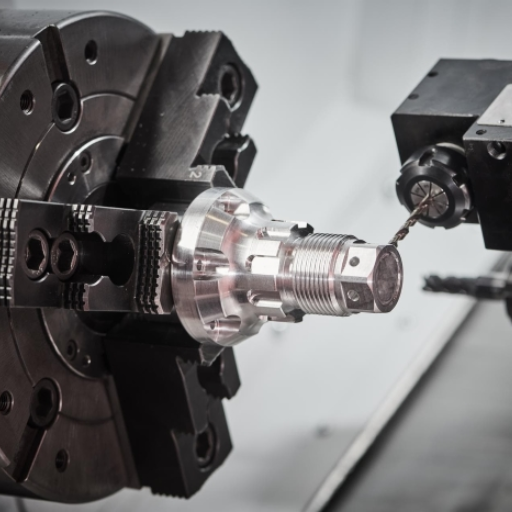
CNC machining services are performed on computer-controlled machines to manufacture precise parts and components from raw materials. They are invaluable to numerous sectors, ranging from aerospace to automotive, with the need for fine precision and repeatability. CNC machines can do a lot, they can mill, turn, drill, cut, etc., running under the commands of pre-written software.
The CNC rigging services are great for folks who are looking for efficiency and accurateness. Because human error is reduced in comparison with manual methods, the machines can produce parts on a consistent basis—all to exacting specifications. In essence, CNC performs machining processes for the production of prototypes or high-volume manufacturing, thus-suited for companies operating on all levels. This helps generate a substantial saving on labor, in as much as the machines are automated. Production is speeded up due to automatic procedures, which can have a positive result on net productivity.
The consideration of aspects like material compatibility, intricacy in design and the turnaround time are critical in ensuring a quality-manufacturing efficiency process with respect to the CNC machining services.
Several key factors affect the costing of CNC machines. The main determinants of this cost include Material, Complexity of Design, Time, and Work. Simple alloys might vary in cost, with materials like aluminum or steel or titanium coming in at different price ranges, whereas more exotic or hard-to-machine materials are just expensive. Similarly, intricate designs requiring extreme tolerances or additional machining rules shall attract higher cost due to extra time and complexity needed for production.
| Cost Factor | Impact on Total Cost |
|---|---|
| Material Selection | Aluminum and steel are cost-effective; titanium and exotic materials increase costs significantly |
| Design Complexity | Intricate designs with tight tolerances require more time and specialized processes |
| Labor Costs | Skilled workers needed for programming, setup, and monitoring operations |
| Machine Runtime | Longer runtimes increase wear, tear, and energy consumption |
| Production Volume | Larger runs benefit from economies of scale |
| Secondary Processes | Surface finishing, heat treatments, and quality inspections add time and resources |
Labour and machine runtime are primary contributors to machining cost. A good share of money goes to skilled workers who are involved in programming, setting, and monitoring the operation of CNC machines, especially in complex machining setups. The machine time spent directly proportional to the complex nature of the job, while longer runtimes mean greater wear and tear on the machines and higher energy consumption, resulting in higher costs. By the way, one more real component affecting the price of the job would be the volume of units being created, since larger production runs take advantage of the economies of scale.
An analysis for price per piece is quite a predominant analysis between CNC machining in domestic versus CNC machining off-shore. The major determiners behind total cost per piece are not the factors of machine. While off-shore manufacturing may come with labor costs at rock bottom, some more determining factors that will swing the pendulum towards the much higher overall cost include shipping fees, import/export tax and duty, lead time, and costs related to possible quality issues or change orders.
Domestic CNC machining presents a higher quality standard, while the lead times are significantly shorter while improving communication. Such antics bring down the chances of expensive mistakes and thus make for an efficient production.
Offshore CNC machining might be substantially rewarding for large volume production runs, where beating high unit costs is of primary importance in attempting to satisfy great budget constraints.
Domestic suppliers are normally very agreeable to stage any concurrent design amendment as well as any urgent need that may require change with lower costs and improved lead-time without adding transit time for material and retentioned labor costs. Hence, deciding about the domestic or offshore CNC machining will need to be predicated on project requirements: offering a truce between cost savings and quality, reliability, and logistical implications.
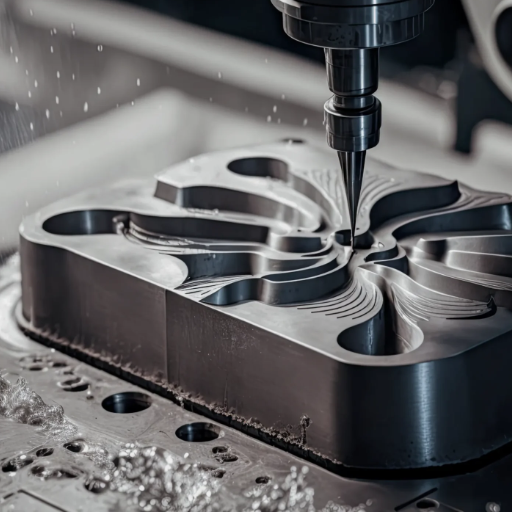
When it comes to domestic CNC machining, quality, accessibility, and control are among the main reasons why it is considered to be such a great operation. Communication is facilitated and resolution of potential design or process problems is faster, as the machining is done nearby. In the final analysis, the choice of whether to go for domestic machining or not should depend on project needs and priorities.
In the end, the choice of offshore CNC machining must be a result of a thorough and detailed assessment of the project’s requirements. For those manufacturers that put the cost of production and efficiency as their top priorities, offshore machining may still offer large advantages. On the other hand, if quality control, shorter lead times, and easier communication are prioritized, then domestic machining is likely to be the better choice.
| Cost Component | Domestic CNC | Offshore CNC |
|---|---|---|
| Per-Unit Cost | Higher due to labor and overhead | Lower due to reduced wages |
| Shipping Costs | Minimal | Significant (international freight) |
| Lead Times | Shorter delivery times | Extended due to distance |
| Quality Control | Easier monitoring, fewer issues | Potential for rework costs |
| Tariffs & Duties | None | Additional costs apply |
| Communication | Seamless and immediate | Potential barriers and delays |
| Total Cost Predictability | More predictable and manageable | Subject to fluctuations |
Several factors come into play when one looks at the comparison of domestic CNC machining with that of offshore CNC machining in terms of costs. In the end, to know which option is more cost-effective, companies really need to weigh their individual priorities. If the key objective is to minimize initial costs at the same time the company can afford to wait for a longer time, then the offshore CNC machining will be a more economical option. On the other hand, for those firms that require fast processing, high quality and reliable communication, domestic CNC machining usually incurs lower hidden costs and is more reliable over the long term.
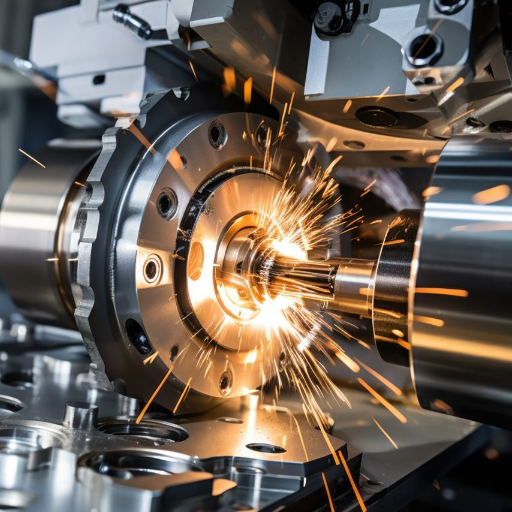
CNC machining quality control standards are the most important thing that guarantees the required specifications and performance criteria are met for the final products. Standards are a huge help in the process of defect identification and elimination, consistency maintenance and reliability enhancement.
The quality control measures in domestic CNC machining are typically very stringent and these are greatly influenced by government regulations and industry-specific demands which in turn lead to a very low probability of errors and costly rework. On the other hand, offshore CNC machining has the potential of needing difficulties in quality control because of the disparity in standards, regulations and oversight.
One of the major factors in determining the total costs for CNC machining services is logistics and shipping costs. They are incurred throughout the whole process starting from moving the raw materials to the manufacturer and taking the finished parts to the de facto place. Being aware of the prices beforehand is a way to manage the project within the budget.
In order to reduce costs, the company has to collaborate tightly with the supplier to determine the most suitable packaging and shipping of the product while still maintaining its quality. This collaboration is not only an advantage for the manufacturers’ productivity but also helps them to have a better control over costs throughout their manufacturing process.
Import tariffs and duty fees have a significant influence on international trade and can alter the price of commodities to a great extent. Goods entering a country are subject to these fees, which are levied by the government, and are aimed at both revenue generation and protecting local industries. The import tariffs’ rates are not fixed and they depend on the product, its classification under the Harmonized System (HS) code, and the country from which it is coming.

Deciding between domestic and offshore CNC manufacturing, lead time and delivery schedules become major factors. The domestic CNC production usually presents shorter lead times because of the local suppliers’ networks and geographical location. This quickens the shipping of the products, the fulfillment of the orders, and it reduces the delays that are mainly caused by customs or international logistics.
| Aspect | Domestic Manufacturing | Offshore Manufacturing |
|---|---|---|
| Lead Times | Shorter, more predictable | Longer due to shipping and customs |
| Flexibility | High – quick order adjustments | Limited – requires careful planning |
| Market Responsiveness | Excellent – rapid response to changes | Slower – potential for market timing issues |
| Risk of Disruption | Lower | Higher – logistics and customs delays |
Having shorter lead times gives businesses a lot of flexibility to change their orders according to demand and to react to market changes. Companies that depend on overseas suppliers should plan carefully and have enough time in their production schedules to cover the risk of disruption.
When it comes to the domestic or offshore CNC production decision, communication is a decisive factor. Depending on the location, the CNC manufacturing process will vary in terms of the difficulty of communication, with the domestic being the easiest thanks to the common language, allied time zones and closeness in culture.
Companies that are going for the offshore production will have to come up with communication protocols that are clear and robust, such as having a standard documentation process and scheduling virtual meetings, to overcome the communication barriers. Sectors that require high customization or quick collaboration may consider the domestic CNC production to be a better option.
The matter of where to produce CNC parts—domestic or offshore—suddenly becomes a simple question when one factor is considered. Intellectual property (IP) protection issues are the primary reason to vote for domestic production. Domestic production usually safeguards IP rights better because of the strong legal systems, clear enforcement mechanisms, and familiarity with local laws.
There are instances when some nations might not even have laws concerning IP enforcement that are workable and therefore the company would not be able to hold its proprietary technology or design. The firms that place the highest priority on the protection of their sensitive designs and technologies will usually opt for domestic manufacturing as the safer option.
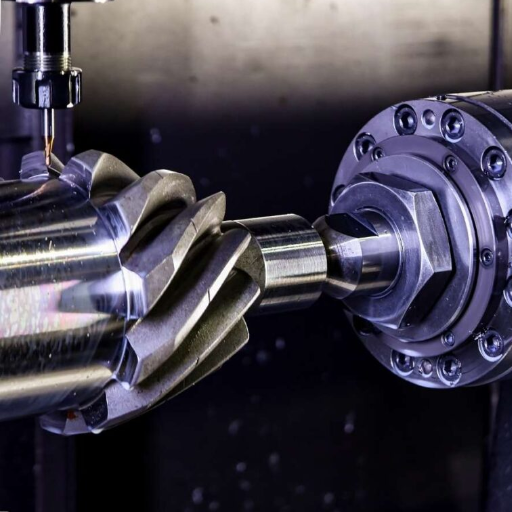
Local suppliers are essential for the efficient and reliable operation of the supply chain. The use of locally sourced goods enables the reduction of lead times, shipping costs, and involvement in the movement of inventory. The near location may also result in quicker resolution of problems if there are problems, thus guaranteeing the flow of production and operations.
Dealing with local suppliers builds stronger company relations and trust through direct human contact. Such relations may improve communication, develop joint solutions for problems, and achieve a common understanding of the business objectives.
Several factors can be considered for assessing the reliability of CNC suppliers both locally and internationally. In most cases, the domestic suppliers are the ones who provide more transparency, and this very transparency leads to better communication and quicker response between the parties involved. The geographical proximity usually makes it easy to perform quality assurance checks and solve problems speedily, all of which are very important factors in the reliability chain as a whole.
| Criteria | Domestic Suppliers | Offshore Suppliers |
|---|---|---|
| Transparency | High | Variable |
| Response Time | Quick | Delayed |
| Quality Consistency | Reliable | May vary |
| Cost Advantage | Moderate | Significant |
| Shipping Times | Short | Extended |
In the end, the selection of domestic or offshore CNC suppliers will depend on what the business values the most. In the case where keeping a tight control on quality and fast delivery time is of the utmost importance, then domestic suppliers are likely to be trusted more. On the contrary, if the cost is the main concern, offshore suppliers can be a good substitute, given that proper precautions are taken to manage the risks effectively.
Strong partnerships with suppliers of CNC machines are the best way to create long-term economic value for businesses. These partnerships usually result in constant cost savings, better quality of products and more flexibility in the operations of the company.
The collaborating company and supplier will eventually be able to read each other’s practices, expectations and goals leading to a seamless flow of operations. Companies that make use of the knowledge and views of their suppliers will certainly keep their products aligned with the market needs and giving the customers better value, thus, ensuring long-term growth and success.