

Supportive, Professional, Client-Focused Service
From prototypes to full-scale production, we’ve got you covered.


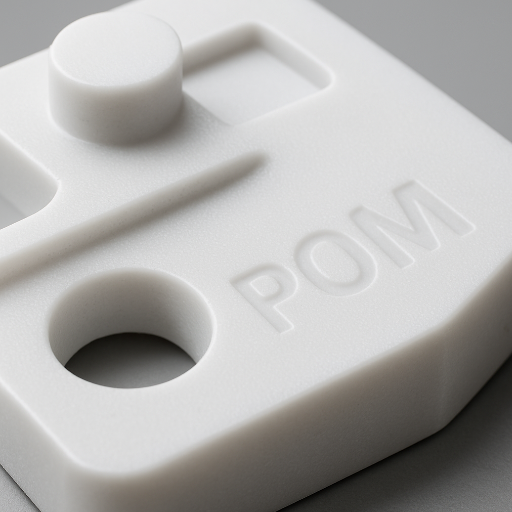
For Polyoxymethylene (POM), also known as acetal, surface finish for components is as important an aspect as material selection. Whether you wish to add strength, enhance aesthetics, or make it multifunctional, you must be well-versed in surface finish options and post-processing techniques. In this blog, we delve into the deep abysses of POM’s surface finish in terms of methods, advantages, and relatable real-world applications while retaining the ability to boost your parts to a higher level. Whether you are a designer, engineer, or manufacturer, be prepared to expose valuable tips that can optimize your manufacturing processes in order to achieve top-notch results.
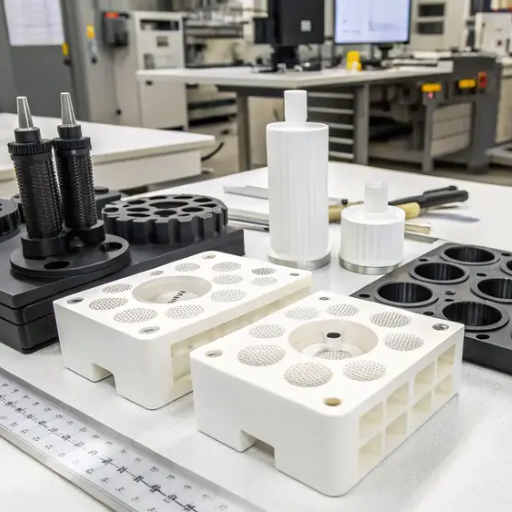
Polyoxymethylene, commonly known as POM, is an easy engineering thermoplastic. Due to its excellent mechanical properties and versatility, it is often used in manufacturing. It is highly crystalline and provides such characteristics as strength, stiffness, and stability under a variety of conditions. POM also has a very low coefficient of friction and is extremely resistant to wear, which makes it excellent for parts subjected to numerous movements or loads.
One very essential property of polyoxymethylene is its high dimensional stability, ensuring that it remains within a defined shape under mechanical stress or thermal variations. Furthermore, it is tolerant of exposure to various chemicals, including oils, solvents, and fuels, which makes it suitable for industrial cases. In addition, POM supervises liquid intake at a low level, maintaining the tension of its material for a longer time; this is helpful when working in humid environments. Due to being endowed with these traits, polyoxymethylene is most often used for machinery components that have to be precise in their functioning, such as gears, bearings, and other fitting systems.
POM is also easy to machine, making it particularly suitable for creating detailed and precise components. Its natural hardiness and kind of stability make it attractive to features calling for a great deal of precision. The competing-ness of this material can be seen in industries like those of automotive, electronics, consumer goods, and medical devices, where the ownership and reliability of the components play a key role. By making full use of such unique properties of POM, manufacturers are therefore instrumental in realizing greater efficiency and performance in their products.
| Type | Characteristics | Best Use Case |
|---|---|---|
| Homopolymer POM | Highly crystalline, rigid, superior wear resistance. | High-precision gears and bearings. |
| Copolymer POM | Better thermal stability and chemical resistance to alkalis. | Fuel lines and potable water systems. |
Homopolymer POM: Homopolymer POM, also referred to as acetal homopolymer, is a polymer with one repeating unit in its polymer chain. This chain structure makes it highly crystalline, so it is equally strong, rigid, and wear-resistant. Both these POM chains are most suitable in applications that need stable dimensions, such as gears, bearings, and fasteners. However, they come with low ability to withstand impact and low thermal stability in relation to copolymers, which makes them pretty unfavorable to high thermal-weight operations.
Copolymer POM: With copolymers, the introduction of a second monomer into the polymer chain results in reduced crystallinity compared to homopolymers. The copolymers generally exhibit better chemical resistance, primarily to strong alkalis or hot water, and better thermal stability over a wider range of temperatures. They find applications generally include automotive components, fuel lines and fittings, and potable water systems where exposure to moisture or chemicals is more or less usual.
Homopolymer vs. Copolymer Choice: The choice among homopolymer and compatible copolymer of POM depends upon the specific requirements for application. For high-precision functioning components, demanding both superior strength and high rigidity, homopolymer is the best choice. In contrast, for applications where exposure to chemicals, moisture, or higher temperatures is more frequent, copolymer would present higher levels of durability and resistance. Having an understanding of environmental and mechanical needs of the intended product helps in deciding the best POM for optimum performance.
An unheard of stiffness makes POM a proper choice for application calling for strong structural support. Its stiff carrying capacity maintains the shape of a component and its resistance to the mechanical escalation of pressure. This aspect is really important when it comes to the manufacturing of precision parts, such as gears, bearings, conveyor belts, where they must work virtually perfectly.
Another intrinsic feature of POM is its low friction, which amounts to minimal wear in the assembly of moving parts. Due to its self-lubricating capability, POM moves without much fuss through the mechanisms that are made up of it and hence how long they can work without the need of added lubrication given the characteristics of the parts themselves. This makes POM super suitable for use in motion applications, particularly mechanical systems fitted with sliding or rotating components.
POM is regarded for its durability in demanding environments. This material can be relied on for high resistance to abrasion and moisture alike, making it a guaranteed investment for long-term stability. Even in outdoor or industrial settings, POM can handle weather and environment to stay in shape-systematically resilient and ensure a long period of reliability with low frequency for repairs. These features make POM one of the most versatile materials across various industries.
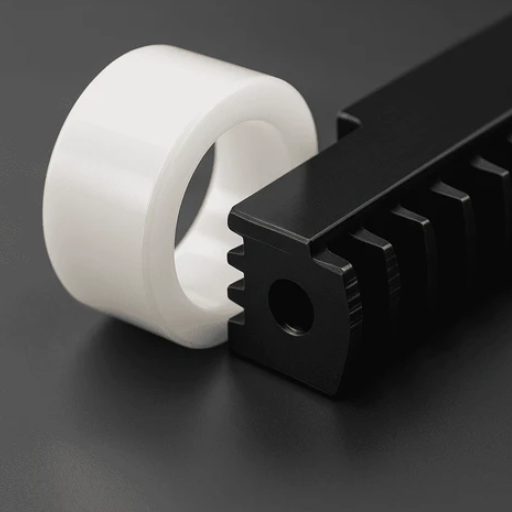
Polyoxymethylene, or POM, material can undergo several treatment processes in order to enhance either the material’s enhancing functionality or to bolster the material’s performance by augmenting the aesthetics of the product’s surface quality; such treatments are often required where aesthetic considerations or the particular surface properties—like improved wear qualities or increased smoothness—are needed. The choice of the particular process employed would depend totally on the requirement of the application and the anticipated outcome.
One of the standard surface POM finishing is machining, which allows for a very fine adjustment of the component’s surface for accurate measures and functionality strengthening. It delivers a smoother finish and much more demanding designing. Polishing is another method designed for making parts with a wet shine or matte finish, bringing great aesthetic appeal to the part while preserving its own strength.
In the context of surface treatments, it is the etching or texturing that is further viewed as the possible options for enhancing the adhesion for coatings or manipulating the surface properties of the POM components. Names we would like to emphasize on as a pre-fabricated step for POM components too, which enhances adhesion of painting, printing, and bonding. The main goal of all surface finishes is rendering supreme extent of versatility to POM components so that they suffice for diverse industrial and design applications.
Durable and possessing excellent mechanical properties plus low friction make POM components, like others from such group of materials, elastic for use in a wide range of industries. Different surface finishes are generally applied during processing to additionally improve performance and utilities of POM components, depending on process application requirements. In fact, the finishes themselves add adhesion for coatings, increasing the potential toward painting, print application, and bonding.
One well-observed surface treatment for POM is plasma treatment. It changes the behavior of the surface. Meanwhile, it raises the wettability of such a surface, allowing the adhesion of paints, glue, or any other coatings, needing in some industry specific applications. Plasma treatment is particularly useful in some industries demanding efficient and consistent bonding or finishing for beauty.
One of the additional techniques is mechanical surface roughening or texturing—using sanded, blasted, or specialized abrasive surfaces. This process increases surface area and creates a textured plane, which would increase bonding and coating performances. Chemical etching is applied similarly sometimes to improve adhesion by changing the microstructure of the POM surface. Each specific method is chosen based on the specific product requirement, ensuring their provision of both functional and aesthetic benefits.
Always verify the intended bonding agent before selecting a surface treatment. While plasma treatment is excellent for general adhesion, mechanical texturing may be more cost-effective for internal structural components.
Surface finishes have various advantages contingent on the treatment employed. Such finishes provide visual appeal and easy cleaning, which are ideal for decorative or hygienic applications, while exterior staining or finishing, decoration, painting, etc., performed on the steel element can combine to create a remarkable look of the product. The surface irregularities are minimized during polishing, which, if left largely untouched, could trap contaminants in certain environments where cleanliness and appearance are critical.
Textured or roughened finishes, through sanding or blasting or what have you, provide greater grip and bonding strength. Such surfaces enhance bonding to coatings or adhesives and re often used wherever durability is principal and safety is a consideration, such as flooring or structural components. The texture can also prevent glare or improve tactile response depending on how it is to be used.
Chemical etching provides structural modifications that can find applications increasing adhesion or decreasing friction. Usually, this layer is used in precision-machined components and functional components of targeted properties. Every type of surface finishing has its unique aim; therefore, each is a mix of function and look to be of use to various industries.
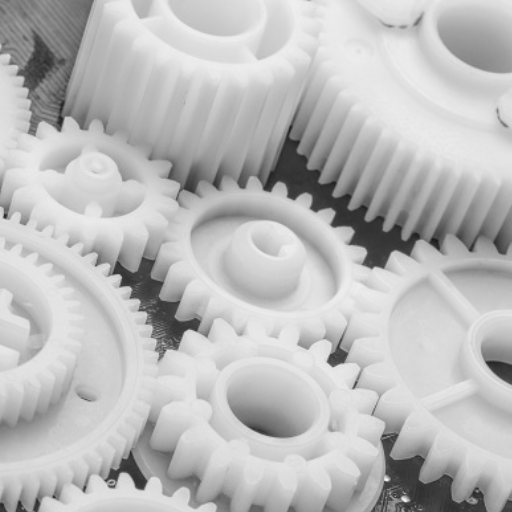
CNC machining is one of the most effective methods of producing the high-quality POM components. It ensures both precision and consistency, making it ideal for generating components with tight tolerances and a good surface finish. The process is so tightly controlled so that it is possible to bring into focus any complex geometry and minute design aspect while keeping its inherent rigidity and strength.
POM, famous for its low friction and excellent wear resistance characteristics, greatly benefits with the use of CNC machining. The accuracy of CNC machines not only ensures maintenance of these attributes during the fabrication process but also makes parts perfect for applications with stringent demands, such as gears, bearings, and valves, among others. Considering this, CNC machining cuts down material wastage and proves to be a cost-effective option for both small and large-scale production runs.
Since the use of CNC machining enables production of a superb quality finish, it greatly enhances the performance of POM components. The finished surface allows for lower friction wear of components during mechanical operation, which all the more extends the life-cycle of these said components. What is more, many different ways of customization options available in the procedure, professionals are able to fulfill standards and demands in the particular industries. All these make CNC machining realtidlig and an adaptable solution for the production of POM components across different businesses.
Maintaining tight tolerances in POM machining is very important for ensuring that the output nanocomponent meets precise specs and works as required. POM’s good dimensional stability is the source of its excellent machinability that makes obtaining tight tolerances easier. Tight tolerances do require careful attention to control by engineers throughout the machining procedure.
Tool selection is first in importance in maintaining tight tolerances. The use of sharp tools is really crucial to the reduction of discrepancies, minimizes the chances of dimensional errors and deviations. A correctly inted technitian kit and running of cutting speed and feed is necessary to control the overheating or deformation of the working material or otherwise the loss of dimensions.
Environmental parameters like temperature and humidity need to be kept a check on. POM evinces a little thermal expansion whenever it is machined; it is key to ascertain the right level of maintainable conditions surrounding the machinery, since they equally will affect the stability level of the surface area of the work part. Maintaining machines with regular inspections, calibration, and upkeep is equally important for precise and repeatable operation. Application of such methods will hence allow tighter tolerance references quite consistently in machining POM thereby increasing efficiency and quality.
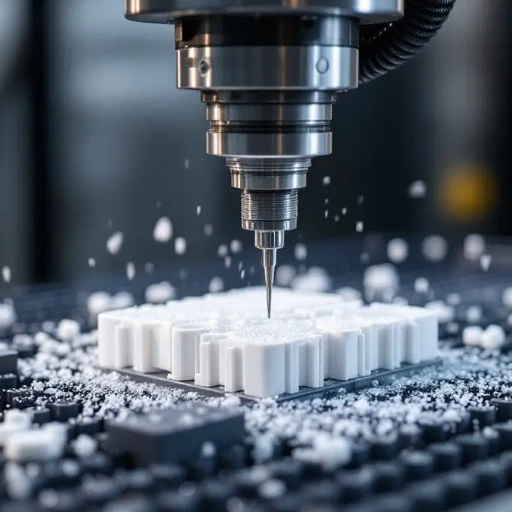
POM or Polyoxymethylene has low surface energy, which makes processes like adhesion, coating, and painting quite challenging. Such properties would blend less adhesion as POM inherently resists being used with other material or substances; thus, for any effected post-processes, surface preparation would be a highly specialized ceremony.
One common method used to relieve surface energy adhesion is by “Surface Treatment.” With Plasma Treatment, Corona Discharge, or Chemical Etching, the surface energy of POM is significantly increased. These treatments actually change the surface into micro-roughness or introduce the polar groups of action that would significantly increase its bonding capacity with adhesives, paints, or coatings. Proper selection of the treatment processed according to the desired outcome and uniform treatment over entire sample assure uniformity of results.
In addition to that, it is imperative to clean the POM surface properly prior to any treatment to get rid of any contaminants like oils or dust, which reduces the opportunity for the adhesive to stick to the surface further. Such treatments help to make the surface of POM predominantly hydrophilic. Cleaning with solvents or using ultrasonic cleaners can provide effective preparation. Testing the wettability of the surface after being cleaned or subjected to a surface treatment can help to confirm that the relevant surface energy has been reached for the planned application.
Polyoxymethylene (POM) is quite valuable for its excellent resistance to chemicals that largely affects surface finish and long-term performance. The ability not to be easily interacted by chemicals like oils, solvents, and diluted acids guarantees that the surface integrity stays undamaged under severe conditions. However, if indeed exposed to certain strong acids or bases, materials can start to degrade, which eventually affects their outward appearance and properties later on.
Chemical resistance in POM provides resistance to coloration, staining, or swelling from different substances. This implies a reasonably strong and stable surface finish that can stand up to the requirements of numerous industrial sectors, from automotive to consumer goods; nevertheless, it is necessary to evaluate the specific environmental application to guarantee compatibility and a long life, particularly in instances when the exposure to aggressive chemicals will be continuous.
For further enhancement of surface finishes, post-processing might entail polishing and/or coatings. These treatments not only for appearance but are also characterized by an extra set of protection from the influences of the environment and chemicals. The choice of surface finish and post-processing made will depend on the nature of the post-process intended, and under what operating conditions, to ensure the performance/durability best fit for the product.
Dimensional stability of parts is essential when post-processing. It is trying to keep as closely as possible to the original design number so that it would behave as intended. This requires the control of material properties, processing conditions, and environmental effects on the post-processing steps.
Typically, the most important key is to determine materials that have high dimensional stability. These materials should not display much in the way of dimensional expansion properties under thermal and mixed environmental stresses and should display such problems as humidity, which is the cause of bending. Moreover, understanding how the material reacts to heat, pressure, or chemical agents applied during post-processing may aid greatly in the control of unintentional dimensional changes.
Secondly, one of the factors governing process control is that the consistency of controlled processing should be maintained. Heat treatments, machining, or coating sponsors should also be attended with proper in-process controls to avoid thermal stress or incomplete curing. Any maladies and variances in the given measures are quickly known and rectified through controls, such as regular inspection and dimensional measurement.
In conclusion, the operating conditions of the finishing part become exceedingly critical. It is required that these include proposed temperature changes, readable mechanical input stress, and corrosive surroundings. To guarantee that the resultant part shall remain rigid and reliable for the given period of life, these operational conditions will be considered in the post-processing application of the part.
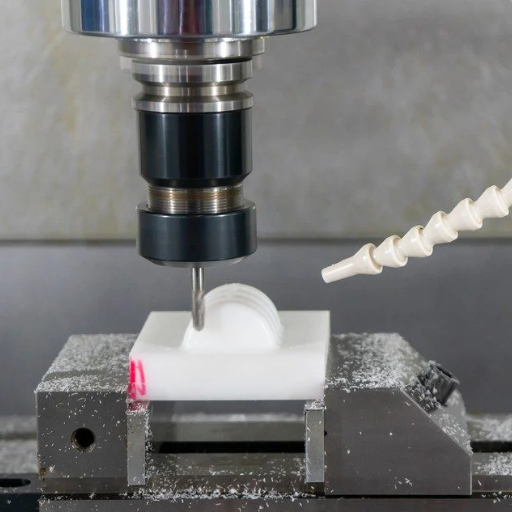
Polyoxymethylene, otherwise known as POM, is a versatile engineering plastic, being noted for its tensile strength, stiffness, and dimensional stability, making it desirable for a variety of applications. Primary usage lies in precision components, such as gears, bearings, and bushings, where low friction and good wear resistance are critical. These characteristics enable POM components to function fairly well in machinery and automotive systems, even under the most stringent operating conditions.
The other ideal applications for POM are those within consumer goods applications where sturdy products in need of impact resistance are important. Handles, fasteners, and zippers are the main examples where POM can keep maintaining performance under substantial use. In addition to that, due to its resistance to moisture and various chemicals, POM is also useful as a preferred material for components within plumbing applications and food industries, ensuring reliability and compliance with safety standards.
Plastic vials/fittings are a sample of POM’s role in the electronics field. It has excellent insulating properties with repetitive thermal cycles that match even the most demanding settings and devices known for long-lasting performance. POM parts can support the longevity and performance of applications around the harsh environments, if properly surfacing finished.
Polyoxymethylene, or POM, is an excellent material for bearings and moving parts, what with its high resistance to stress, low friction, and superlative wear-resistance. These properties have made POM very effective in applications where components are continuously subjected to moving loads and where reduced maintenance needs ensure uninterrupted operation of the specified machinery. Natural low friction is one more reason making the use of additional lubricants redundant, which is sometimes impractical due to the demands of lubrication maintenance.
Durability under extreme environments is one of the POM’s ignitable positive aspects when it comes to bearing and moving-part applications. POM performs quite well in a variety of temperature ranges and tends not to absorb moisture, meaning that its mechanical properties remain irrespective of heavy humidity or really challenging conditions. Thus, it finds unique advantages relevant both to various indoor and outdoor uses with respect to industries like automotive, consumer products, and assorted industrial processes.
The POM components are lightweight but contribute robustly to making complete systems energy-efficient. These operations withstand stresses imparted repeatedly without their permanent deformation—straightening machine life and reducing overall costs with replacement components and downtime. Such advantages make POM an inevitable response material for mechanical parts and bearing material.
POM-playing surface finishes have found extensive uses in the motor vehicle manufacturing industry. Gears, bushings, and fuel system parts are typical applications for elements that enjoy a high mode of mechanical capacity, low friction, and wear resistance using POM. Such assets lead to prolonged performance, making POM material a key component in any type of automobile with well-defined mechanical systems and the ability to operate properly in different atmosphere conditions.
The electronics industry is another big beneficiary of POM surface finish. With POM’s insulating properties and dimensional stability, precision components like connectors or switches are ideal applications. These features boost the quality of operation and life assurance of the devices with strictest functional requirements, but support expedited efficiency and reduced maintenance costs.
One more significant field of application for the POM surface finishings is the medical field. POM is used within the devices like inhalers, surgical instruments, and drug delivery systems because of its biocompatibility, its easy sterilization, and a high degree of resistance to chemicals. The reliability and safety provided by POM in medical applications emphasize its crucial role in guaranteeing patient care and product integrity.
Q: What are processes highly used for POM post-processed finishes and methods?
A: As is with all surface finishes, in which cases end processing commonly rendered, polyacetal surface post-processings include, but are not limited to, in that objects are molded through injection molding, milling, bead blasting, buffing, chemicals, coating, etc. It mainly depends on the end application. Said post-processing with respect to surface smoothing as a decrease of mold surface roughness may depend on the inherent surface finishings for those POM copolymers or POM homopolymers that are molded—combe these from injection or compression molding—or be further improved to have the standards of desired surface conditions through post-processing.
Q: How does production technique affect POM surface roughness?
A: The process the POM undergoes—namely, injection molding, compression molding, or plastic machining—has a strong influence on surface roughness. Injection molding produces consistently as-molded finishes and tight tolerance for production runs, with machining and finishing steps required for removal of material and achieving precision dimensions and low surface roughness for intricate POM components.
Q. Which POMs can yield the best results in surface finish quality?
A. The homopolymer and copolymer POM grades are both good varieties for surface finish qualities, but they differ from each other in their properties. The homopolymer POM is recognized for high stiffness and wear resistance which usually results in improved as-molded surface finish, and the copolymer POM displays a touch higher chemical resistance as well as lower hydrogen absorption. The selection of the appropriate grade of POM depends on geometry, machining requirements, and superficial finish requirements.
Q: What aftertreatment shall give a smooth surface on machined POM parts?
A: For smooth surface finish on CNC machined POM with maximum yield, the machinist must use optimized cutting parameters (feed rates, cutting speed parameters) and sharp cutting tools that reduce tool wear and create heat. These have a polished or buffed finish, with optional further chemical smoothing to aid with surface quality. These machining steps complete the accurate consistency and tight tolerances of machined POM components as economically as possible, all while maintaining the POM’s characteristic of high strength and mechanical toughness.
Q: How does the machinability feature of POM affect the post-processing choices?
A: The machinability of POM is very good—unfavorable characteristics of polyacetal material are well-suited for operationalized parts; the use of CNC machines, prescribed cutting tools, and controlled cutting speeds produce clean chips and low burrs. Since POM can be easily overheated while being machined, speed reduction and tool edge control are used to prevent melting and assure dimensional precision. Machining plastics is relatively easy, leading less expensive machining and easier post-processing due to greater polishing for smooth surface finish.
Q: How does post-processing affect the mechanical properties and dimensional stability of POM?
A: Acceptable-looking finished surfaces may usually be provided by post-processing without considerably altering the mechanical properties and dimensional stability. The extreme scenarios of chemical polishing or, for prolonged periods, hot machining may probably affect the dimensional tolerance or cause an increase in thermal expansion effects. Selecting the right POM material, monitoring machining sequences, and adopting mild polish procedures preserve the mechanical strength, stiffness, and durability needed in high-performance applications in POM parts.
Q: What are best practices for producing POM components that meet tight tolerances and surface quality standards?
A: To produce POM components with tight tolerances and excellent surface quality, one should begin by selecting the correct polymer material (homopolymer or copolymer) along with DFM and part geometry; selecting the right manufacturing process, i.e., injection molding for production runs while precision is crucial to CNC machining. Go with controlled cutting parameters, sharp cutting tools, and finishing processes like polishing or buffing; post-process to reduce surface roughness while retaining dimension stability, giving a smooth as-produced finish.
Q: Is there any major post-processing factor for POM peculiar to the industry, i.e., in automotive or bearing applications?
A: Yes. In the case of automotive and bearing applications in which low friction, strength, and close tolerances are very important, selecting very strong and wear-resistant POM grades may prove helpful. Post-processing may generally include ultra-fine polishing, coating, or heat treatments to develop parts with smooth surface finish and low surface roughness. A very important point is managing factors such as moisture absorption and thermal expansion in highly-temperatures-exposed applications to maintain dimensional stability and mechanical performance.
Injection Molds Behavior and Lifetime Characterization
This paper explores methods to determine the durability of injection molds, including surface finishing considerations.
Access the study at The University of Texas Repository
Property changes in polyoxymethylene (POM) resulting from processing, aging, and recycling
This research highlights the thermal stability and processing characteristics of POM, relevant to post-processing.
View the paper on Academia.edu