

Supportive, Professional, Client-Focused Service
From prototypes to full-scale production, we’ve got you covered.


How Titanium Parts Transform Automotive and Motorsport Performance
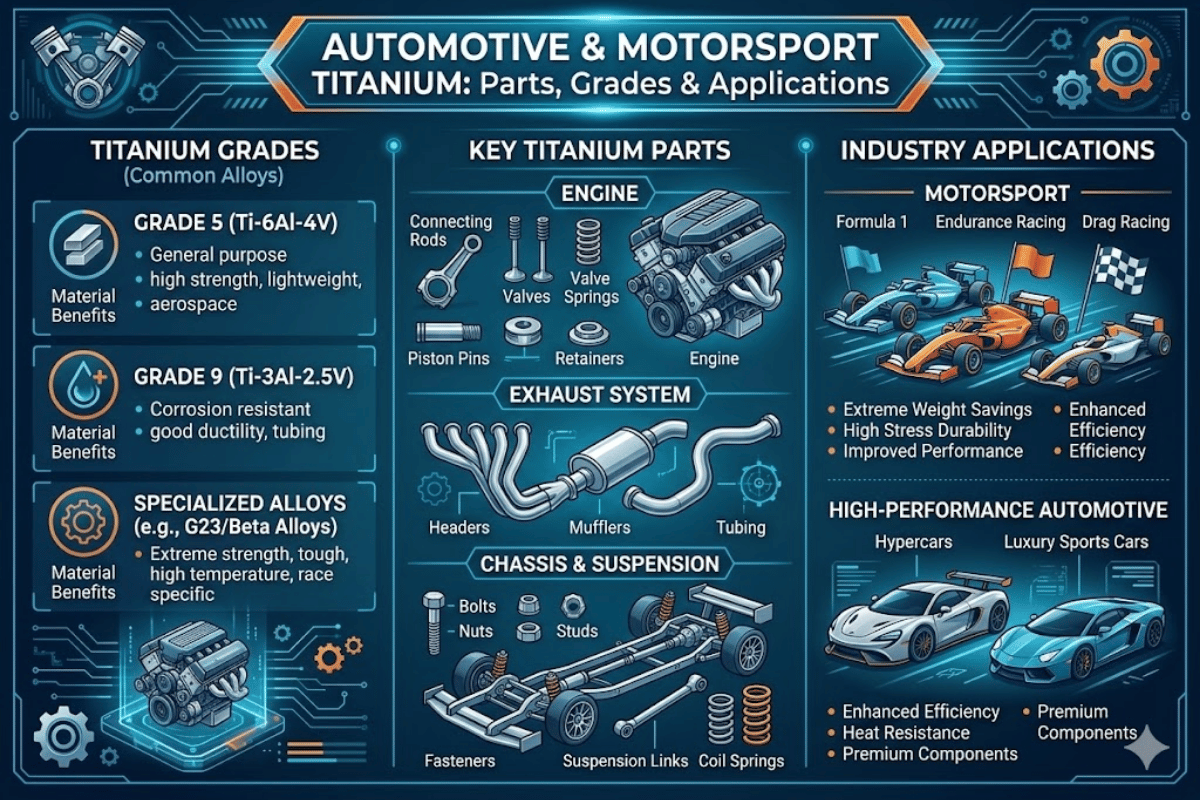
Every gram counts in motorsport. On the street, every gram affects fuel economy and handling response. That shared pressure drives engineers toward one metal again and again: titanium. With a density roughly 45% below steel and tensile strength that rivals it, titanium and titanium alloys occupy a unique position in both professional racing and high-performance road cars.
This guide breaks down the specific automotive and motorsport titanium applications — from exhaust systems and engine internals to fastener hardware and driver safety structures. We cover alloy grades, real weight-savings data, and selection criteria so you can match the right titanium product to your project.

Titanium is a transition metal with a density of 4.5 g/cm³ — roughly 45% lighter than steel (7.8–8.0 g/cm³) and only 60% heavier than aluminum, yet far stronger. The strength-to-weight ratio of titanium alloys such as Ti-6Al-4V reaches 200–250 kN·m/kg, compared with 65–90 kN·m/kg for stainless steel 304. That gap explains why the metal moved from aerospace into high-performance automotive parts decades ago — and why demand keeps rising.
Three material properties make titanium especially valuable in the automotive industry:
“In our 17 years of CNC machining titanium parts, we have watched automotive clients shift from ordering one-off prototypes to placing recurring production runs. The performance data speaks for itself.”
— Lecreator Engineering Team

Few single components weigh as much as an exhaust system, and switching from stainless steel to titanium cuts system weight by 40–50%. A typical stainless cat-back exhaust weighs 18–23 kg; the equivalent titanium exhaust drops to 9–14 kg. For a race car already fighting for tenths of a second, shedding 10–18 kg from below the chassis lowers the center of gravity and reduces unsprung mass.
| Property | Stainless Steel (304/316) | Titanium (Grade 2) |
|---|---|---|
| Density | 7.9–8.0 g/cm³ | 4.5 g/cm³ |
| Typical Cat-Back Weight | 18–23 kg | 9–14 kg |
| Max Service Temperature | ~870 °C | ~600 °C (Grade 2) |
| Corrosion Resistance | Good (can pit in chlorides) | Excellent (no rust, self-healing oxide) |
| Relative Cost | 1× | 2–3× |
In Formula 1, GT3, and professional drag racing, titanium exhausts and titanium tubes are standard equipment. On street vehicles, they have moved from supercar-only fitment into enthusiast platforms like the BMW M3/M4, Porsche 911 GT3, and Nissan GT-R. Yes, you will pay two to three times what a stainless system costs — but that premium is offset by a lifespan that often exceeds the vehicle itself because titanium does not rust.
Many buyers focus only on the material cost and overlook durability. A stainless exhaust in a salt-belt climate may need replacement after 5–7 years, while a titanium exhaust in the same conditions can last 15+ years — making lifetime cost comparable.

Inside a high-revving engine, every gram of reciprocating mass gets accelerated and decelerated twice per crankshaft revolution. Reducing that mass directly frees horsepower and allows higher RPM limits. Titanium engine internals target exactly this bottleneck.
Connecting rods are the highest-impact swap. According to data published by Nippon Steel Corporation, titanium connecting rods weigh roughly 30% less than equivalent SAE 4340 steel rods while matching or exceeding fatigue life. In race engines operating above 8,000 RPM, that 30% mass reduction translates to measurably faster throttle response and reduced crankshaft bearing loads.
Intake and exhaust valves made from titanium alloys cut valvetrain mass, which lowers the spring pressure needed to control valve float at high RPM. Production motorcycles like the Yamaha YZF-R1 and Ducati Panigale V4 ship with titanium intake valves from the factory.
Engine bolts — including head studs, rod bolts, and flywheel bolts — are a common starting point for motorsport builds because they deliver weight savings with minimal engine disassembly. Grade 5 Ti-6Al-4V bolt stock offers a tensile strength of approximately 1,000 MPa (145,000 psi), sufficient for most race engine fastening loads.
Key Titanium Engine Parts by Weight Reduction
When machining precision titanium parts for race engine builders, we hold tolerances within ±0.01 mm on rod big-end bores and pin bores. Tight tolerances matter because any dimensional variance in a connecting rod becomes a vibration source at 9,000+ RPM.

Look beyond engine internals, and you will find titanium automotive parts everywhere. Fastener kits, lug bolts, and chassis hardware represent one of the fastest-growing segments in motorsport titanium products. It comes down to simple math: every bolt you swap from steel to titanium saves roughly 50% of its weight, and in rotating assemblies like wheels, that savings is amplified.
Industry testing confirms that a weight reduction in rotating mass is approximately eight times more effective than the same reduction in static mass. Replacing 20 steel lug bolts with titanium equivalents can remove 200–300 grams of rotating weight per wheel — equivalent to shedding over a kilogram of static weight per corner in terms of acceleration response.
Always apply titanium-rated anti-seize compound to threads. Titanium can gall against itself or dissimilar metals under torque. Use a calibrated torque wrench — never an impact wrench — for final tightening on titanium car parts.
Our fastener selection framework for motorsport clients starts with three questions: What is the operating temperature range? What shear and tensile loads will the bolt see? And does the application require a corrosive-environment rating? Those answers determine whether Grade 2 or Grade 5 is the right alloy choice.
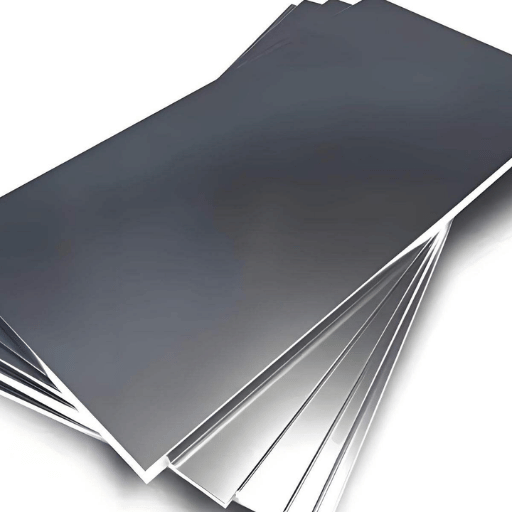
Not all titanium is the same. Each alloy grade determines tensile strength, formability, heat tolerance, and cost. Automotive and motorsport applications primarily use four grades, each suited to different operating conditions.
| Grade | Composition | Tensile Strength | Best For |
|---|---|---|---|
| Grade 1 (CP) | 99.5% Ti | ~240 MPa | Chemical piping, non-structural trim |
| Grade 2 (CP) | 99.2% Ti | ~345 MPa | Exhaust systems, heat shields, tubes |
| Grade 5 (Ti-6Al-4V) | 90% Ti, 6% Al, 4% V | ~895 MPa | Engine rods, bolts, fasteners, safety structures |
| Grade 9 (Ti-3Al-2.5V) | 93.5% Ti, 3% Al, 2.5% V | ~620 MPa | Hydraulic tubing, bicycle frames, lightweight tubes |
Grade 5 Ti-6Al-4V dominates the motorsport landscape. Its tensile strength is roughly 2.6 times that of Grade 2, while adding only a modest cost premium. According to a review published in the Journal of Alloys and Metallurgical Systems, Grade 5 remains reliable at 400–500 °C continuous service and tolerates short-duration exposure up to 600 °C — well within the thermal envelope of racing engine and exhaust components.
Grade 2, being commercially pure, offers superior formability and weldability. Exhaust fabricators prefer it because titanium tubes can be mandrel-bent without cracking, and welding requires only argon shielding — no post-weld heat treatment.
At Lecreator, we guide customers through alloy selection based on three factors: operating temperature, stress load, and budget. A race car exhaust header might use Grade 2 for the tubes and Grade 5 for the flange bolts — mixing grades to balance formability, strength, and cost in a single assembly.

Speed is only half the story — titanium also saves lives. Consider the Formula 1 halo device, the protective arch mounted above the cockpit to shield the driver from airborne debris and crash impacts.
According to the FIA’s official technical documentation, the halo is machined from Grade 5 Ti-6Al-4V titanium alloy and weighs approximately 9 kg. It must withstand a static load of 116 kN (roughly 12 metric tons) from above for five seconds, plus lateral loads of 93 kN and frontal loads of 46–83 kN — all without structural failure. Since becoming mandatory in 2018, the halo has been credited with protecting drivers in multiple high-speed crashes across Formula 1, Formula 2, and Formula E.
Beyond open-wheel racing, titanium appears in roll cage mounting hardware, crash-absorbing nose cones in sports car prototypes, and protective panels in rally cars. As a structural material, it absorbs impact energy effectively while adding minimal weight to the chassis — a critical trade-off in motorsports where excessive weight hurts both lap times and fuel strategy.
A common misconception is that titanium is too brittle for crash protection. In reality, Grade 5 Ti-6Al-4V exhibits ductile failure behavior similar to steel — it bends and deforms rather than shattering, which is exactly what safety engineers need from a driver protection structure.
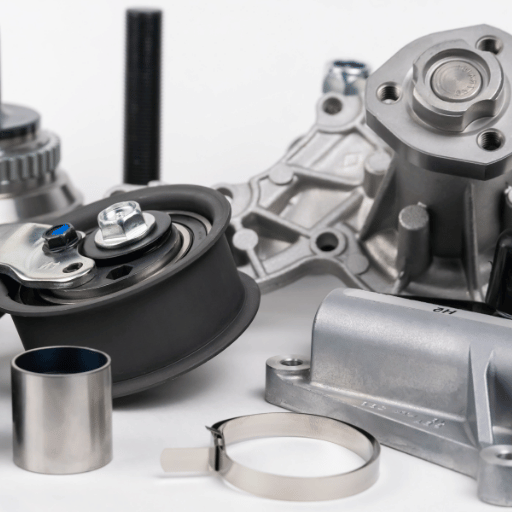
Sourcing titanium is not as simple as picking a catalog number — the supply chain is fragmented, and not every manufacturer delivers the same quality. When sourcing custom titanium parts for an automotive or motorsport project, evaluate suppliers across five dimensions:
Supplier Evaluation Framework
Lecreator specializes in titanium CNC machining with 80+ machines, 100% outgoing quality inspection, and a 98%+ first-pass yield rate. Whether you need a single prototype connecting rod or a batch of 500 custom titanium bolts, our engineering team provides material guidance, DFM feedback, and full dimensional reporting.
If you are planning a titanium replacement project for a race car build or a production vehicle program, explore our complete titanium machining capabilities or contact our engineers for a project review.

From prototype connecting rods to production-volume fastener kits, Lecreator delivers precision CNC-machined titanium with fast turnaround and full quality documentation.
Lecreator has machined titanium alloys for automotive, motorsport, and aerospace clients since 2008. The material property data and grade comparisons in this article reflect what we encounter daily on the shop floor — from Ti-6Al-4V connecting rod billets to Grade 2 exhaust tubing stock. We wrote this guide to help engineers and race teams select the right alloy and manufacturing process before committing budget to a titanium project.