

Supportive, Professional, Client-Focused Service
From prototypes to full-scale production, we’ve got you covered.


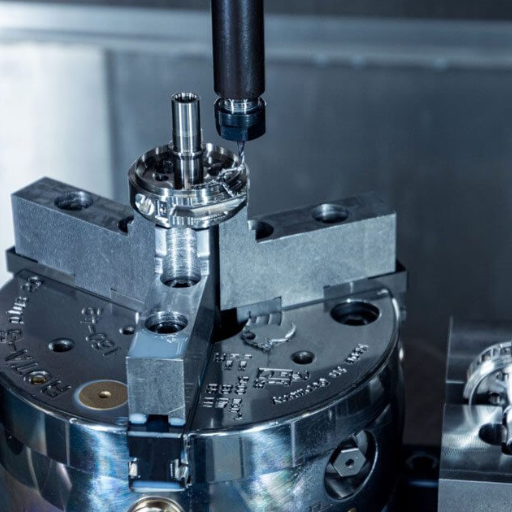
Machining titanium presents a difficult challenge which multiple industries must address because of its distinct manufacturing properties. Aerospace and medical and automotive industries use titanium as their preferred material because it offers exceptional strength-to-weight ratio and corrosion resistance and ability to withstand extreme conditions. The same characteristics which make titanium an attractive metal for use in industrial applications create major difficulties during its machining process. Tools experience rapid wear while titanium generates heat at a higher rate than most materials and operators find it difficult to maintain operational accuracy. The guide provides an in-depth analysis of titanium machining difficulties through its examination of machining obstacles created by specific titanium properties and the solutions used by industry experts to resolve these challenges. The article provides detailed information about titanium production problems which both engineers and machinists and general readers can use to understand its complicated nature.

Titanium is a metal which demonstrates exceptional strength when compared to its weight, its ability to resist corrosion, and its biocompatibility with living organisms. The material, which has steel-like strength, is highly sought after by aerospace, medical, and automotive industries because it weighs 45 percent less than steel. The exceptional properties of this material arise from its distinct atomic configuration which enables it to endure high-temperature strength maintenance.
Titanium exhibits its most essential characteristic through its exceptional ability to resist corrosion. The material develops a protective oxide layer which remains stable on its surface after it comes into contact with oxygen. The material develops a protection layer which stops degradation to barriers, withstanding harsh conditions of seawater and acidic environments to provide lasting protection. Medical implants and tools used for human body compatibility can utilize titanium because it remains non-toxic to humans.
The combination of titanium with other elements to form alloys increases the material’s flexible application range. Engineers can develop alloys which fulfill particular requirements through the creation of increased hardness, improved ductility, and enhanced resistance to extreme temperatures. The unique attributes of titanium make it a valuable resource, but its expensive nature and machining challenges need special expertise and methods to handle.
Different grades of titanium alloys exist because their specific properties match different industrial requirements. The American Society for Testing and Materials (ASTM) has standardized numerous titanium grades, with Grades 1 through 5 being the most commonly used. The following sections contain detailed information about essential grades together with their actual applications which use recent data and insights as evidence.
| Grade | Characteristics | Primary Applications |
|---|---|---|
| Grade 1 | Most soft/ductile, excellent weldability. | Chemical processing, marine, desalination, surgical implants. |
| Grade 2 | Balance of strength and corrosion resistance. | Piping systems, heat exchangers, pressure vessels. |
| Grade 3 | Increased strength over Grades 1 and 2. | Aerospace components, aviation structural frameworks. |
| Grade 4 | Strongest form of unalloyed titanium. | Medical implants, industrial tools, aerospace parts. |
| Grade 5 (Ti-6Al-4V) | 6% Al, 4% V; high strength and lightweight. | Jet engines, orthopedic implants, automotive parts. |
Various industrial applications depend on titanium grades because their special characteristics keep them valuable in multiple fields while research continues to develop new methods for using titanium-based materials in technological innovations, medical advancements, and other fields.
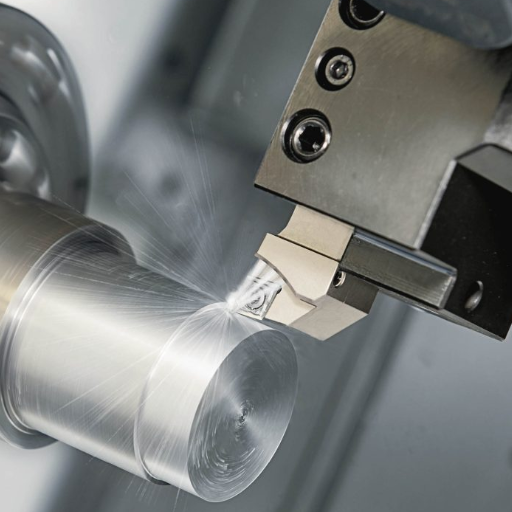
The physical and chemical properties of titanium make it hard to machine. This material combines immense strength with lightweight character and a very low thermal conductivity coefficient, and it therefore fails against heat dissipation during machining process. Therefore, both work and tool are heated in reaction to a restriction of heat passage and a consequent build-up of heat. Increased tool temperature in return fuels a greedy pit time for the latter’s wear thus eventually leads to a combination of increased tool attrition and material distortion.
The machining slips into several problems at high temperatures due to the interaction of titanium with cutting tools at the higher temperatures. Material reactivity usually produces galling, during which titanium particles get stuck to the cutting-tool surface, causing further decreased tool life and deteriorating product-quality finish. The superior strength and deflection capability of titanium lead to significant spring-back effects during its machining, which makes attainment of precise and smooth cuts quite challenging.
By virtue of its natural resistance to corrosion and incredible chemical stability, titanium challenges the common cutting and shaping operations, of all metals. Machining titanium calls for special procedures and instruments that can work only at low speeds with reduced material wastage achieving superb results. Recommended for an excellent result in titanium machining, a number of problems crop up for operators because accuracy for each and every step has to be maintained.
The machining process of titanium creates heat buildup problems which affect both the material properties and the performance of cutting tools. The low thermal conductivity of titanium results in heat from cutting operations remaining in the cutting zone instead of spreading throughout the material. The concentrated thermal energy causes fast tool degradation which shortens the useful life of cutting tools and drives up manufacturing expenses.
The excessive production of heat causes alterations of titanium material properties. The material undergoes surface oxidation after extended heat exposure, which results in strength loss and surface finish degradation. The process of uneven heat distribution creates thermal stresses during machining, which results in titanium parts experiencing distortion or warping. The effects demonstrate how temperature control serves as a crucial factor for preserving material integrity.
Machinists implement different methods to control heat buildup, such as using cutting fluids for workpiece and tool cooling, choosing heat-resistant cutting tools, and maintaining reduced speeds. The employment of these methods enables organizations to handle thermal impacts while increasing precision.
The unique properties of titanium create major difficulties which both tool wear and work hardening bring to titanium machining operations. Titanium’s thermal conductivity remains low, which causes heat to accumulate at the cutting edge and this phenomenon accelerates the process of tool deterioration. The combination of high strength and abrasive material properties enables titanium to cause faster degradation of cutting tools, resulting in decreased tool lifespan and higher operational costs.
The process becomes more difficult because work hardening makes the material develop tougher properties which create greater resistance against cutting work when subjected to repeated mechanical pressure. The hardening process results in quicker tool degradation, which creates the need for constant tool replacements that disrupt the production process. The problem becomes more severe because improper handling and insufficient cutting parameters create additional challenges to select appropriate tools and machining methods.
Machinists need to use high-quality heat-resistant cutting tools together with optimized cutting speeds and feeds as their solution to reduce tool wear and work hardening. The use of flood coolant as a cooling method enables effective heat dissipation, which decreases stress on both the tool and workpiece. The implementation of regular tool monitoring together with modern machining techniques that include multi-axis methods helps to solve these issues while guaranteeing accurate and effective titanium machining operations.

The process of machining titanium requires specialized cutting tools which have been designed to meet the specific needs of this particular material. The low thermal conductivity of titanium causes heat to accumulate at the cutting edge, leading to fast tool deterioration. The industry standard solution for this issue consists of high-quality carbide tools together with carbide-coated tools. These materials provide protection against extreme temperatures while maintaining their cutting edges.
Engineers developed special cutting edges for titanium machining tools which produce reduced friction while stopping chip buildup. The combination of sharp cutting edges with suitable rake angles enables operators to remove materials effectively while they decrease the chances of work hardening. The tools come with titanium aluminum nitride (TiAlN) coatings that enhance their heat resistance while increasing their operational lifespan, leading to better machining results.
Two important aspects of cutting tool selection involve determining appropriate tool dimensions and assessing tool stiffness. The preferred tool design for titanium machining requires short tools with sturdy construction to decrease machine vibrations and deflection during work. The specified parameters deliver improved precision together with better surface finishing, which both serve as vital requirements for aerospace and medical manufacturing sectors. The use of advanced cutting tools enables efficient and dependable titanium component machining operations.
When you machine titanium, it is necessary to understand how to control certain machine parameters that will decide on successful machining operations; this is intricately related to the machine performance itself and the accuracy of the material being processed. The cutting speed, feed, and cut depth are just three outplayed-parameters that determine the effectiveness of cutting, working on titanium. Best machining practice requires lower cutting speeds; high-speed cutting creates excessive heat that can ruin both the work material and the machine. A medium feed rate prevents a cut too deep of a width, and hence supports machined stability in light of the minimal tool deflection.
The process of machining optimization depends on the effectiveness of cooling and lubrication systems. The low thermal conductivity of titanium results in heat accumulation at the cutting zone, which leads to increased tool wear and surface damage. The use of high-pressure coolant systems and specialized cutting fluids allows effective heat dissipation which results in improved process reliability. The process of lubrication provides consistent protection against friction which results in better tool performance and product quality.
The process of titanium machining effectiveness depends on the selection of cutting tools and their associated coatings. Tools made from carbide-based materials or wear-resistant coated materials provide the best solution because they can handle the abrasive nature of titanium and its high cutting forces. The implementation of well-calibrated maintenance tools and automated monitoring systems results in process consistency while decreasing downtime. The optimal machining results for titanium achievement require these steps to meet the strict standards of aerospace and medical industries.
Machining titanium requires effective coolant systems which provide both efficiency and safety. The thermal conductivity of titanium is low which causes heat to accumulate during cutting processes. Tool performance decreases and product quality suffers because of this heat. Aerospace and medical manufacturing industries depend on effective cooling systems which eliminate heat build-up to protect tools from damage while maintaining their essential operational accuracy.
The efficient functioning of the water-delivery system is mostly important and directly tied to good results. High-pressure coolant delivery systems prove highly effective at removing chips from the cut point and preventing material from re-entering the cutting zone under optimal cutting conditions. The choice of coolant is of crucial importance as water-based, high-pressure coolants with flip-flop lubrication are capable of providing excellent cooling and lubrication in machining especially with titanium.
The challenges encountered by Engineers in relation to maintaining coolant systems cannot be underestimated. The importance of periodic inspection and maintenance is to ensure coolant systems operate soundly while machining and when cutting a path. And manufacturers can benefit by optimizing system performance for maximizing tool life, smooth quality surfaces, and efficient processing, which facilitates coping with these special problems linked with titanium.

The unique strength characteristics and low thermal conductivity of titanium create challenges for tool selection during machining operations. Titanium machining requires tools to be constructed from materials that offer both high heat resistance and extended operational lifespan which includes carbide and coated carbide tool materials. The materials used in the tool construction provide protection from cutting edge loss while maintaining operational performance.
The process of selecting tool sizes and types according to specific application requirements serves as the most important step. The selection of tools for roughing operations requires equipment that can handle high material removal rates. For finishing tasks, operators need tools that provide exact measurements together with the ability to produce specific surface outcomes. Manufacturers achieve better machining results while spending less money and boosting productivity through task-based tool selection processes.
The feed rates and speed need to be examined in machining because these factors determine the efficiency of operations, the lifespan of tools, and the quality of surface finishes. The definition of feed rate describes how far the tool moves forward after the workpiece completes one full rotation of its axis, whereas speed describes how fast either the cutting tool or workpiece rotates. Proper feed rate and speed combination selection leads to optimal cutting conditions which decrease wear and enhance precision of results.
Operators need to consider material properties which help them find the best feed rate and speed settings. To produce clean cuts on aluminum, which is a softer material, operators need to work at high speeds while using moderate feed rates. Steel, which is a harder material, needs operators to use lower feed rates and slower speeds for cutting because these methods help them control heat generation and protect their tools. The combination of matching these parameters with material properties helps achieve successful machining operations which will result in extended tool life.
In order to establish the required feed rate and speed settings, operators must take into account the machine’s capabilities and tooling elements. Machines with high power and strong spindles will operate at high speeds and may be able to handle higher loads, while less-superior equipment at lower feed speeds. Esoteric knowledge helps the operator to comprehend the interactions between the material, tooling, and machine capacity deliberately for the achievement of optimal machining performance, cost-effectiveness, and safety.
Existing manufacturing processes undergo transformation through innovative machining methods, which develop more precise, efficient, and flexible operational systems. The main development in this field enables operators to create precise automated systems through computer numerical control (CNC) machining. Through computer control systems, manufacturers establish product quality standards while decreasing human mistakes, which results in faster production processes.
The industrial sector projects it evolved significantly, implementing the utilization of both additive and hybrid machining technologies. 3D printing has given an impetus to its amazing ways of making complicated products partnered with a regular minuscule amount of scrap-the first choice in environmentalism for prototyping and small-scale manufacturing. Hybrid machining offers the opportunity to combine the traditional subtractive processes and additive ways, creating complex parts using efficient production methods.
As a new text with different language use: New tremendous feats such as super fast cutting rate are rendered by means of advanced capital machining capability. Consequently, it is pretty much the tired cutting tool that can serve its desired goal under machining operation. Engaging hard, difficult-to-machine materials calls for a specialized tool to carry out the cutting operation. With coatings solely made of ‘special’ substances like titanium nitride, the approximate cooling method will consider enhancing the life of boring. This new discovery guarantees maximized efficiency – unfortunate to curse the tool’s wear. This way new improvements in the gondola route are possible for the techno–economic industry today.

Titanium machining exists as a vital process for the aerospace industry because titanium exhibits an exceptional strength-to-weight ratio which aerospace engineers need to develop aircraft components. The properties of titanium make it suitable for manufacturing vital aircraft parts which include airframes, engine components, and landing gear systems. The use of titanium helps reduce overall aircraft weight which results in better fuel efficiency and enhanced performance capabilities.
The aerospace industry extensively uses titanium in jet engines because it helps engines operate under conditions which produce high levels of stress. Its strength and heat resistance enable the material to survive the extreme temperatures and pressures which occur in engine turbines. The aviation industry needs titanium to ensure that modern aircraft safety and operational performance requirements remain intact.
Aerospace applications require precise and dependable performance which has led to the development of advanced machining methods designed specifically for working with titanium materials. High-speed machining methods, together with specialized cutting tools, enable manufacturers to create titanium components which meet production targets while achieving exceptional product standards. The development of this technology results in better operational performance for aerospace systems which enables the industry to create more advanced products while maintaining safety standards.
Titanium serves as a popular material for medical applications because it exhibits biocompatibility and high strength and maintains its properties in corrosive environments. The material’s properties make it suitable for producing surgical instruments, prosthetic devices, and medical implants. The capacity of titanium to bond with human bone tissue enables medical procedures to achieve higher success rates because it reduces the chances of body rejection. The material’s lightweight characteristics enable patients to experience both comfort and freedom of movement after receiving their implants or prosthetic devices.
Surgeons use titanium to create orthopedic implants which include joint replacements and bone plates. The metal’s strength enables these devices to endure the physical demands of everyday use while remaining operational for extended times. The bonding capacity of titanium with jawbone structures makes it a common choice for dental implants because it establishes a reliable base that supports artificial teeth for extended periods.
Surgical instruments depend on titanium for their creation, but the metal serves another purpose as well. The material’s non-magnetic characteristics enable safe use in surgical environments where doctors operate advanced imaging systems like MRI machines. The surgical instruments maintain their sterile condition through titanium’s capacity to withstand temperature and sterilization methods which allows medical staff to operate safely while maintaining their work efficiency.
Titanium serves as an essential material in both the automotive industry and the energy sector because it possesses exceptional strength and lightweight properties together with its ability to resist corrosion. The automotive industry uses titanium to produce essential parts which include exhaust systems, connecting rods, and engine valves. The parts derive advantages from the material which can endure high temperatures and its weightless characteristics that boost vehicle efficiency and fuel consumption. The long-lasting nature of titanium enables components to serve extended periods without requiring multiple substitutions.
The energy industry uses titanium mainly in two fields which include renewable energy and power generation. The material achieves extensive use in geothermal plants because it offers essential corrosion resistance against high-temperature corrosive conditions which define the operating environment. In offshore wind farms, titanium components protect turbine structures from seawater exposure through their ability to withstand extreme environmental conditions. Titanium serves as an essential element for developing energy solutions which require both environmental friendliness and long-term sustainability.
Reduction in weight compared to steel while maintaining similar strength.
Titanium serves as an essential element that enables modern automotive and energy systems to develop through its various properties. The application of this technology results in better operational capacity and system dependability while helping to achieve energy conservation goals and environmental protection targets. Titanium continues to create new opportunities for growth in vital sectors which include electric vehicles, clean energy systems, and traditional automotive manufacturing.
Q: Why is Titanium Hard to Machine Compared to Other Materials?
A: Titanium is difficult to machine because of its problematic properties: having high strength and hardness associated with titanium and with springy and highly elastic titanium alloy metals, and poor thermal conductivity which does not dissipate cutting heat away from the tool and workpiece. Evidently the frictional resistance between the tool and cutting point increases, the heat generated during cutting contributes to the tool’s wear and deterioration, and together makes titanium alloys difficult to machine.
Q: What are the other roles of effective lubrication in metal-cutting?
A: Effective lubrication is fourfold, including (a) reducing cutting-edge temperature; (b) urgently carrying away produced chips and spawned heat from the cutting zone; (c) decreasing the coefficient friction; and (d) improving the accuracy. A small increase in friction or heat can change chip shell formation and lead to cutting edge breakdown, accelerated wear, plastic deformation in the chips, and reduced tool life. Thus, depending on material type and cutting conditions, prior to the machining process foretold cooling, the choice of a suitable cutting speed gets imperative.
Q: How do the elasticity and elastic deformation of titanium affect its machinability?
A: Titanium being rather elastic metal with a large range of elasticity springs back and elastically deforms prior to the cutting point. Such behavior results in high contact area between the tool and the workpiece, high friction, and local deformation which may lead to built-up edge or chatter. Elastic deformation at the tool/workpiece interaction can lead to geometric accuracy and surface integrity degradation, such as when machining thin-walled parts or with high wear tooling.
Q: What are the differences when machining titanium alloys and pure titanium?
A: Pure titanium seems soft in the annealed or softest state also being devoid of the good thermal properties and high adhesion to tooling as compared to titanium alloys. Incidences where titanium alloys arrive to become harder by virtue of alloying and heat treatments, with the increase of strength and hardness make machining titanium alloy parts look a rather easy task vis a vis machining pure titanium. Furthermore, alloyed materials change the cut and may increase notch wear and tool impact.
Q: What tooling strategy and cutting method gear titanium milling?
A: Use an appropriate hob that has positive cutting geometry and exceptionally sharp tool cutting edges. Tools specifically built for the purpose need high heat and adhesion resistance. Design your cutting tools to have little contact area. Use tools of variable helix or optimised geometry for chatter suppression. Inhibiting heat and fluxing from plastic deformation result from modest cut depths, high feeds per tooth, and tools that are never made dull. A correct set-up in milling titanium betters machinability.
Q. What impacts do heat and cutting parameters have on tool wear and surface integrity?
A: The heat generated at the cutting point and that in the cutting zone affect the tool life negatively and thus bring about the emergence of surface integrity. Due to titanium being a poor conductor of heat, the combined effect hardens, causing the local heat-affected region to deform the cutting edge; hence more friction. Thermal softening and the onset of wear mechanism features are thus more accelerated, often leading to notch wear or adhesion. Therefore, sharp cutting depths, such as the use of some possible cutting fluids for flood cooling, will help avoid many drive properties problems with respect to hottening or coldening that are normally unintended while maintaining the necessary geometric precision for a feature on part performance.
Q: What special consideration is needed to machine titanium parts with thin walls or complex geometries?
A: The thin walls and complex geometries intensify the challenges faced when machining titanium. The thin-wall parts are highly sensitive to elastic deformation and therefore irreversible springbacks, which weaken dimensional accuracy and encourage chatter. Local deformation caused by contact and indentations produces distortion, decreased fatigue life, and reduced service life. Toolpaths are important to consider in addition to specific workholding fixturing, support strategies, and minimal machining depth to prevent any tool deflection in machining titanium parts.
Investigation of the Machining of Titanium
This study discusses why titanium is classified as a “difficult-to-machine” material, focusing on its unique properties and applications.
Read more here
A Review on High-Speed Machining of Titanium Alloys
This review highlights the challenges of machining titanium alloys, including tool wear and poor machinability.
Read more here
Machining Stability of Wire EDM of Titanium
This paper explores the difficulties in machining titanium due to its low thermal conductivity and reactivity with tool materials.
Read more here