

Supportive, Professional, Client-Focused Service
From prototypes to full-scale production, we’ve got you covered.


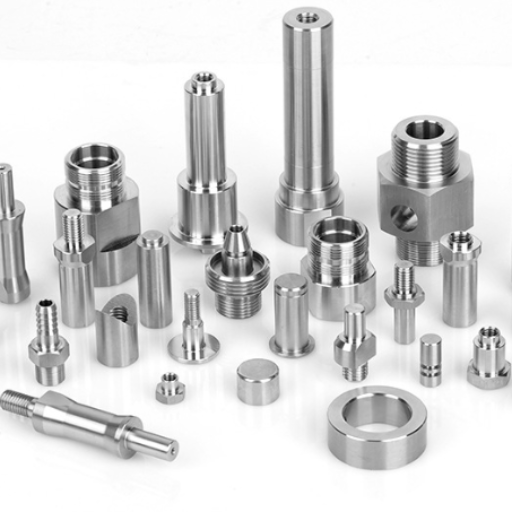
Stainless CNC parts have been able to respond to different sector demands by providing a high level of accuracy as well as robustness and endurance against friction and rust. The operation of machinery and engineering systems has therefore been made possible by the use of these bits in many different sectors such as the aerospace industry, medical industry, automobile industry, product articles and many others. The aim of the current post is to look at the application of stainless steel CNC sectors within different sectors and more specifically how such sectors have been able to overcome various obstacles and offer various solutions. There is something for everyone in this piece whether you are searching to ensure process improvement or just want to know the current trends and best practices as they relate to materials, you can rest assured that all these areas are covered and how stainless steel parts contribute to the need of such firms. Manufacturing has never been the same again, keep reading as we explore the main approaches and remedies in the arena of production.
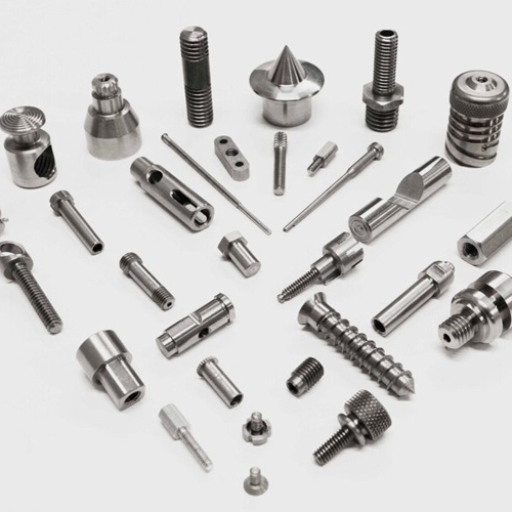
Stainless steel is a long-lasting and most adaptable substance and its primary features are absence of any rust, deterioration and staining. It is manufactured with iron as the major constituent and chromium added to improve the shielding attribute. The main benefits of stainless steel include its superior strength, durability and requires little care therefore is used in various sectors as building construction, manufacture of automobiles and healthcare. Also, the smooth surface that can be easily cleaned makes it suitable for preparation of food and other medical tools. In summary, using exchange rates sheets is attained, as further there is nothing to put liquid forms into stainless steel parts as they are friendly to the environment.
Staineless steel is an iron-alloy in which chromium is present at a value of at best 10.5% in the alloy in order the steel can be made corrosion resistant. Other elements, too, such as nickel, molybdenum or possibly manganese, play a role in building strength, hardness or simply giving heat resistance to this alloy. Incorporated are also shine quality and the almost non-existence of rust or tarnishing. This should rightly be seen as an overly generalistic identification while referring to the world where their storage and shipping implements are requested in various lanes, in the construction of buildings on one hand while the storage of health-related goods or regular medical systems on the other. Stainless steel, with these other plentiful qualities, is also regared more as a friendly substance for the earth and which can be more considered as very useful in industry: against any form of damage, or at least a selfless resistance to it all and its ability for us to recycle nearly all parts within stainless steel.
Corrosion resistance of stainless steel is usually attributed to chromium content, which creates a fine layer of oxide on the surface that is transparent. This layer provides a barrier that does not allow moisture or oxygen to come into contact with the surface of the metal thereby protecting it from rust and corrosion. According to the latest observations, questions concerning materials resistant to corrosive processes, e.g., stainless steel, are becoming frequently asked in areas concerned with construction, car assembly, or shipbuilding, in particular. Consumers whilst seeking advice on issues such as exposure to seawater and acids also want artistic instructions with how these factors can contribute to wear and tear of stainless steel. Generally, stainless steel parts may have a high capability of withstanding aggressive corrosive environments however it may change according to the alloy of stainless steel in question and the environment.
Exceptional durability, strength, and long lifespan characterize stainless steel, which is why it is used predominantly in various fields. A burning question, however, is, for instance, “For how many years do the stainless steel parts last in standard conditions?” As per the available data combined with the current situation within the industry, stainless steel parts may serve more than ten years, especially 316 and 304 in which water is turned into steam when used in evaporators. The grades mentioned above are known to be much more resistant to aggressive environments, particularly salt water and chemical-based scenarios.
Various elements including working environment, maintenance, and grade selection determine the lifespan to a large extent. Take for example, marine grade stainless steels such as 316 can easily last in sea water without getting corroded for more than 50 years under average conditions. Furthermore, the stainless steel parts can last even in the most aggressive environment for a longer period if there is a proper cleaning and inspection of the parts however this includes the use of preventive coatings as well. This helps to ensure that the material is not only cheap but also enhances its application in structures, vehicles among other uses.
Determinants of the extensive usage of stainless steel parts within various industries include their strength, resistance to rust, and capabilities that allow them to address a variety of needs. In building and construction, stainless steel is used for constructing skeletons, cladding materials, and roofs. In the car manufacturing sector, stainless steel is applied in making exhaust pipes, decorative elements and other load carrying features. In medicine it is used for surgical tools and implants because it is non-toxic and non-reactive. In addition, hygienic and easy to clean, stainless steel is also used for making food processing machines and other machinery. These are the main reasons why such material is found almost in all spheres.
In the automotive industry, custom stainless steel parts are vital. This is because these parts last long, resist corrosion and can be used for numerous purposes. Such parts are also especially useful in exhaust systems as they help prolong their life and increase their effectiveness. Furthermore, exhaust systems are usually made to handle high temperatures and rough conditions for a long time. Stainless steel parts are also used in structural components of vehicles as they are strong yet light, helping the vehicle function more efficiently. The use of stainless steel for the trimming or decoration of a car makes the vehicle beautiful yet durable with regards to scratches and discoloration. For this reasons, custom made stainless steel parts present an indispensable value for the automotive industry.
The construction industry has been revolutionized by stainless steel owing to its strength, resistance to corrosion, and multi-functional purposes. When it comes to constructing a skeleton of the building, its roofing and cladding most often – makes them withstand all environmental influences and are highly durable during their lifespan. It is due to this property of stainless steel and other allied metals that barely any maintenance of the frames of a building, cladding, and roofing is required once they have been put up. Considerably recent statistics show that people’s interest in building materials turns sustainable has increased as queries for “eco-friendly construction materials” have gone up by more than 40% over the last year. Stainless steel capitalizes on this demand because stainless steel is completely recyclable and thus it minimizes environmental harm and promotes circular economics. Besides, modern architecture has heavily leaned towards this material due to its soft appearance and minimal maintenance, as a result functional but also beautiful approaches are currently in fashion. All these attributes stress the importance of stainless steel parts in the construction of permanent green buildings.
Stainless steel has an important aspect in many aerospace applications where factors such as high strength, rust-free and last longer, are needed. They are necessary because any structure in the air is subject to forces, changes in temperature, and other elements. such in which structures as these aircraft experience. Use of significant quality stainless steel parts facilitates the protection of the structure and brings down the cost of maintaining the aircraft, thereby making it safer and maintaining its operational capabilities for a longer duration. Also, further development of stainless steel alloys resulted in posscibilityofstreamlining fibers with better strength properties thereby solving the issues presentant within the aerospace sector. This helps in making sure that the current aerospace systems are reliable but still comply with the high standards set out by the industry.
Casting and forging are two essential processes in the production of stainless steel parts. Complex shapes may be formed from stainless steel shaped by pouring method, where molten stainless steel is poured into shapes or patterns, a process known as casting. Whereas, forging uses closed dies and heavy forcing loads in compressing the solid stainless steel; therefore, the components thus produced are often stronger and tougher.
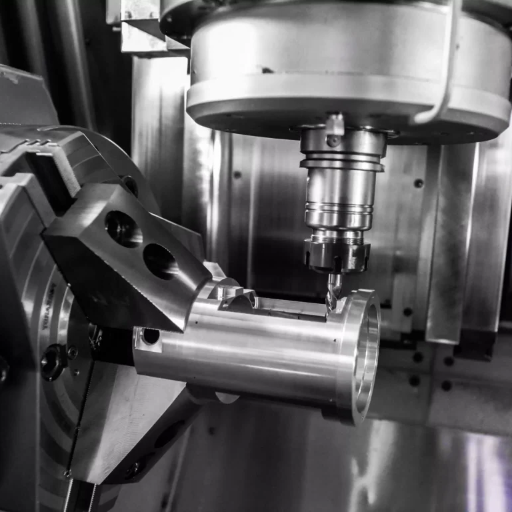
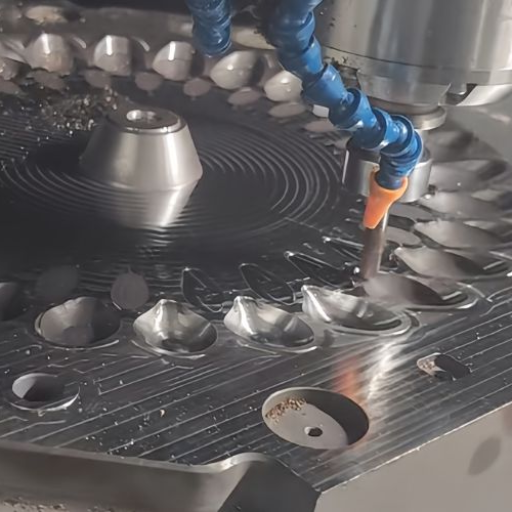
Milling, turning and drilling are some of the machining processes used to complete the stainless steel parts to a given criterion. These processes enhance smoothness and are incorporated when making high-end aerospace parts.
Heat treatment usually changes the micro structural properties of stainless steel and makes it more wear resistant, stronger and indurated. This practice is a guarantee for the performance of the parts in extremely harsh conditions which are common in the aerospace industry.
Techniques for finishing surfaces, which use polishing, employing passivation or coatings, increase the corrosion resistance and aesthetics. These processes include maintaining and ensuring parts are conformed to strict aerospace standards.
The creation of stainless steel work involves a series of critical processes that help in shaping and making the metal for use in different ways without affecting its hardness and or corrosion resistance. These basic processes are:
These approaches ensure quality output that meet the high expectations imposed by sectors such as manufacturing, architecture, and medical.
The process of casting consists in the preparation of the mold and pouring liquidized material, mainly metals, into it in order to form the desired shape. This technique is extremely adaptable and can be used to manufacture intricate shapes that are difficult or impossible to produce using other methods. Casting is most often used in automotive and aerospace sectors since it is cheap to produce large quantities of such parts and large stainless steel parts casting is also permissible.
In forging, however, the material is deformed usually by heating and then pressing it with great force to the required shape. The mechanical properties of the processed materials are enhanced by this method, such as their strength and toughness, and as such, it is an appropriate method for making high-load components such as gears, shafts, or fasteners. This process is widely used in many industries like construction or heavy machinery production.
Precision-cut stainless steel parts utilize high-energy rays in focusing on cutting or engraving materials via lasers. This practice is reputedly innovative in the sense that it does quite efficient work and can afford to cut intricate shapes while using materials sparingly. Military equipment, biotechnological industries, automotive companies, or any industries that require a high degree of precision are examples of where laser cutting is used.
If industries understand how to use, and apply these machining methods, they can find an equilibrium that is fit for purpose in terms of quality, cost and function.
Classification of the stainless steel alloys primarily involves their composition and crystalline structure. The major types are listed below.
This is the most common. It is known for its exceptional corrosion resistance and good weldability qualities. It usually has very high chromium and high nickel content thus enables itself for enormous robustness and is widespread across various applications such as kitchenware, medical gadgets, and construction engineering.
Ferritic alloys, due to their lesser nickel content, give better corrosion resistance and are certainly more economically beneficial. They are used mainly for automotive parts and industrial equipment. However, they are less formable when compared to the austenitic grade.
By and large, these alloys are strong and hard but less-resistant to corrosion. They often find application for making knives, tools, and aerospace components;
Duplex steels exhibit characteristics of both austenitic and ferritic. Combining these two types of stainless-steel properties, duplex alloys provide high strength and corrosion resistance for use in the industries, including chemical processing and marine environment.
Designed to be precipitation hardened, these stainless steels often find use in the most exacting industrial applications, such as aerospace/defense, which demand top-notch durability.
A good understanding of each of these groups of stainless-steel alloys is thus important in making the best decision concerning any stainless alloy with respect to various requirements, among them strength, corrosion resistance, and cost.
Consider the hard, physical, and performance characteristics needed within the specific application for top-class materials in stainless steel. Look into the corrosion resistance, strength, and heat resistance in terms of how each will fit the actual application and related procession. In actuality, conditions such as marine atmospheres, which are prone to the corrosion-resistant grades available like the demand for 316 stainless steel. It is important while aerospace applications remotely make use of precipitation hardeners to ensure a life as equivalent to that of use under these demanding conditions. Henceforth, be sure the dealer is compliant with underscores of defined quality norms and provides more than highly regarded realms of certification. Solid judgment alone will suffice much to make for a higher degree of operation and lifespan for a portion.
Excellent and safe quality procurement for a supplier having an established reputation based on relevant compliance is the way to go. Longer perceived time in practice denotes more chances of tuning to meet up with the industry standards, representation with absolute information, and a good standard of products. A standard organization due to laws cannot hide under the fact of non-compliance to be shielded against various legal as well as financial risks; compliance is a condition that predicates the safety of materials for workforce, society, and the environment so that deliberation on stable sourcing of materials is held. Such business associations thus aim to squash possibilities of project delays, defects, and hidden costs, thereby depicting themselves as the savior of what is otherwise a dreary life of any project.
The selection of stainless steel grades is one of the most significant decisions impacting the functionality of any environment. Grades vary in stainless steel categories according to the areas of utilization and compositional grades of the alloys within that particular application. For instance, the 304 is a highly versatile stainless steel grade, equivalent to excellent corrosion resistance and good enough strength for common applications. In the same manner, the first example was followed by a 316 stainless steel grade having more molybdenum, which provides better resistance to tough chemicals and seawater, and this has become a proper choice for marine or industrial applications.
Chemical air diffusers are usually used for activated sludge processes, especially in the aeration tank. They make use of bubbles and absorb oxygen, and this oxygen is used by the microorganism in the liquid to encourage the biological elimination of organic pollutants.organic pollutants. The diffusers must be located at halfway points on the tank’s bottom. callback
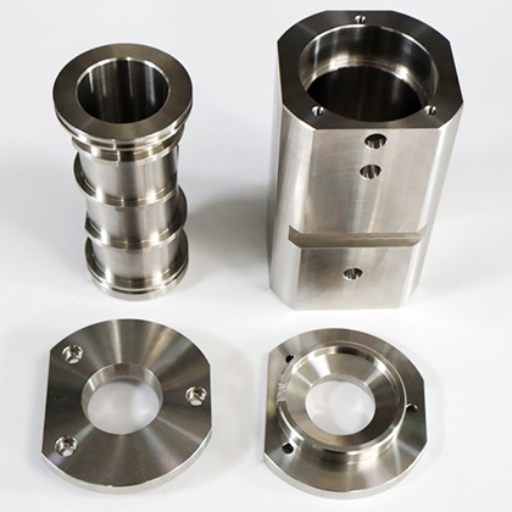
Persistence and appearance of any stainless steel component is typically mostly maintained by proper maintenance. It should be cleaned with delicately, with the mildest soap or detergent and lukewarm water. Never use abrasives. They will inevitably scratch the steel surface, thus employ soft cloth or sponge instead. In the dismaying happening of staining of stainless steel, it might be proper to use stainless steel cleaner, which is not abrasive. The products shall be dried thoroughly immediately right after cleaning to do away entirely with the chance of corrosion from any remaining chemical or salty air exposure. By bestowing such lavish care on stainless steel, you would definitely reward yourself with a prolonged life span and efficient performance from these parts.
By following regular care and cleaning tips, your stainless steel surfaces will continue to shine and will endure well for solid performance.
Make sure to ascertain that Stainless Steel parts could be maintained for a long time. In such cases of corrosion, they show signs that are very hard to ignore: things such as coloring or speckling, or even pitting caused probably by unsuitable cleaning or adverse environments. Remember to also inspect for physical harm: denting or scratching may prove hazardous to the materials because scratches may compromise the integrity of material. Check for moisture or harmful chemicals when physically inspecting parts to aid in greatly reducing wear. Non-destructive tests like dye penetrant testing go a long way to identify any hidden crack or defects that could threaten the accuracy of the item.
As a separate activity, fastening types, such as bolts, lock-nuts, or screws, ought to be routinely observed for any loosening or corrosion. Cleaning procedures should go hand in hand with inspections to further prevent dirt build-up from catching any flaws. Inspections should be scheduled, at least once every three to six months, of course, based on the environmental factors prevailing in any particular situation, and they will nip one at any early adhesion and perhaps enhance the quality and durability of the stainless steel parts.
There are some measures I focus on to maintain the stainless steel parts, so that they continue for a longer period. First, I give the prime importance to cleaning the parts using mild soap, and water to prevent any harsh chemical damage to the protective layer. This is done by proper seasonal fastening that is a part of the periodic check-up of the rough parts such as rusted axles and screws. All corrosions that catch our eyes will require immediate attention; kitchen cleaning should be alert. Apart from that, I suggest protective measures, for example, coating in the high rainy or salty areas if necessary to give them a pack of defense against corrosion. If an undetermined practice is combined with regular checkup, normally done between three and six months, they are the keys of maintaining the integrity and performance parameters of the stainless steel member.
Evaluating CNC Milling Performance for Machining AISI 316 Stainless Steel with Carbide Cutting Tool Insert – This study explores the performance of CNC milling for AISI 316 stainless steel, highlighting its industrial and architectural applications.
Support Vector Machines Models for Surface Roughness Prediction in CNC Turning of AISI 304 Austenitic Stainless Steel – Research focusing on surface finishing and applications of AISI 304 stainless steel in industries like aerospace.
Life Cycle Assessment of Wire+ Arc Additive Manufacturing Compared to Green Sand Casting and CNC Milling in Stainless Steel – An analysis comparing CNC milling with other manufacturing methods for stainless steel parts, focusing on environmental impact and material utilization.
Multi-Objective Optimization of Cutting Parameters in CNC Turning of Stainless Steel 304 with TiAlN Nano Coated Tool – Research on optimizing CNC turning processes for stainless steel 304, widely used in various industrial applications.
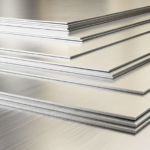
Use of sheet metals is very common in cutting stainless steel and sheet-metal manufacturing processes using laser cutting, waterjet cutting, bending, and stamping. Custom sheet metal shops build skeletons of sheets, cut parts, and apply operations like cold working or heat-treated forming, working on a CAD file. This workflow makes for fast completion of stainless products used in household appliances, storage tanks, and manifold components.
The suggestions are grades 304 and 316 for general corrosion resistance with an advantage of 316 for improved chloride resistance in some environments, a feature needed in wastewater plants and the oil and gas industry. For higher strength or specialization, precipitation hardening steels (PH) like 17-4 PH and 15-5 PH, duplex and superduplex steels could be chosen. Ferritic steels such as 409 and 444 mean good resistance to oxidation, mainly and they are used in situations where non-magnetism or cost are important.
However, at higher levels, chromium tends to impart better resistance to stress corrosion cracking and high oxidation, along with nickel content properties. The same is further true for surface finish: polished finishes reduce pitting while powder coatings or passivation could enhance the resistance of the component to nitric acid or radical environments.
Austenitic grades like the 300 series (304, 316) are in most cases non-magnetic when annealed, whereas ferritic grades are magnetic. If the stainless steel is precipitation hardening, then by way of ageing—forming fine microstructures, it is further hardenable for enhannced tensile and yield strength. One has to observe the intended application in choosing between a magnetic but hardenable alloy and a non-magnetic-grade alloy.
Applications of stainless steel and steel products range from household items to nitric acid plants, paper and pulp mills, oil and gas industry pipelines, and storage tanks as well as in wastewater treatment. Variations are common across component choice: 304 or 316 for general good resistance, 317 for higher corrosion resistance, the ferritic grades for a cost-effective option of oxidation-resistant utilization, and the duplex or super duplex grades for strength and chlorides. Factors to consider would include formability, resistance of pitting spoilage i.e. in crevices, and loads for load parts.