

Supportive, Professional, Client-Focused Service
From prototypes to full-scale production, we’ve got you covered.



The trade policies that are currently in place between the US and China have been a great influence on a large number of industries, and the market of CNC (Computer Numerical Control) parts has already felt the impact. The influence of tariffs is not only on the prices; it also affects the supply chains, and the sourcing of materials; thus, the companies that depend on CNC parts are going through a period of both hardship and opportunities. Tariffs have a significant impact on the CNC parts market, manufacturers and suppliers are going to face certain implications and there are measures through which businesses can adjust. The companies facing increased costs, reconsidering their sourcing strategies, or looking for new markets, they have to understand the implications of the tariffs in order to stay competitive in the global market today. Thus, accompany for a thorough perspective of the current situation and practical tricks that would lead your company to success.

Tariffs come as a direct cost to the importation of CNC machines, reflecting the increase in the cost of the goods owing to the imposition of taxes on them. These taxes are usually calculated as a percentage of the product value, thus making it hard for the buyers to afford CNC machines. Companies that are depending on international suppliers will have to bear the cost of higher imports which could result in less profit margins or even price increases for their customers in order to cover their cost.
The impact of tariffs is usually not limited to the rise in price. Importers may experience shipping delays as they adjust to the new trade regulations or if they move to supplanting hos at coming tariff-free markets. This situation can lead to the disruption of the supply and thus the uncertainty regarding the production time. Further, increased costs may prompt some firms to go for domestic production or upgrades of their existing facilities, which may require considerable financial investment in the beginning.
In order to tackle these issues, the companies should apply the tactics like negotiating with suppliers, diversifying their sources, or buying second-hand CNC machines which would reduce their capital costs as a matter of fact, along with these, they could get into a very deep understanding of the tariff regulations and could also utilize government trade assistance programs which are meant to help the firms financially impacted by the import tariffs. The tariffs are indeed a source of problems, but on the other hand, through proper planning, their ability to cause disruptions can be greatly reduced.
The pricing trends in the CNC machine shop sector are impacted by several main factors such as the cost of materials, the wages of workers, and the introduction of new technologies. The past few years have seen a rise in the cost of raw materials like steel and aluminum which has directly affected the price of CNC machining services. Also, due to labor shortage in some areas, the wages have been raised which has also contributed to the increased costs of production that are mostly transferred to the customers. However, the extent of these factors varies greatly with the location and the demand in the market.
Advanced technologies are the main factor in the pricing trends when talking about the future of machining. CNC shops that are automating and are equipping themselves with the latest equipment are very efficient and as a result, their production costs become lower hence, they are able to sell at a lower price. On the other hand, manufacturing firms that are reluctant to upgrade their production facilities may have to incur high operational costs and struggle with pricing, being not very competitive in the process. The continuous demand for shorter lead times has made pricing a critical area in which firms have to balance between timely delivery and cost-effectiveness.
Lastly, the global forces like trade tariffs, supply chain disruptions, and energy prices have continued to be a major factor in the CNC sector. Tariffs on the import of raw materials and parts can lead to changes in prices, while supply chain problems can create long and expensive lead times. Moreover, the fluctuating energy prices are a major factor in determining the total cost of machining CNC operations. For companies, the best way to be successful in this is to be very flexible and always analyzing the trends in order to have the right pricing strategy that makes them not only competitive but also profitable.
The pricing pattern in the industry has shown a clear trend of increasing prices due to the enforcement of tariffs on the import of CNC parts from China, among other goods, to the US. These tariffs, which typically are between 10% to 25%, increase the price of importing both raw and finished products. As a result, manufacturers and suppliers are either absorbing these costs or passing them on to the customers resulting in a pricing structure that is greatly influenced by these tariffs. This has led to companies having to find ways of keeping their prices and thus profits in line with the rest of the world without sacrificing the quality of their products and the competitiveness of their market position.
The indirect effects of the tariffs will be more pronounced in the areas of goods that are elastic in demand. The increased cost of goods has made it imperative for companies to operate in a much more efficient manner than in the past by adopting modern machine tools and competent staff. Such steps could be aimed at retaining some of the customers that would otherwise be lost owing to being unable to offer competitive prices. However, this could be accompanied by an increase in the number of people losing their jobs since an organization could be forced to displace old workers with younger ones or fewer workers being required due to the use of advanced machinery. Also, quality consistency might be one of the new hurdles to be faced. The need for businesses that want to continue their operations in this tough environment has additionally become a critical factor that must be supported by technology and flexibility.
Nevertheless, a significant one of the long-term effects has been the automation and efficiency improvements among manufacturers expedited. A number of businesses have opted for more proficient machining processes and high-end technologies to keep costs low by lessening waste and boosting output. The adoption of such measures will not only assist in cost management but will also display a required transition of operations to the future. The overall result of enforcing tariffs on Chinese CNC parts is that companies become more reliant on their supply chain strategies and skills.
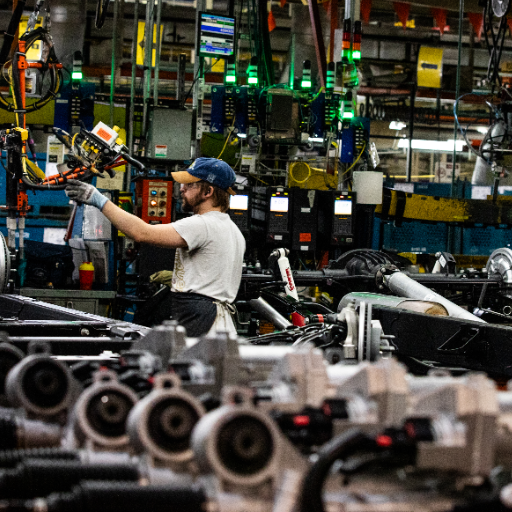
The tariffs imposed on international trade have had a far-reaching effect on the supply chain, as the companies at the receiving end have to raise prices for their products or cut their profit margins. The production costs have been raised up due to the increased materials and many manufacturers have been looking for new suppliers which is a long process and very costly, thus even more production delays. The situation has worsened, so that even those industries that rely on CNC parts have to wait longer for their products.
One of the biggest effects that these disruptions have caused is the shortage of key components. Manufacturers have to constantly face the problem of stock shortages which can alter and thus limit their capacity to supply the customers. This can be extremely difficult for small firms with not enough resources that might lead to loss of sales, thus lowered competitiveness in the market. Not to mention, the tariffs imposed have also caused a rise in the prices of products, and companies, in turn, have to charge the customers more, making it thus more expensive at the consumer end.
In order not to be so negatively affected by the supply chain disturbances, the companies are doing such things as signing up more suppliers, stocking more materials, and buying the latest forecasting software. No doubt, some of the immediate problems can be solved with these methods, but they also usually demand a lot of time and money to be released. The disruptions will be finally resolved once the local production capabilities are developed to the level where importing is no longer necessary and production-lines are more secure.
The disruptions in supply chains have had considerable ripple effects on global trade, revealing the weak points of the interconnected world economy. One of the main effects is the raise of delivery times and costs, which are mainly caused by port disruptions and the lack of transport resources. This has resulted in a slow process of bringing goods to the markets, which is going to be a negative influence both on businesses and consumers all over the world.
Besides, the rise in the price of goods, which is another consequence, is being felt more and more strongly in terms of regionalization and diversification of supply chains. Companies are starting to evaluate their foreign suppliers’ heavy reliance, and they may decide to establish production facilities close to home or in other regions. This movement not only diminishes the risks but also lowers the reliance on one supplier or region which is more encompassing and thus better adapted to future challenges.
The ripple effects have also brought up the issue of the need for innovation and technology in supply chain management. Companies are putting their money into the movies of prediction, automation, and data-driven solutions to be able to anticipate and react better to disruptions. These innovations are meant to make the supply chains more efficient and less prone to taking the brunt of dynamic challenges that exist along with the global trade’s gradual evolution.
The absence of visibility and transparency across the network is the major cause for the vulnerabilities in supply chains to emerge. It is already very challenging to predict disruptions if firms cannot trace the flow of goods, monitor the activities of the suppliers, or bottlenecks in the production line are not detected. Debugging issues that are caused by lack of transparency may result in delays, thereby increasing the overall cost of operations and making the company less efficient, especially during the occurrence of unpredictable events like natural disasters and political instability.
Another crucial weakness is the reliance on a singular supplier or region. If a supplier has problems or the region gets affected, it may lead to a more significant risk threshold for companies that depend almost entirely on one source for raw materials or manufacturing. It is very necessary to have suppliers spread out across different areas and have contingency plans developed as these are the critical strategies to overcome the risks and make the supply chain operations robust.
Lastly, outdated technology and the presence of non-digitized companies may weaken the already vulnerable supply chains that could not cope with modern challenges. Without the assistance of predictive analytics, automation, or centralized data systems, companies might be slow to react to disruptions in the supply chain. It is, therefore, investing in technology and building agility in supply chain management that are very critical steps to take in order to eradicate these weaknesses and achieve continuous stability.
Sourcing parts of CNC machines from places outside China is an option which can easily be taken by the companies which want to diversify their supply chains and also want to cut down their dependency on one region. Nations such as India, Vietnam, and Mexico, are getting recognition as strong substitutes because of their manufacturing capabilities, competitive labor costs, and improving infrastructure being developed. The moment these areas are already attracting those companies in the industry that are after quality CNC parts at a price that is not exorbitant.
The Indian skilled and capable workforce plus its growing industrial base make it a very good candidate for sourcing CNC components. Moreover, Vietnam with its orientation towards exporting precision machinery and acquiring technical know-how has declared itself a manufacturing hub. On the other hand, Mexico with its location being the US border, for the North American companies provides a lot of logistics advantages and that too at a very low cost. All these factors work together to bring down lead time and cost of transport.
If companies want to successfully source CNC parts from other countries, they must carry out a very detailed study regarding the suppliers’ capacity, the standards of quality, and the rules for export compliance. Apart from that, it is also necessary to have an open communication channel and to cultivate a partnership with a trustworthy supplier in order to minimize the risks that are connected with product quality inconsistency and also to ensure that the quality is continually maintained. In this way, the international sourcing options will be an opportunity for companies to strengthen their supply chains and to be more prepared for global supply disruptions.
For assessing the quality and cost of different suppliers, a comprehensive assessment is necessary to see in what extent these suppliers can satisfy your business objectives. First, assess the quality of the suppliers’ products and quality systems, such as certifications and the degree of their adherence to globally recognized quality systems. Make trips to the suppliers, request products and use them for testing, or alternatively engage a third-party tester, who might give you a report as to the suppliers’ product quality and credibility and make an overall assessment of their offerings in terms of quality and reliability.
Cost should be assessed not just in terms of the price of the goods at the moment of purchase, but also in the long run. Include shipping costs, tariffs, lead times and possible risks like delay or defect and all these factors can make the price the effective cost higher. The analysis of cost in detail should give a clearer view of the overall value the suppliers can deliver by comparing the total landed cost of shipping from each supplier.
Lastly, it is important to weigh up quality and cost by including both in a wider strategic framework. Give preference to suppliers who prove to be consistent, reliable, and have a long-term potential rather than going for the cheapest options only. Regular monitoring and performance reviews should also be part of supplier management to keep high standards and make the sourcing strategy a winner in the long run.
The emerging markets for CNC manufacturing are developing hand in hand with the technological advances that have come along and the universal need for precision-engineered products that have risen at large. The regions of Asia-Pacific, Eastern Europe, and certain areas in Latin America are turning out to be the drivers of this market. These regions are not only characterized by lower production costs but also by an ever-expanding skilled workforce and, most importantly, an increase in the investments made to’ inter this large industry that encompasses industrial automation thus making them a preferred destination for manufacturers.
The Asia-Pacific area, especially countries like India and Vietnam, is witnessing the problem where CNC manufacturing is growing quite rapidly. This is hence, already the automotive, aerospace, and electronic industries of the region. Governments are not just supporting the industries but also providing the infrastructure needed thus assisting with the modernization. The same goes for Eastern Europe; it is becoming a manufacturing hub, one that is made possible by its skilled workforce, and close proximity to vital global markets thus becoming more and more competitive for production of goods.
Latin America is slowly getting into this market with Brazil and Mexico taking the front seat. The two nations are making use of their-industrial base that keeps growing, their trade agreements plus their geographical closeness to the largest consumer market that is the US. The quality of production and efficiency of cost in these places indicate their potential of ruling the CNC manufacturing market in the future.

The primary strategy of mitigating tariff impact and building supply chain resilience is to diversify suppliers. Companies can lower their reliance on one market by buying materials or products from several suppliers located in different countries or regions. Risk-sharing is one of the benefits of this method making it less likely to be affected by sudden tariff alterations, trade prohibitions or political instabilities. Another advantage of diversification is the ability of firms to obtain cost advantages from different places while keeping supplies steady.
In order to achieve diversification, the companies need to concentrate on making connections with suppliers located in diverse parts of the globe. Thus, manufacturing and delivering could go on without interruptions from tariffs or limitations in any one area. They should carry out extensive evaluations of the possible suppliers taking into account factors like production quality, costs, dependability, and adherence to regulatory standards. Apart from the risk reduction, the tactic might also yield better supply chain flexibility and capability of quick response to changing market demands.
In addition, by using local suppliers in all cases where it is feasible, the company will not only be able to mitigate risks but also cut down on the cost of transportation and the duration of delivery. Also, firms may want to consider adding contingency supplier contracts to handle unexpected tariff hikes or interruptions in supply. A large supplier network increases the reliability of a company and ensures that it is ready to face the future challenges of global trade.
Machine shops that adopt cost-saving methods are basically ensuring their profitability and operability at the same time. A scheduled maintenance plan for machines is one such measure that eliminates the chance of sudden breakdowns. Due to regular maintenance machines, there are no issues with repairs and no need for costly repairs as the machine is always running at its best. Furthermore, the use of energy-efficient machines will significantly lower electricity costs which the company will benefit from in the long-term.
Another option might be cutting down the use of raw materials by making production processes more efficient. The application of appropriate measuring and cutting techniques, and the usage of the left-over materials where possible, can contribute into reductions in costs. Moreover, if the employees get training in waste-reduction practices it will be a win-win situation, as waste will be minimized but overall efficiency and costs will be lower reduction as well. The recycling or reusing materials in new ways is a burden-less operation and adds a little sustainability aspect to the shop.
Furthermore, heaving the last but not the least, automation has been and will always be the main source for a significant amount of cost savings. Robotic arms along with automated tools performing the same repetitive task lead to both higher accuracy and decreased labor costs. Although the initial investment usually is high, typically it will take only a few years for the extra long-term productivity gained from less errors to fully cover the cost of investment. The combination of these measures now allows machine shops to manufacture products at lower prices and in an eco-friendlier way.
It is the expansion of sales to new markets that is the main factor leading to growth in the production of CNC machines. The first opportunity is the aerospace industry, where the precision machining of components like engine parts and structural elements are very important. Manufacturers demand that their products be of the highest quality, and CNC production with its high precision is the perfect solution. Besides, the growth of commercial aviation and rising demand for lightweight components are driving this market further.
The medical device industry’s a good second bet. CNC machines are used for the fabrication of complex medical tools and implants, among which are orthopedic screws and prosthetics. The demand for high-quality, personalized devices is growing mainly because the population is aging and medical technologies are evolving. This demand matches very well with the output capabilities of CNC production. Thus, through innovation and adherence to regulatory requirements, CNC manufacturers can set up a partnership with this market as they are the main players.
In conclusion, the renewable energy sector is an area that has a great potential market for CNC production. As the world turns to sustainable energy solutions, there is a growing demand for precise machining of components in the wind turbine, solar mount, and other renewable energy infra sectors. The accuracy and durability that CNC machining can provide for these applications make the manufacturers ready to explore a long-term growth-promising sector.

The recent trade policy updates underscore the persistent effect of tariffs on the import of CNC parts from China. The trade war between the two countries is still going on and has resulted in increased prices for CNC manufacturers depending on the Chinese supply, which in turn affected the cost of raw materials and finished CNC products. The tariffs, which were supposed to promote domestic production, have turned into hardships for companies that are heavily reliant on global supply networks.
Many industry specialists are analyzing the situation and they are recommending that manufacturers might have to shift their sourcing and suppliers to a greater extent or even completely to cut down China’s share in the total imports. Countries in Southeast Asia such as Vietnam and Thailand are gradually appearing as alternate sources for CNC parts providing not only competitive prices but also lowering the risks that are associated with tariff variations. This transition is strategically difficult but in the future is likely to be a source of cost-effectiveness and supply chain durability if it is well thought out and planned.
Apart from that, governments and trade representatives are actively talking about policies aimed at reducing tensions and creating trade agreements that would be more stable. The resolution timeline is still very much uncertain, however, businesses should not only keep an eye on policy changes but also think of adaptive strategies, like increasing local production or investing in automation, to reduce future trade-related inconveniences during their operations.
In order to cope with the alterations in the trade environment, the CNC industry should concentrate on supply chain diversification as its primary strategy. As a result, the companies would be able to reduce the risks connected with possible tariffs, trade restrictions, and worldwide supply chain disruptions through the procurement of materials from different regions all over the world. Choose suppliers that are trustworthy, flexible, and thus able to keep their operations running smoothly even in the unstable markets.
The automation investment is another critical approach in the CNC sector. The automation operation not only makes the production more efficient but also helps to lessen the reliance on the labor-intensive processes that may be impacted by worker’ shortages or rising labor costs. The change to state-of-the-art machinery and tools can facilitate the work process and improve accuracy thereby raising the quality of the products and reducing the consumption of raw materials.
In the end, the CNC businesses should be on the lookout for the local production opportunities which would make the logistics and shipping costs cheaper and easier. Moving some of the manufacturing process nearer to the main customer not only cuts down the delivery times but also aids the companies in getting in line with worldwide market demand for sustainable and eco-friendly operations. Adjusting in this way can not only protect but also promote continuous business during tough economic times.
A: In order to steer clear of the dangers associated with tariffs, OEMs have a variety of options including the diversification of suppliers, investment in machining in the home country, benefiting from reshoring or nearshoring, renegotiation of contracts, absorption of increased costs, and employment of tariff mitigation tactics such as duty drawback, reclassification, and the use of bonded warehouses. Create an environment that allows your company to be creative and also make smart choices about automation and collaboration with nearby suppliers to decrease dependency on Chinese imports.
A: The alterations in tariffs and retaliatory tariffs, in combination with the uncertainty surrounding them, have made the reshoring and nearshoring of certain critical components like CNC parts, sheet metals and high-value electronics, more interesting. However, while reshoring might reduce the risk of being hit by the tariffs and the situation that escalates politically, it still demands skilled labor investment, capital machinery, and supply chain adjustments to develop domestic manufacturing capacity and to also reach the market of the customers in the domestic market.
A: A change in the existing tariffs or the introduction of new tariffs in 2025 might ultimately lead to an increase in the prices of imported parts. Consequently, a significant reshuffling of the global CNC supply chains would take place and the market trends would become more unstable. Continuous trend observation, not only through past and present throughout 2025 but also the tariff situation, will be a necessity for the companies, considering the cost of equipment and making supply chain adjustments accordingly in order to remain competitive and protect their profits in the global market.
A: The imposition of retaliatory tariffs and the application of reciprocal tariffs have the potential to ignite trade wars, complicate the acquisition of Chinese imports, and eventually cause a change of suppliers and a longer-term supplier network. The cost and supply continuity resulting from the escalation of such situations lead manufacturers to the diversification of the sourcing, creation of the links with the nearby or the domestic suppliers, and the preparation for continuity of business even in the times of geopolitical uncertainty and tariff volatility.
A: The geopolitical realities such as the ongoing US-China confrontation and the new international trade trends are the main issues that create uncertainties about tariffs and possible changes. The geopolitical factors not only are able to influence the tariff structures but also result in initiating new tariffs on aluminum and steel or other materials or inputs that are designated while reshaping the global trade map. The manufacturing industry leaders should be vigilant to the geopolitical signs so that they can properly handle the market access and tariff-related complexities.
A: The suggestion for the SMEs is to carry out scenario planning for cost inflation, find out other foreign suppliers in countries besides China, consider local sourcing, adopt better inventory management, and customize automation to reduce the cost per unit. The supplier diversification, long-term contract negotiations, and the application of tariff mitigation tools will not only enable the SMEs to cope with the risks arising from tariffs but also make them keep their footing in the U. S. and global markets.