

Supportive, Professional, Client-Focused Service
From prototypes to full-scale production, we’ve got you covered.



What Is Metal? A Materials Science Guide to Definition, Properties, and Classification
| Elements Classified as Metals | ~91 of 118 known elements (IUPAC Periodic Table) |
| Most Abundant Metal in Earth’s Crust | Aluminum — 8.1 wt% |
| Highest Melting Point (Metal) | Tungsten — 3,422 °C / 6,192 °F |
| Only Liquid Metal at Room Temperature | Mercury (Hg) — melts at −38.83 °C |
| Global Crude Steel Production (2024) | 1,885 million metric tons (World Steel Association) |
| Steel Recycling Rate (Global) | ~630 million tonnes recycled annually |
Metals are everywhere- from the beams used to support bridges, to the wiring used inside, to the casing used in your phone. However, while you may be familiar with the names and the uses, most people would be hard-pushed to give an at atomic level explanation as to what makes a material a metal. This guide aims to explain exactly that- what is metal, what properties enable it to qualify for the classification, in what ways do the main categories differ, and what are their industries of choice? The following is a compilation of many sources of material data, which should provide the necessary information for a budding manufacturing engineer or a materials scientist in the planning stages.

A metal is a substance- either in its elemental form, a alloy or compound- that conducts electricity, conducts heat, reflects light and that can be deformed without breaking. Of the 118 elements listed by IUPAC on the periodic table, around 91 are typically metal- diverse parentage, extensive range.
What are metals made of at atomic level? All atoms of metal atoms have a nucleus (protons and neutrons) surrounded by shells of electrons, but it is the fact that the atom holds its valance electrons loosely that makes it a metallic element, and when large numbers of atoms aggregation, the delocalized free electrons can leave their parent atom and enter a collective number, called the ‘electronsea’ model, which was suggested by physicist Paul Drde in the early 1900s.
📐 Engineering Note
Metallic bonding happens when all of the cation cores of the physically placed atoms are in lattice while the ‘itinerant’ electrons move between them. This explains the electrical properties (a lack of resistance to an electrical current as the electrons moves freely) the electrical properties (absent resistance to an electrical current as the electrons move freely), the inability of the material to shatter when heated or beaten (the electrons ‘act’ like cushioning filled with a sloshing liquid that allows the atomic layers to slide past each other without breaking) and the energy needed to break the bonds, from 100 to 800 kJ/mol, depending on the number of other electrons in the last shell, and the radius of the atom.
Because of the uniform nature of the electronsea centering the ion lattice in all directions, metals tend to be in their solid form when used at room temperature. There is an exception Mercury, with unusually flaccid metallic bonds that mean it melts at just 38.83 C.
Metal properties fall into broadly physical and chemical classifications. Study of the properties of the metal helps design and manufacturing engineer decide what materials would be best suited to any project.
| Property | Definition | Top Performer | Measured Value |
|---|---|---|---|
| Electrical Conductivity | Ability to conduct electricity | Silver (Ag) | 6.30 × 10⁷ S/m |
| Thermal Conductivity | Ability to conduct heat | Silver (Ag) | 429 W/(m·K) |
| Malleability | Deformation under compression without fracturing | Gold (Au) | Can be hammered to 0.1 μm thickness |
| Ductility | Deformation under tensile stress (drawn into wire) | Gold (Au) | 1 oz drawn into 80 km of wire |
| Melting Point | Temperature at which solid becomes liquid | Tungsten (W) | 3,422 °C |
| Hardness | Resistance to surface indentation | Chromium (Cr) | 8.5 Mohs scale |
High thermal and electrical conductivity of metals has a common explanation- delocalized electrons can carry the charge with little resistance when voltage is applied; silver has the highest electrical conductivity of any element- top of the list at 6.30 10 S/m. However, it costs 10 to 1/100th of the price of copper per kilogram so is not commercially viable for use in for instance, electrical wiring. Copper remains one of the primary conductors of electricity and heat in industry, delivering comparable performance at a fraction of the cost.
Malleability and ductility are dependent on the crystal structure of the material. Metals that exist with a face-centered cubic (FCC) structure, such as gold, silver, copper and aluminum, have more slip systems, which is how many of its atomic planes can slide. Metals that exist with a body-centered cubic (BCC) structure such as tungsten and iron have fewer slip systems, which, although making them harder than FCC metals, does not allow a process such as cold work, which in turn makes them less ductile. Metals with a hexagonal close-packed (HCP) structure such as zinc and titanium are at a cross between the two above.
On a chemical level metals have a tendency to lose electrons when undergoing reactions, forming positively charged ions. These processes are coined oxidation. Alkali metals such as sodium and potassium are extremely reactive, especially with water, whereas gold or silver are almost completely resistant to corrosion. The block of element groups known as transition metals, where all the highest energy electrons are in d-orbitals account for the biggest portion of the periodic table and include chromium, copper and molybdenum – their combination of reactivity and stability provides the workhorses of industrial metallurgies. Metals are ranked from most to least reactive in the reactivity series.
Not all metals are magnetic. The only ones which are will show characteristic ferromagnetism at room temperature. Iron, cobalt and nickel do, but aluminum, copper and gold do not, despite being electrical conductors of the highest quality. This means that if producing sensitive electronic equipment, or magnet resonance imaging (MRI) machines, where the units need to be unaffected by magnetic fields in the vicinity, selection of the appropriate metal is critical.
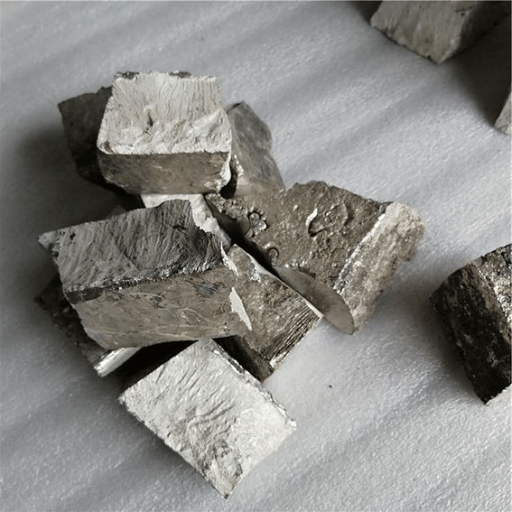
Industrial metals may be classified broadly as two, or more rarely three, groups depending on whether they are ferrous metals, non ferrous metals or alloys. The requirements for using each type is then application specific with regard to cost, weight, strength and corrosion resistance.
Ferrous metals contain varied alloys of iron. Common ones are cast iron, (an iron-carbon alloy with a carbon content of about 4.5%), (with a composition of around 0.002–2.14% (or 0.02–21.4 g/kg or 20–21400 ppm) carbon making the properties of the primarily iron). World Steel Association 2024 report sees annual global crude steel production reaching 1,885 million metric tons. Carbon steel is formed with 0.2-2.1% by weight of carbon in the equation (via ASTM A941) and cast the over 2% carbon content creates a production of cast iron, which is brittle but highly castable.
Non ferrous does not contain iron. They include Aluminum, Copper, zinc, Titanium, Nickel and Gold, Silver. It is probable that the largest by far is Aluminum growing USD 1183.9 billion in 2024, reaching USD 1746.9 billion in 2033 at CAGR of 4.2%. The driving force behind the increase is the demand in the automotive and aerospace industries where its lightness consisting of a density of 2.70 g/cm2 below that of to 7.85 g/cm2 makes for lightening of vehicles as these share the fusion of an ounce saved in weight with miles traveled potential. (per IMARC Group market report).
Formed when two or more elements are mixed in a specific specified proportion at least one element being a metal, alloys are engineered to have the desired quality or intensity difficult to achieve with a single elements properties. For instance brass provides properties that are harder than copper or zinc individually, along with better corrosion resistance, bronze being an alloy of tin and copper, and addition of chromium (10.5%) to steel to yield stainless steels means a layer of protective oxide forms which means the metal itself will not rust.
| Category | Examples | Density Range | Corrosion Resistance | Primary Use |
|---|---|---|---|---|
| Ferrous | Carbon steel, cast iron, stainless steel | 7.20–7.85 g/cm³ | Low (except stainless) | Construction, automotive, heavy machinery |
| Non-Ferrous | Aluminum, copper, titanium, zinc | 1.74–8.96 g/cm³ | Moderate to excellent | Aerospace, electronics, medical implants |
| Alloys | Brass, bronze, alloy steel, Inconel | Varies by composition | Tuned by alloying elements | Precision engineering, marine, chemical processing |
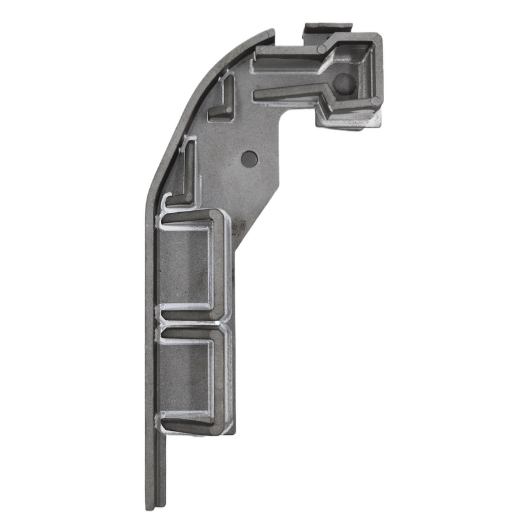
Different types of metals serve different construction requirements as shown below for various examples.
| Metal | Key Property | Primary Applications | Annual Production |
|---|---|---|---|
| Steel | High tensile strength (250–2,000 MPa) | Construction, automotive frames, pipelines | 1,885M tonnes (2024) |
| Aluminum | Low density (2.70 g/cm³), corrosion resistance | Aerospace, packaging, EV battery casings | ~70M tonnes (IAI est.) |
| Copper | Electrical conductivity (5.96 × 10⁷ S/m) | Wiring, plumbing, heat exchangers | ~22M tonnes (ICSG) |
| Titanium | Strength-to-weight ratio, biocompatibility | Jet engines, medical implants (Ti-6Al-4V) | ~0.2M tonnes |
| Zinc | Anti-corrosion (galvanizing) | Steel coating, die casting, alloys | ~13M tonnes |
| Nickel | High temperature stability, corrosion resistance | Stainless steel, superalloys, EV batteries | ~3.3M tonnes |
Metal recycling is a steadily growing section of the global supply chain. Bureau of International Recycling (BIR) 2024 data suggest that about 630 million tonnes of recycled steel enter into making new steel each year; this recycling prevents the release of 950 million tonnes of CO emissions. In the US alone recycled steel constitutes 69.2% of crude steel production, one of the highest level of recycled steel among the world major economies.
Similarly, at the non-ferrous section, recycling of non-ferrous metals like aluminum, copper has gained its share. While ferrous material, during recycling oxidizes slightly and deceases in quality, non-ferrous metals can be recycled ad infinitum without any material degradation. Recycling of aluminum would take about only 5% of the energy used to obtain aluminum from the bauxite ore and smelter.
All the elements on periodic table lie in three broad categories which are metals, nonmetals and metalloids. A stair step line running diagonally from boron (B, number 5) to polonium (Po, number 84) divides the periodic table into two parts. On the left lies the metals, on the right the nonmetals along the top, lower part of the diagonal belongs the metalloids.
| Property | Metals | Nonmetals | Metalloids |
|---|---|---|---|
| Electrical Conductivity | 10⁶–10⁸ S/m (conductors) | 10⁻¹²–10⁻⁴ S/m (insulators) | 10⁻⁶–10³ S/m (semiconductors) |
| Malleability | Malleable and ductile | Brittle in solid form | Varies; generally brittle |
| Bonding | Metallic bonding (electron sea) | Covalent or ionic bonding | Covalent bonding with metallic character |
| Appearance | Metallic luster (shiny) | Dull or varied | Can have metallic luster |
| Key Examples | Iron, copper, aluminum, gold | Oxygen, nitrogen, sulfur, carbon | Silicon, germanium, arsenic, boron |
Uinter-alian.
Metalloids are especially interesting because they connect two domains. Silicon-electric has a conductivity of approximately 1.56 10 S/m. That (or any transition element) has a conductivity decade that of copper (5.96 10 S/m), but millions of times that of sulfur (near zero conductance) does not imply mediocrity; it provides the ability to wire the world with a layer of silicon the price of a motel. the global silicon industry was worth more than US $600 billion.
Metalloids show “mediocre metal” status. The semiconducting traits of their element make them active ingredients for components such as transistors, solar cells, PC chips. Without silicon and germanium, modern computing would be impossible.
✔ Advantages of Metals
⚠ Limitations of Metals
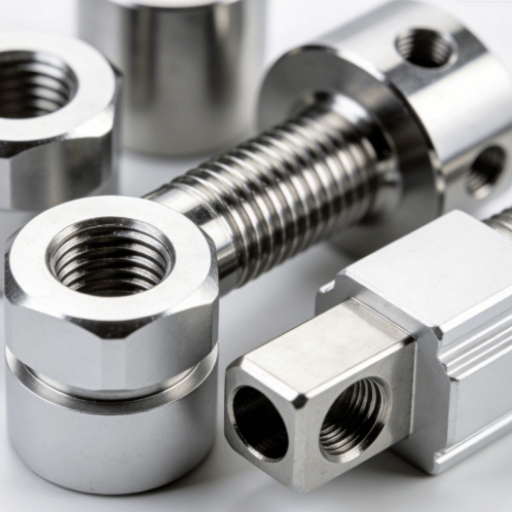
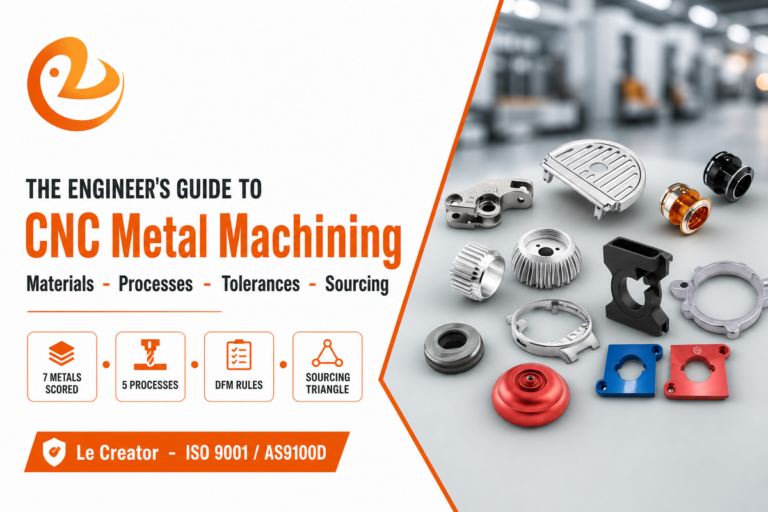
Raw metal can become the end product through various fabrication processes- casting, forging, welding, machining. Particularly beneficial to making metal products with tight dimensional tolerances is CNC (Computer Numerical Control) machining. The machining process involves the removal of metal from a solid block of metal along digitally generated toolpaths, it produces tolerances of ±0.005 mm.
Each metal type dictates its own machining parameters. Aluminum, which has a hardness of only 2.75 Mohs is machined through cutting with head sunk ideally with extensive and rapid heat dissipation through high thermal conductivity. Titanium, by comparison has very high chemical reactivity at high temperature, and work hardens leading to less than ideal speeds of cut and feed with very rigid tooling. On the other hand stainless steel, for a corrosion resistant layer of chromium oxide, is very hard, so powerfully sharp tooling and silica cooled both are used in machining.
📐 Engineering Note
Three parameters are critical to the manufacture of metal components through CNC machining: (1) machinability rating — free-machining brass (C360) has a rating of 100 (highest) on the AISI scale, and Ti-6Al-4V just 22; (2) maximum achievable surface finish — aluminum consistently achieves Ra 0.8 μm, stainless steel Ra 1.6 μm; (3) coefficient of thermal expansion — aluminum at 23.1 μm/(m·°C), steel at 11.7 μm/(m·°C).
When a project requires CNC metal machining services, the initial engineering decision is to find an appropriate metal alloy to match the application needs — strength, weight, corrosion environment, tolerance class. Le Creator’s engineering team works with aluminum, steel, stainless steel, brass, copper, and titanium for automotive, medical, and electronics applications.

Need precision metal parts machined to your specifications?
With CNC Machining services, Le Creator forms metal components in aluminum, steel, stainless steel, brass, copper, titanium for clients from the automotive, medical and electronic sectors. We have used the published standards (ASTM, IUPAC) for our material property reference and industry reports (i.e. the World Steel Association and BIR). We use these data references in order to choose the suitable machining parameters to ensure the part quality in our working everyday.