

Supportive, Professional, Client-Focused Service
From prototypes to full-scale production, we’ve got you covered.



Titanium serves as an innovative material which people recognize for its strength and lightweight properties and ability to withstand corrosion. The process of machining titanium requires multiple solutions to its specific challenges which include heat management as the most essential requirement. The properties which make titanium more valuable than other materials create a machining process which generates excess heat that damages tools and results in poor surface finishes and decreases machining performance. The blog will examine the difficulties which arise from managing heat within titanium machining processes. The blog will present effective methods which solve heat-related problems together with advanced technologies that ensure efficient production while maintaining budget control. The article provides information about titanium processing which will benefit both experienced machinists and engineers and people who want to learn about material science.

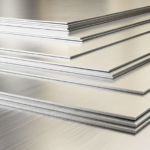
Titanium and its alloys achieve widespread recognition because they possess exceptional strength-to-weight ratio and corrosion resistance and high melting point which makes them suitable for demanding applications that include aerospace and medical devices and automotive components. Titanium exists in two forms which are commercially pure grades and alloyed grades. Commercially pure titanium provides outstanding corrosion resistance whereas titanium alloys such as Ti-6Al-4V are designed to deliver superior strength and durability. The specific characteristics of each type must be understood to achieve proper selection and application in different industrial sectors.
Titanium is a widely used material because it possesses outstanding property combinations which make it suitable for various industrial applications. Its strength-to-weight ratio enables it to match certain steel materials while weighing 45% less than those steels. The aerospace industry and medical implant field both require this material because weight reduction constitutes a fundamental requirement in their operations. Titanium exhibits exceptional corrosion resistance which protects it from damage in extreme environments including seawater and acidic conditions. The material can be used in high-temperature applications because it has a melting point which reaches 1,668°C (3,034°F).
Alloying processes enable titanium to achieve higher strength levels which enhance its ability to withstand damage. The titanium alloy Ti-6Al-4V demonstrates enhanced performance capabilities because it can endure both extreme conditions and material fatigue while maintaining its structural integrity. The biocompatibility of titanium allows it to be used in medical applications because it remains non-toxic without causing harmful body reactions for patients who need joint replacements or dental implants.
Titanium serves as an essential resource for upcoming technological development which will impact energy and manufacturing and space exploration.
There are several types of titanium alloys, including alpha alloys, near-alpha alloys, alpha-beta alloys, and beta alloys.
| Alloy Type | Composition | Strength | Usage | Weldable | Temp Range |
|---|---|---|---|---|---|
| Alpha Alloys | Aluminum, oxygen | Moderate | Jet engines | Yes | High |
| Near-Alpha Alloys | Al, Sn, (trace) | High | Aerospace | Limited | Moderate |
| Alpha-Beta Alloys | Al, V, Fe | High | Medical parts | Yes | Moderate |
| Beta Alloys | Mo, Cr, Nb | Very high | Aerospace gear | Limited | Low-Mid |
This concise summary and table provide an overview of titanium alloy types, their characteristics, and applications in various industries.
The combination of physical and chemical properties makes titanium machining operations challenging because of its unique attributes. The material’s low thermal conductivity property causes machining operations to generate heat that concentrates at the cutting edge, which results in fast tool damage. The high strength and low elasticity modulus of titanium lead to its resistance against deformation, which causes cutting forces to become unpredictable and raises the potential for chattering and tool malfunction.
The process of cutting titanium metal faces another difficulty because titanium metal forms strong chemical bonds with cutting tools when exposed to high temperatures. The welding process results in material accumulation on the tool surface, which increases the rate of wear and decreases the operational efficiency of the machining process. The material shows reactive properties at high temperatures, which result in oxidation and other harmful surface reactions during the machining work process.
The solution to these problems requires the use of specialized cutting tools together with specific cooling methods and machining techniques which increase both the difficulty and expense of the work. The aerospace industry and medical field and automotive production process all consider titanium to be an essential material because it possesses superior strength-to-weight ratios and resistance to corrosion. The process of solving machining challenges requires the optimization of operational parameters to achieve three objectives of maintaining precision and maximizing production while extending the lifespan of tools.
Machining titanium depends on heat because it determines how tools wear and how well surfaces are produced and how efficiently the machining operation runs. The cutting process generates heat which remains trapped at the tool-workpiece boundary because titanium possesses poor thermal conductivity. The combination of unoptimized machining operations will lead to cutting tools which experience accelerated wear and performance decline.
The latest research demonstrates that modern cooling methods which include high-pressure coolant systems and cryogenic machining technology, enable better heat management solutions. The methods decrease thermal stress experienced by tools and workpieces which results in better productivity and extended tool durability. The combination of advanced heat-resistant coated tools with specific cutting speed and feed rate modifications, has emerged as a key solution. Correct heat control methods enable operators to achieve two goals. The first goal involves precise machining. The second goal focuses on maintaining financial efficiency while handling this challenging material.
The process of titanium machining generates excessive heat because the metal possesses low thermal conductivity and high strength characteristics. The thermal conductivity of titanium results in inefficient heat dispersion from the cutting area which leads to most heat accumulation on both the cutting tool and workpiece. The machining process experiences three negative effects because of this localized heating which causes rapid tool deterioration and workpiece thermal expansion and decreases operational efficiency.
The primary reason for heat production during titanium machining operations occurs because of the excessive friction which exists between the cutting tool and the workpiece. The cutting process experiences two effects because titanium strongly bonds with cutting tools which creates material adhesion that increases cutting resistance. The combination of high cutting forces and friction results in increased heat generation throughout the entire procedure.
The cutting tool experiences elevated heat production because built-up edges (BUE) develop and subsequently break apart during operations. The BUE creates a disruptive cutting edge which causes titanium to stick to the edge and prevents the operator from conducting smooth material removal. This process creates a pattern of cutting that creates multiple heat sources and applies extra pressure to the tool. The process of machining titanium requires the implementation of these mechanisms in order to achieve precise and effective results.
The process of titanium machining experiences major impact from heat because it determines both tool wear and machinability. The cutting process of titanium results in heat that remains in the cutting zone because titanium has low thermal conductivity which prevents heat from escaping through the chip. The heat in this area increases the rate of tool wear through mechanisms that produce flank wear and crater wear and notch wear. The cutting tool experiences surface damage because high temperatures create chemical reactions with titanium. The cutting edge experiences enhanced plastic deformation at increased temperature which shortens tool lifespan while compromising machining accuracy.
Technical Insight
Advanced strategies which include implementing high-performance coatings and optimizing cutting parameters through speed and feed and depth settings and effective cooling methods need to exist for achieving these goals. The coatings composed of titanium aluminum nitride (TiAlN) demonstrate superior heat resistance which high-pressure coolant systems use to control extreme thermal conditions. The selection of tools constructed from durable materials such as carbide or polycrystalline diamond (PCD) improves machinability while decreasing heat-induced tool wear.
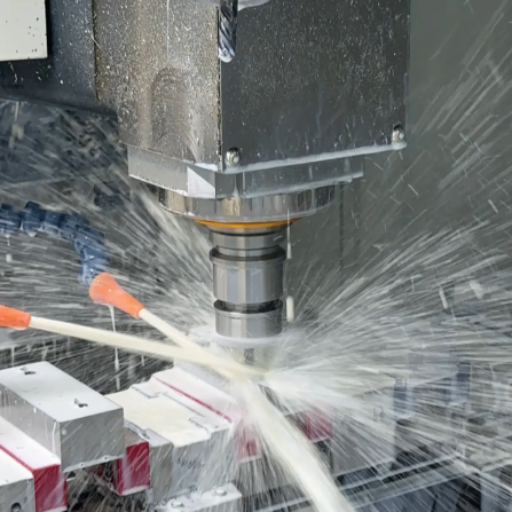
Various processes exist for machining titanium because each process addresses the material’s three fundamental challenges which include its low thermal conductivity and its exceptional strength. The primary methods include:
Proper practices together with the right tools create a system that successfully machines titanium while preserving both tool durability and product quality.
The optimal results of titanium machining require advanced CNC techniques which combine precise operations with efficient performance. The essential method of adaptive machining uses real-time cutting parameter adjustments to respond to material property changes and tool condition variations. High-speed machining strategies which utilize lower cutting forces and higher spindle speeds help to control titanium work hardening while minimizing process heat accumulation.
The implementation of 5-axis CNC machining enables production of intricate shapes while achieving decreased tool vibrations through its capability to create shorter tool paths and improved tool-to-part contact. The popularity of cryogenic cooling techniques has increased because they provide substantial temperature reduction during machining which extends tool lifespan and preserves material properties. The correct application of these methods together with advanced software systems and monitoring tools that operate in real time, empowers producers to fully utilize titanium machining potential while upholding exceptional quality standards.
Case Study
Aerospace project demonstrated successful titanium component machining through advanced cutting parameter optimization and improved cooling system usage. The team used high-performance tooling with exact geometries to achieve reduced tool wear and sustain precise dimensional measurements. The implementation of cryogenic cooling system showed significant decreases in thermal load, which resulted in better surface finishes and extended tool operational life. The production process used real-time monitoring systems to oversee performance while identifying potential problems, which helped maintain quality standards during manufacturing. The combined strategies produced high-precision titanium components which met stringent aerospace application standards and delivered on time.
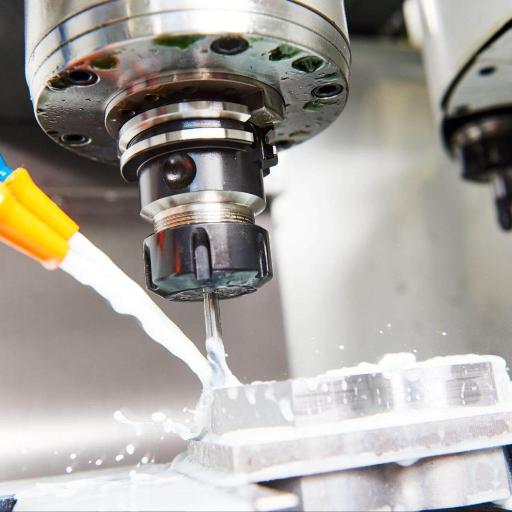
Effective titanium machining requires cooling methods which maintain workpiece temperature control and enable accurate machining results. The low thermal conductivity of titanium causes heat to accumulate at the tool-workpiece contact point which leads to both tool damage and material distortion. The cooling method known as flood coolant uses a continuous flow of cutting fluid to decrease heat and friction between the cutting tool and workpiece. The machining process maintains operating temperatures within safe limits while extending tool lifespan and ensuring precise production of parts.
Cryogenic cooling represents an advanced method which uses liquefied gases such as nitrogen and carbon dioxide to achieve extreme reductions in cutting area temperatures. The method proves effective for high-performance machining because it replaces traditional fluids with advanced thermal management systems. Cryogenic cooling extends tool lifespan through reduced thermal stress and provides excellent surface finishes that meet aerospace component standards.
Minimum quantity lubrication functions as an environmentally friendly solution which reduces environmental harm while delivering precise lubrication and cooling functions. MQL uses a fine mist of oil combined with compressed air which operators apply to the cutting zone in order to decrease heat and friction. The technique proves especially beneficial when organizations need to decrease their fluid consumption while operating through all sustainability initiatives. The selection of the proper cooling technique requires evaluation of both the machining parameters and production objectives because this method guarantees maximum operational efficiency to solve titanium machining challenges.
The selection of tool material becomes essential for titanium machining because cutting operations produce high temperatures during the process. The industry considers coated carbide tools as the best option because they provide excellent protection against heat and wear. The tool performance under extreme conditions improves through thermal stability enhancement provided by titanium aluminum nitride (TiAlN) coatings. High-speed applications can use ceramic tools because they sustain their hardness despite rising temperatures. The selection process for tool materials requires specific machining requirements together with operational parameters to achieve durability and precise results.
The process of titanium machining needs its cutting parameters to be selected and modified because those parameters determine how much heat will be produced and how long the tools will function and which materials will stay intact. The essential elements which determine machining operations include cutting speed and feed rate and depth of cut. Research shows that using lower cutting speeds together with higher feed rates results in reduced heat buildup while maintaining effective material removal. The application of appropriate cooling techniques which include high-pressure coolant systems enables more efficient heat dissipation. The use of sharp high-performance tools which have TiAlN and diamond-like coatings enables better operational efficiency through reduced friction and improved thermal resistance. The process of continuous tool wear monitoring together with parameter adjustments enables consistent performance maintenance during titanium machining operations.
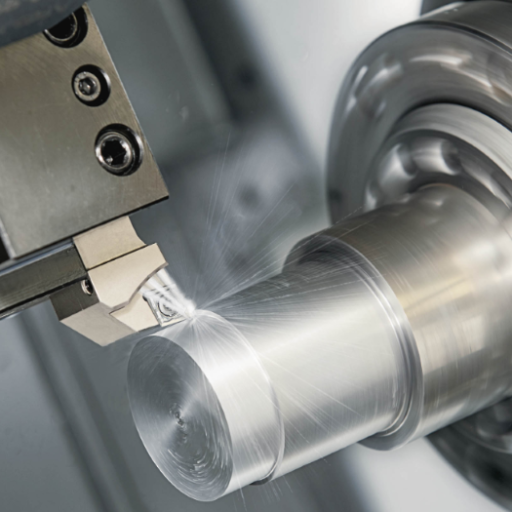
The main obstacle in titanium machining lies in heat control because titanium exhibits low thermal conductivity which leads to heat buildup in the cutting area. The current research efforts concentrate on three different areas which include improving cooling methods and developing new tool materials and enhancing machining operations.
The development of advanced lubrication and cooling systems includes minimum quantity lubrication (MQL) and cryogenic cooling which improve heat dissipation capabilities. MQL applies a fine mist of lubricant directly at the cutting edge, minimizing heat and improving tool life. Cryogenic cooling uses liquid nitrogen as a cooling agent to achieve extremely low temperatures that protect both the tool and workpiece from thermal damage.
The use of cutting tools made from high-performance materials has become more common because of their ability to maintain cutting efficiency under extreme operating conditions. The tools provide exceptional protection against wear while maintaining their ability to manage heat, which makes them suitable for handling the high temperatures that occur during titanium machining. The combination of high-speed machining and optimized toolpath planning brings about better heat distribution which results in reduced heat buildup during machining operations. The combination of these innovations leads to improved operational efficiency and precision and extended equipment lifespan for titanium machining operations.
The combination of automated systems and intelligent machining systems has transformed titanium machining by providing better accuracy and operational efficiency and consistent operation capabilities. The manufacturing process benefits from automated systems which include robotic arms and CNC machines because they reduce human mistakes while keeping product quality at a constant level. Smart machining technologies use Internet of Things and Artificial Intelligence to provide operators with tools that enable them to monitor operations in real time and make process changes during the machining procedure. The system evaluates machine operational data together with cutting parameter data and material property data to create predictive maintenance models which enhance decision-making processes. Advanced solutions enable manufacturers to enhance their production processes while decreasing machine idle times and solving the unique difficulties that arise from processing titanium which includes its resistance to heat and extreme hardness.
Titanium machining technology will achieve its future goals through improvements in efficiency and precision and sustainable practices. 3D printing and other new additive manufacturing methods create new possibilities for using titanium because these methods create minimal material waste and allow users to create complex products. The combination of artificial intelligence with machine learning technologies will help optimize manufacturing processes through real-time predictions of tool wear and cutting strategy improvements. The development of new cutting tool materials and coatings which can endure the combined challenges of titanium toughness and heat resistance will become essential. The current trend of developing sustainable machining methods aims to decrease energy use and environmental harm while delivering performance results that meet industrial standards. The aerospace and medical industries together with other high-performance fields will experience industry transformation and expanded use of titanium materials because of these ongoing developments.
Sustainable machining of titanium alloys: a critical review
Published in the Journal of Engineering Manufacture, this paper discusses sustainable machining practices for titanium alloys, including heat management techniques.
Thermal-assisted machining of titanium alloys
This chapter explores various external heating techniques, such as laser and plasma torch heating, to improve titanium machining.
Towards energy management during the machining of titanium alloys
This research focuses on energy and thermal management during titanium machining, addressing its unique challenges.
Effect of machining parameters and heat treatment on the residual stress distribution in titanium alloy IMI-834
Published in Materials Science and Engineering, this paper examines the impact of machining parameters and heat treatment on titanium alloys.