

Supportive, Professional, Client-Focused Service
From prototypes to full-scale production, we’ve got you covered.


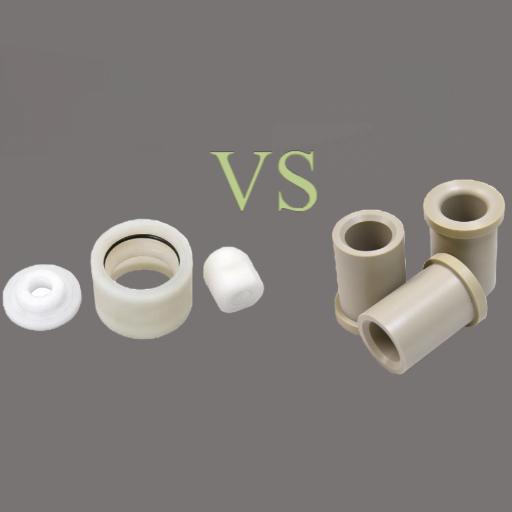
Making the right material selection can be mission-critical in engineering and industrial applications in terms of performance, durability, and cost-effectiveness. Among the vast class of blends in technical polymers, there emerge POM (Polyoxymethylene) and PEEK (Polyetheretherketone), respectively: these are two very versatile and rough-and-tumble materials. But how does a person tell what is best for the specific requirements? This article attempts to delve into the compared differences, pros, and best uses of POM and PEEK, inducing a clear understanding and choice. Thus, for your choice, be it some small precision parts, total resistance to chemicals, or cost-affordability, a comprehensive guide is in place.
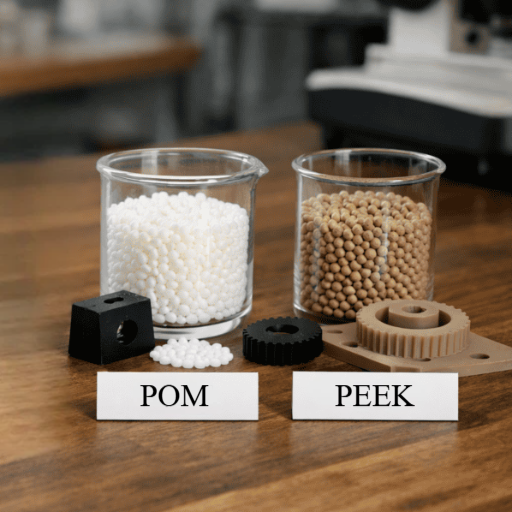
Referring to the attributes suitable for different applications, Polyoxymethylene (POM) and Polyetheretherketone (PEEK) are high-performance thermoplastics. POM is an extraordinary plastic reinforcing dimensional stability, low friction, and high resistance to wear in addition to such properties as dimensional precision parts like gears, bearings, and fasteners. Owing to its exceptionally high strength, combined with high temperature and chemical resistance, as well as low smoke emission, PEEK has attracted wide attention within specialized industries such as aerospace, medical, and automotive. When compared to PEEK’s better formability, POM is relatively low cost, thus allowing the two to possess sufficient characteristics to satisfy any technical requirement pertaining to extreme temperatures or high resistance. Whether your application requires POM at that point or PEEK, tailored to each requisite and performance, at least the choice is there.
Polyoxymethylene, aka POM and Polyetheretherketone, PEEK, are exemplary high-performance plastics. They maintain widespread application across an assorted range of uses thanks to their juxtaposed and essentially unique characteristics. POM, also known as acetal, is highly valuable due to its less friction, excellent wear resistance, and top-notch dimensional stability, which makes it an excellent choice for gears, bushes, and bearings in precision applications. Its endurance against mechanical action and resistance against moisture and solvents signifies that POM is a very reliable material for use in the automotive, consumer goods, and medical industries.
PEEK, alternatively which is a superlative polymer, has distinguished itself as an extraordinarily strong, thermally resistant, and chemically inert material. It can withstand extreme temperatures and also be swooped down in harsh environments, thus becoming a necessity in aerospace, oil and gas, and medical worlds for items such as gaskets, or bearings, or implants. To some extent, PEEK’s ability to replace metal parts owing to its ultra-lightweight material yet very strong capability is a logical context for advanced engineering. Both materials can be engineered around complex dynamics which give precision, resilience, and longevity.
Technical Analysis
Speaking of strength and stiffness, POM and PEEK both have mechanical properties for a wide range of applications in engineering; however, they are used differently in engineering.
Material A — POM
POM is known for its extraordinary rigidity and dimensional stability which make it ideal for precision parts and also drives these rare qualities. A tensile strength of about 60–70 MPa and a flexural modulus of between 2.5 GPa and 3.0 GPa for the polymer material hashes a balance of strength and stiffness for low to moderate load applications. Smooth use and wear resistance are critical in these applications.
60–70 MPa
Tensile Strength
2.5–3.0 GPa
Flexural Modulus
Material B — PEEK
On the contrary, POM holds it against PEEK in tensile strength and stiffness, provided its ultimate tensile is typically 90–100 MPa. A flexural modulus of 3.5–4.5 GPa is your typical PEEK. It can stand a high-level of performance and operates smoothly under harsh conditions. It demonstrates strength retention even when basically raised in temperature and low resistance to mechanical loads. For this attribute, PEEK is given preference in demanding sectors like aerospace, automotive, and medical, where stress holds the upper hand.
90–100 MPa
Tensile Strength
3.5–4.5 GPa
Flexural Modulus
Comparative Analysis
While both foster high mechanical resistance, PEEK is best for works demanding higher power and stiffness in challenging environments than POM. POM, then, offers low-end cost and a solution for products to be used where high-end performance is less important.
The properties of POM and PEEK about the impact resistance are confined within the specific demands of the applications. POM, also known as polyoxymethylene, offers excellent resistance to impact stress at normal room temperature, which can apply to components that have to go through degrees of mechanical stress, such as gears and bearings. It is also very resistant and stands repeated stress loading without spalling or cracking in common industrial conditions.
PEEK, now, beat POM where high performance is involved, especially in instances where there is extreme temperature alteration along with an ongoing load. Its conventional impact resistance slightly falls behind POM’s, but PEEK adds that with superior thermal and chemical protection and is not blunted in the severe environment, as exemplified by aerospace and medical applications. The cost, however, is usually very high, thereby restricting its suitability in less stringent conditions.
Summary of Comparison
POM has strong specialization towards applications requiring high impact resistance and cost-effectiveness, whereas PEEK is better in applications needing a combination of impact resistance and resilience under extreme conditions.
When contrasted for the criteria of fatigue behavior and life, POM (Polyoxymethylene) and PEEK (Polyetheretherketone) serve very clearly insofar as these materials address great but distinct classes of requirements emerging from the applications. The greatness here is because POM has very good fatigue resistance under cyclic stress and is very good for gears, bearings, and other movable/rotating machine parts, with all these capabilities for excellent predictable service life under cyclic loading under other considerations toward a given material that is cheaper for repeated mild cyclic stress situations.
Compared to polycarbonate (POM), PEEK has an exceptional fatigue resistance, which is characteristic to work perfectly well in high-heat environments with heavy mechanical loads. The elements that renders this material’s characteristic stand out are its good tensile properties, low creep, and, moreover, this material can maintain remarkable resistance, above-average performance in harsh applications, especially aerospace components and implants, respectively. The latest information renders data that, in undertakings subjected to killer fatigue tests, PEEK forces POM to the ground with many more miles in the long run, under severe conditions.
These are just some of the most notable features/strengths of PEEK and, compared to cases with stress, temperature, and wear-enhanced situations, POM works well for simpler applications with moderate fatigue exposures.
Performance Under Heat
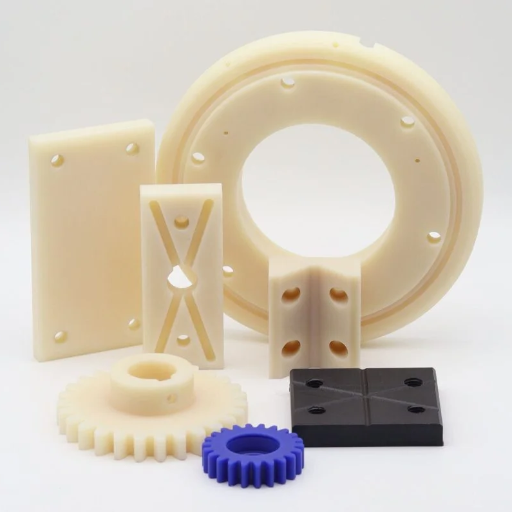
What distinguishes Polyoxymethylene (POM) from Polyetheretherketone (PEEK) is the fact that POM has only moderate thermal stability. POM has a good thermal stability up to about 100–120°C and beyond, the thermal stability decreases very slowly to zero. Such low thermal stability and subsequent degradation restrict its use in environments where higher temperature resistance is required.
In contrast, PEEK exhibits an exceptionally high degree of thermal stability. It can still be in its own element and continue to offer a strength and chemical resistance anywhere up to 250°C or even higher. This kind of quality allows PEEK to work peacefully in certain key industries where it can be exposed to high temperatures and aggressive environments.
Recent data indicates that PEEK’s high thermal deformation threshold and failure resistance clearly outperform those of POM even under long-term exposure to high temperatures. So, in high-heat demanding applications, PEEK will reign supreme, while POM stands as the preferred cost-efficient choice for environments with low thermal demands.
| Property | POM | PEEK |
|---|---|---|
| Continuous Service Temperature | Up to ~120°C | Up to ~250°C |
| Thermal Stability Level | Moderate | Exceptional |
| Thermal Conductivity | Low (good insulator) | Slightly Higher Than POM |
| Heat Deformation Resistance | Moderate | Superior |
| Best For | Low–Mid thermal environments | Extreme high-heat applications |
When compared side-by-side with respect to high-temperature performance, POM takes the water out, while PEEK is one of the thermoplastics with superb tolerance to thermal degradation. PEEK can be heated continuously up to 250 Celsius, making it an ideal material for high-temperature working applications. In contrast, POM finds its ideal use in the temperature ranges up to 120 degrees at the lower-ended part. For a higher duration of users’ exposure to the high temperature, it is superior to use PEEK on account of its higher strength, while POM would be a fair material choice for less demanding heating duties.
In terms of thermal conductivity and insulative properties, POM and PEEK show significant differences. POM has low thermal conductivity, making itself a good thermal insulator as the case may be where it is forced to minimize heat transfer. PEEK also has desirable insulation properties, yet a slightly higher thermal conductivity than POM, another variable acting in favor of the applications demanding some heat dissipation control. PEEK’s superior thermal stability is unsurpassed by any POM, thus rendering PEEK as a high-standard insulation which performs well even in the context of severe hotheads. POM is a good consideration for applications that expose the material, however, to a middle-to-high heat environment. So, PEEK is the highest durability answer for higher thermal resistance with insulation applications while POM remains, the best solution for low to mid-range cost-intensive thermal insulation modules.
Manufacturing Considerations
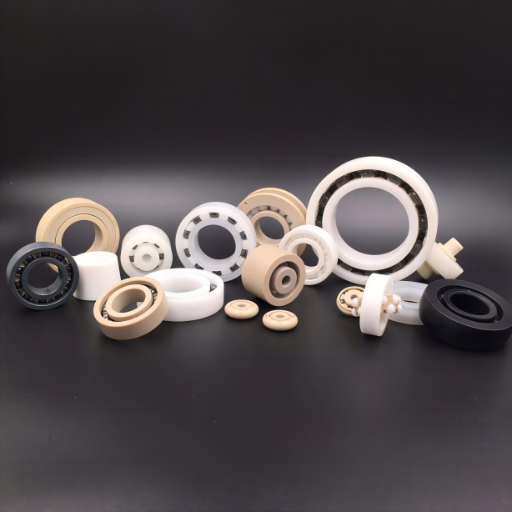
PEEK and POM are distinctly different in their peculiarities among another in regard to machinability considerations. POM stands out as possessing high dimensional stability, low friction coefficient, and easy machinability qualities which make it a material of choice for precision components. Standard CNC cutting tools can effectively process POM without too much tool wear, and its relatively low melting point results in decreased chances of thermal deformation. On top of all those, the material’s relatively low cost would often make it desirable for mass production needs.
On the contrary, working with PEEK is much more difficult. PEEK is difficult to machine, with its high thermal resistance and toughness. Precision typically requires specialized cutting tools and adequate cooling needs to be maintained to counteract the build-up of heat during machining. PEEK is more expensive but given that it pays off in terms of its mechanical and chemical properties and associated grinding needs, a worthwhile case can be made for developing this. Employing the progress of CNC technologies and optimized process parameters, producers can provide precision machining processes with both POM and PEEK in the respective industries of automotive, aerospace, and medical devices.
When POM and PEEK are compared in terms of fabrication ease and tolerances, there are some noticeable differences. POM is generally easier to machine, with very little necessary in terms of specialized tools. Meanwhile, its low melting point allows for its quicker processing. These factors, together with its dimensional stability and resistance to warping makes POM viable for achieving tight tolerances using just the usual feed and speed for cutting tools.
PEEK, on the other hand, is a challenge to fabricate due to its high melting point and the hardness of its output. Precision will invariably be lost by any irregular cutting. To control the temperature experienced during cutting processes and prevent the surface from excessive damage, specific modalities and tools are conducive to the maintenance of precision. PEEK does keep quite high tolerance after having been machined under a sequence of temperatures and in the presence of any mechanical load. Thus, it is considered versatile enough for high-performance applications.
POM is generally cheaper used than PEEK, and its fabrication scope would typically only extremely close tolerances. PEEK would, on the other hand, be preferred for rare cases where consistency of tolerances and material properties are critical.
Machining processes can significantly influence material properties of both POM and PEEK. In the case of POM, machining, in general, does not adversely affect the inherent characteristics such as high stiffness, low friction and dimensional stability. However excessive heat caused by cutting may lead to surface degradation or even material melting, causing some adverse consequences regarding the appearance (melting, vapourisation, polymer chain scission, etc.) and the superficial dimension changes. It is crucial to always use sharp tools and regulate feed rate as well as cutting speed to keep the undesirable — in this case, thermal — impact on POM to its minimum.
PEEK, known for its excellent resistance to thermal environments and better armor against mechanical stresses, can thus withstand much tougher machining conditions compared with POM. If machined ineffectively, there may establish internal stress, surface micro-cracks, or minute inaccuracies which in turn can result in poor performance, especially in important applications. Maintaining the much-valued characteristics, extreme care with properly generated toolings and cooling systems is evidently necessary.
There have been more recent reactions which also recognize that as both materials are versatile, the advanced machining technologies, including CNC machining, would significantly enhance the product’s precision and surface quality. Following specific machining practices conformed to each studied material can only lead to improved performance with overall longevity in their developed components with respect to infusion into industries like aerospace, medical, and automotive where first and foremost the integrity of the material is concerned.
Decision Framework
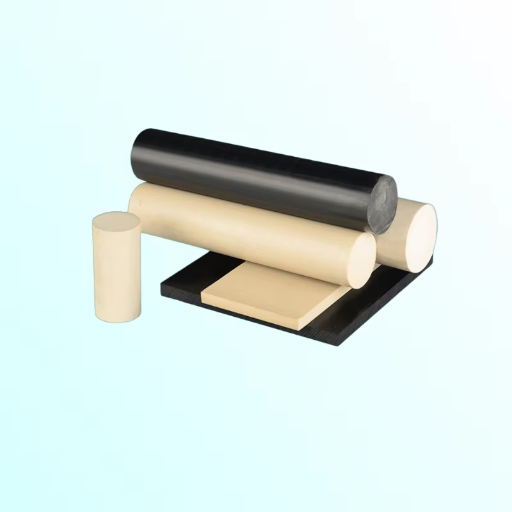
The following factors are to be borne in mind when comparing POM (Polyoxymethylene) with PEEK (Polyetheretherketone):
Analyze the functional requirements, environmental conditions, and budget constraints in order to choose the materials that best meet the requirements for your application.
The choice between Polyoxymethylene (POM) and Polyetheretherketone depends on the purpose of use and the basic raw properties that fulfill that requirement and must really make sense. Here is a brief look at their respective prospects.
| Criterion | POM | PEEK |
|---|---|---|
| Mechanical Performance | Excellent rigidity, low-coefficient friction, and modest resistance to wear. Best for gears, bearings, or slide ways against lightly demanded load platforms. | Extremely strong, heat resistant up to 260°C, resists creep under long-time load. Well suited for aerospace, medical, and automotive applications. |
| Chemical / Environmental Resistance | Good resistance to fuels, solvents, and mild chemicals. Cannot hold up against strong acids or highly oxidative environments. | Excellent against aggressive chemicals, steam, radiation, and continued exposure to water and temperature that might degrade POM. |
| Machinability & Manufacturability | Less difficult, greater forgiving tendencies, lower-cost mass production. | More precise requirements due to very high hardness and melting point. |
| Cost and Level of Use | Cheaper. Best for general applications without the need for extreme conditions. | Expensive. Justified for demanding applications requiring mechanical, chemical, or extreme temperature resistance. |
Conclusion
POM can be used in standard applications where cost and processability are significant, while PEEK may be selected if exceptionally high performance is crucial under the strenuous conditions.
Final Verdict
When considering the latest insights, the choice between POM and PEEK ultimately boils down to the application’s requirements. POM is a fantastic choice for general applications in which matters such as cost, machinability, and low-friction properties are important. It performs well in environments at mild temperatures that need not be too high and under moderate mechanical requests, making it an excellent choice in applications like gears, bearings, and wholesome components.
PEEK is best used in heavy-duty applications. Since PEEK has the highest thermal stability, better chemical resistance, and extraordinary toughness under severe environmental circumstances, it can arguably justify the higher price for obtaining the product. PEEK is envisaged among the aerospace, medical, and oil and gas industries, for intensive constructions with high pressures, elevated temperatures, or corrosive fluids.
Key Points
Proper selection of a material — no matter what it is — starts with a careful evaluation that should consider your desired performance and budgetary constraints. The correct selection assures both efficiency and cost-effectiveness in the final product.
Color Changes of Polyetheretherketone (PEEK) and Polyoxymethylene (POM) Denture Resins
This study compares PEEK and POM materials in terms of their color stability under staining and cleansing conditions.
Link to source
Impact of Surface Roughness and Contact Pressure on Wear Behavior of PEEK, POM, and PE-UHMW
This research investigates the wear performance of PEEK and POM under varying surface roughness and contact pressure conditions.
Link to source
A Comparative Study of Polymer Gears Made of Five Materials
This paper examines the performance of PEEK and POM gears, including wear rates and torque under different conditions.
Link to source
POM Mechanical Properties
This resource provides an in-depth review of POM’s mechanical properties and processing conditions.
Link to source
Q 01
When considering POM against PEEK for application in corrosive environments, exactly how does POM fare in chemical resistance under harsh conditions as compared to PEEK’s chemical resistance?
Where POM holds good chemical resistance qualities toward hydrocarbons, alcohols, and weak acids, it will not withstand heavy oxidizers and some organic solvents — POM loses against PEEK, which provides a far superior chemical resistance in harsher environments. Only when subject to severe chemical environments is the comparison made that for its broad chemical resistance and higher continuous service temperature, PEEK would be the material to choose generally.
Q 02
Can we compare POM to PEEK in terms of strength and stiffness for high-performance products in an extensive way?
POM has better failure due to mechanical properties and toughness and hence finds applications in many mechanical components. Although PEEK has the best failure in tensile strength, it performs exceptionally well when the application demands high environmental temperatures with regard to heat resistance and thermal cycling. A good thought of PEEK being best for applications where temperature and long term demanding loads are critical.
Q 03
What about the thermal properties of POM, and how do they affect the heat-deflection value or service temperature?
In comparison, POM has moderate thermal properties and hence, a lower temperature for heat deflection, which puts an end to its continuous use in temperatures higher than in high performance polymers like PEEK. POM can function well within moderate-service-temperature applications, but for when both deflection at temperature and continuous service at high temperature are called for, PEEK is a good material as it fares better to sustain its mechanical properties.
Q 04
How should I weigh the hardness, molecular structure, and stiffness and mechanical properties when selecting the right material?
Material selection involves trade-off on one hand, balancing the hardness, molecular structure, mechanical strength, and stiffness together with the demands of the application. The semi-crystalline molecular structure in POM provides rigidity and hardness for many parts, whereas the aromatic backbone and the semi-crystalline structure provide even higher stiffness, temperature resistance, and chemical stability for PEEK. With these strengths and weaknesses in mind, I can imagine a fair amount of judgment on the part of the engineer in selecting a material with its appropriate use under certain temperature and load conditions.
Q 05
Do you have any processing challenges such as blow molding or typical plastics behaviors when working with POM or PEEK?
Injection molding, machining, and blow molding (POM) is relatively easy to do — depending on the line concerned or involvement required. Nevertheless, POM can be sensitive to moisture and can rapidly create formaldehyde. PEEK, on the other hand, is comparatively difficult to process because of its high melting points and requirements in machinery. However, once PEEK is properly processed, it has the finest of engineered hard powers. Fillers, like conductive or stiffening carbon-powder fillers, can be used in both polymer types, which may greatly affect surface roughness and machineability.