

Supportive, Professional, Client-Focused Service
From prototypes to full-scale production, we’ve got you covered.



Apart from precision and consistency, another crucial aspect in POM (Polyoxymethylene) CNC machining often overlooked is stress relief during the machining process. If not dealt with properly, poor stress management can lead to warping, altering dimensions or causing surface defects, thereby compromising the integrity of the end product.
This post discusses essential techniques and strategies to relax the internal stresses during POM CNC machining, which guarantee you good yield and longer life for your components. Whether you are just starting out in CNC machining or an experienced professional, this guide equips you with newfound knowledge that improves the machining processes while avoiding costly mistakes.
Proactive stress management through annealing, optimized geometry, and precise machining parameters is essential to prevent warping and ensure the long-term dimensional stability of POM components.
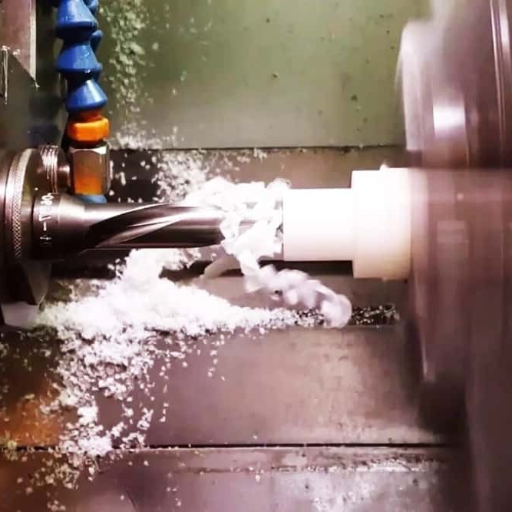
Polyoxymethylen (POM), commonly known as acetal, is a highly miscible polymer that is considered ideal in CNC machining for its excellent workability, stiffness level, and strength. Yet, these materials can bear away under sheer intense stress while machining or transformation. Much of these stresses are lessened due to material uneven removal, aspiration big areas, mismatch expansion coefficients with thermal, or acetal’s properties in shear.
Warpage will result if these stresses are left untreated. Such strengthen would then decrease the mechanical performance of the product or would threaten its geometrical accuracy. Producing high-quality components, maintaining precision etc. rely on controlling the stresses out. Heading to long-term integrity within applications.
Acetal, commonly termed polyoxymethylene (POM) or Delrin, is thereby a highly cost-effective and widely suitable technology in the engineering-grade thermoplastics league, praised for its extraordinary mechanical and thermal resilience. Its strong features are stiffness, low friction, and rapid dimensional stability for precision moldings with high wear and mechanical requirements. Applications are to gears, bushings, automotive components, and consumer electronics.
According to the data, POM becomes increasingly valid in the automotive and electronics sectors with a bright future and a broad scope set for growth within the confines of the global market. Demand, an eternal turn around market forces, stiffening for lightweight robust materials used to increase vehicle efficiencies. They are high-performance plastics on the side of gracing the technological design of electronics. In trying to encourage new environmental-friendly formulations, consumption of such materials actually ensures that environmental concerns may be refracted although leaving POM materials as an environmentally friendly, versatile and diverse material for daily-use applications.
Stress concentrations are those zones within very high material stress, which are substantially higher from societal zones, due to geometrical irregularities like sharp corners, notches, or holes. Especially important for POM (Polyoxymethylene) machined parts is the phenomenon since it can have adverse effects on mechanical integrity and longevity of the part. POM is known for its high strength and high modulus, but its frailty under localized high stress can result in cracks or failure to occur over time.
Creators can reduce stress concentrators by scaling back on sharp inner corners, keeping wall thickness uniform, letting the design show small fillets where they are needed, and making sure no major changes are present in the geometry. Proper control over machining will also reduce the occurrence of microcracking or other infiltration processes that could exacerbate or multiply stress concentration. This will directly improve the performance and durability of the POM parts under load, making them excel for use in various industrial applications.
Stress relief in plastic CNC machining is an important thing done to increase the quality and the dependability of the product. Stresses that occur within the materials are carried typically as a consequence of the cutting force and the heat during machining. Stresses left unreduced will give supportive distortions, deviations upon actual measurements and almost premature mechanical failure to the component during the initial course of its service. Introducing favorable stress relieving methods, including annealing, should prevent accumulation of stresses. This is done to keep it stabilized and strengthening its mechanical attributes.
Recent findings also indicate that the lack of provision of stress relief in POM parts can greatly affect their performance, particularly in applications where close tolerances or dynamic loads are involved. Advancements in machining technologies, along with stress relief techniques, enable manufacturers to bring out parts of considerable precision and consistent quality, thereby serving various industries like automotive, medical, and consumer electronics. Stress relief must continue to emphasize the CNC machining process to secure better and long-lasting operations for POM components.

Polyformal upholds these mechanical properties the most when put to good use in components that involve various loads. In this, the strength and stiffness of polyoxymethylene are rather in between, unlike other commodities resulting from the diverse nature of its tensile strength and stiffness. This allows for sustained structural integrity under heavy mechanical conditions. It is resilient and deformation-resistant under dynamic loading, thus being an ideal material in gears and bearings for applications of this type.
The excellent creep resistance, when applied to heavy-long-load conditions, is capable of maintaining resistance to distortion under such pressure. Instead, there is a durable performance over time that contributes immensely to the industry as the time flies away. Some other plastic of this nature will begin to reveal weakness, such as the degradation of mechanical properties, at some moderating temperatures. Want to know where the line lies? Well, polyformal has the reservations and gumption to stabilize itself from low to high temperatures.
In systems where actual load cycles end up producing materials’ complex loading, the high wear resistance, compounded with the low coefficient of friction of POM, will let the material to survive well under actual mechanical loads. The reduction in loss due to friction will often add to the enhanced shock resistance of the material produced under such conditions. Energy savings through lower friction, high mechanical stability, and a long life cycle are the forces that propel POM into this position.
Polyoxymethylene or POM is closely associated with the term machinability due to its appreciable thermal stability, making it a suitable material for various thermal conditions. It does so because its low thermal conductivity promotes minimal heat transfer, which pays off particularly well in high-speed machining processes notorious for yielding an overload in heat leading to mediocre output. The thermal elongation of POM is rather low, which only assures the dimensional stability even when subjected to the vagaries of temperature differences. This stability is unbelievably significant for meeting tailor-made precision and tight tolerances on machined materials. Additionally, POM manages its mechanical properties over a substantial temperature range, rendering more convenience to machinability and assured, unvaried performances.
Properly selecting the speed of machining, geometries for cutting, and lubricants is indispensable to absorb any energy that might cause thermal degradation.
More advanced cutting tool technologies are bringing success in machinability and good cooling methods avoid excessive heating in case of POM. Managed heat also allows for efficient and precise production. In the end, a deep understanding of the thermal properties of POM can help to safely handle it in the challenging technical application.
Geometry in materials plays an influential role on the distribution of the stress throughout Polyoxymethylene components under service conditions. Sharp edges and corners result in stress concentrations, leading to material crack or failure over time. Rounded corners, or fillets, give an even sharing of stress across the component enhancing its durability. Moreover, the thickness of POM parts determines their load bearing capacity; thinner sections distort easily under load, while thicker sections result in uneven cooling during production, leading to stress buildup potential. The insight into and optimization of geometry during the designing phase assures the ability of POM parts to maintain structural integrity, and consequently to perform reliably for the variety of applications.
Effective conditioning of a material is needed in POM CNC machining in order to reduce residual stresses and improve tolerances. A common means of conditioning is to anneal the POM material before machining it. Annealing implies heating the polymer to a temperature below the melting point, generally within the 100-120ᵒC range, and allowing it to cool slowly. Annealing reduces any internal stresses from extrusion or molding that may be present in the polymer.
It also goes further to shape the raw materials for proper storage, since conditions here can highly condition them: environments with stable temperature and humidity conditions to avoid taking up moisture which would considerably diminish machinability and part accuracy.
Lastly, machining processes should be chosen with care, ensuring they are gradual, low in stresses, and free from the possibility of cold work introduction. Machines should be run at high speeds, supported by very sharp tools, through the supply of low coolant flow rates, thus helping to keep the temperature around the cutter to within points of the workpiece. By adopting such techniques, the service life and reliability of any chemically resistant POM component is ensured under serious conditions.
The efficient clamping at POM CNC machining is crucial to prevent material changes due to deformation and inaccuracies in dimensions. The major issues in holding work are, first, to hold it tight and, then, to avoid the over-tightening of work-piece which creates undue stress. Modern techniques, for example vacuum fixtures, efficiently distribute clamping forces throughout the surface of the workpiece, thereby mitigating localized stress supposed to be imposed on the material. Using fitted soft jaws can render the work-holding process flexible and thereby significantly reduce the risk of several harm during a machining operation.
Additionally, modular work-holding systems easily allow for quick setting up and positioning without assuming any risk of overtightening. Delrin or soft jaw clamps, among others, may get utilized with limits to protect the POM material from direct compression. Thus, implementing such advanced techniques not only aids machining but also wants to solve the most common issue- dimensional warping during finishing, which fine-tunes the quality across all of the prototypes and major productions.

The concerns of residual stress in POM machining are key points concerning dimensional stability and durability of machined parts. POM, being a thermoplastic material, can develop internal stresses during machining due to many factors including generation of heat due to cutting, cutting speed, and tool geometry. To try to minimize and tame the residual stresses in POM machining:
By monitoring these factors with extreme accuracy, manufacturers are able to selectively impart higher quality to POM machined parts, ensuring they meet stringent functional and performance requirements for various applications. Thus, the combination of high precision machining with adequate stress control is what rules over the reliability of these components throughout various industries such as automobiles, medical equipment, and consumer merchandise.
Optimizing speed, feed rates, and tool selection is essential for getting high-quality results in POM CNC machining. The proper spindle speed is must be carefully adjusted according to the material’s properties and is generally between 3,000 and 10,000 RPM so as to avoid excessive formation of heat, leading to melting or deformation. Feed rates should fairly balance the efficiency of material removal and surface quality such that they should normally be set reasonably low for a smooth finish without causing stress.
Tool selection is also important; use very sharp, high-speed steel (HSS) or carbide tools to minimize the noise and ensure good cuts. Single-flute or two-flute tools can also keep down the generation of too much heat while machining. In addition to the above machining parameters, the right coolant or the right lubricant can improve efficiency further by calming the heat and prolonging tool life. The adjustment of such parameter grouping can lead to repeatable results, which can lead to taking care of the material waste, furthering performance requirements for the POM components.
The solution to reducing deformation in POM lies in the work that CNC milling machines can perform. One of these is to feed with a much slower speed control. This eliminates any potential heat that might otherwise be generated from the fast-chopping device. This procedure would also further prevent high internal forces generated during the production. Retaining a constant speed with the right tool-path setup similarly cancels out the shock ablation of a material, hence preventing warping and damage.
In another item or fact, magnets should be considered for securing machinable fixturing. Software is in real-time so it can compensate for environmental conditions subjected to clamping. To prevent any further distortion, the system repeatedly verifies the correctness of creek. Also, give more attention to the most up-to-date types of cutting tools, which help achieve proper material removal, rather than ensuring that the cutting edge can be oriented away from engaging in chattering by using up-to-date wire EDM systems.
This parameter has been combined with very good cutting tools and cooling strategies to induce optimum conditions at minimum deformation. By employing modern CNC technologies and improving dimensional accuracy, the design of POM parts is structurally very strong, even when employing highly intricate designs.
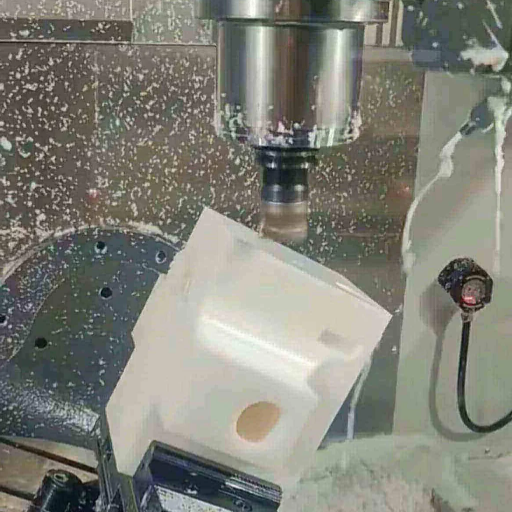
Using these techniques will ensure that POM components maintain their structural integrity, their dimensional accuracy, and durability.
Polyoxymethylene or POM, as a thermoplastic material, typically does not need conventional heat treat treatment. Controlled heat, however, can bring significant enhancement in mechanical properties and much needed stress relief. Following are some significant strategic heat treat treatments for POM:
The control of temperature must be very precise during these thermal processes to avoid the danger of material degradation through overheating, with the consequences of discoloration or weakening the material itself. The procedures enhance the reduction of component with different use cases.
Different surface treatments that could be exercised to improve the dimensional stability of Polyoxymethylene (POM) are plasma treatment. UV curing, chemical etching is the common methods used to modify the surface properties of POMs. For example, plasma treatments can improve POM adhesion properties thereby improving adhesion with coating and adhesives. The UV curing process is employed to impart a durable protective layer while still keeping the material properties.
One of the most effective surface treatments against moisture absorption and thermal variations, which may lead to poor dimensional stability, is the application of thin-film coatings made of suitable materials such as fluoropolymers. Another treatment with encouraging results is shot peening, by decreasing surface stress and increasing the global performance under the given mechanical loads. These facts indicate that specifically developed surface treatment measures can highly improvethe performance and service life of POM components in key applications.
Enhancing sustainability in CNC turning of POM-C polymer using MQL with vegetable-based lubricant
This study explores the sustainability of machining POM-C polymer, focusing on deformation under stress and optimization techniques.
Comparative analysis of surface finishing for different cutting strategies of parts made from POM C
Research analyzing the effects of cutting strategies on surface finishing and internal stresses in POM-C parts.
Cutting parameters optimization for minimal total operation time in turning POM-C cylindrical stocks
This paper focuses on optimizing cutting parameters to reduce deflection and stress during machining of POM-C.
Predictive modeling and multi-response optimization of cutting parameters while turning POM-C GF 25% composite polymer
Research on predictive modeling and optimization techniques for machining POM-C composite polymers, addressing stress and deformation.
Generally, and perhaps the most common way, annealing in saline or nitrogen chamber heating is good, because the controlled process in vacuum furnaces (water cooled or stress relief) will allow for controlled reconstruction; thus, satisfactory low temperature conditions are arranged. It can be emitted. One positive cleaning cycle will facilitate surface finishing thereof. The uncontrollable process of straightening without further internal damage is slower. Very likely, then, an established and few references can be questioned from those newer methods, sparking yet more opinions and considerations on this method.
The common method for relieving stress in machined POM components is low-temperature annealing. Annealing is a process in which parts are held under an even heat close to the crystalline melting point in order to allow for stress reduction, and then slow cooled to avoid any thermal gradients. Vibration or controlled humidity conditioning also sometimes benefits some part types. Proper selection of the method to be used for stress relief also depends on fabrication limitations, geometric complexity, and desired precision manufacturing outcomes. It is known that effective stress concentrations and subsequent potential fatigue life improvement will be made via proper stress relieving, reducing the risk of cyclic fatigue failure due to a number of loading cycles.
How the cutting speed and feed rate do play a crucial role in residual stresses and surface finishes on POM components. Therefore, from a high cutting speed spectrum, which can rise the local temperatures, soften material, and cause smearing or melt zones, to a low-speed world with aggressive feed rates that can build high yielding shear stress and compressive stress, a variety of machining techniques are in between. Optimum machining conditions in the spirit of sharp tooling, mild cutting speed, and mild feed rate will result in minimal rough surfaces and memory for small pocketing corner radii and tight radii transitions, thereby eliminating the extensive stress relieve requirements in post-machining.
Yes. While manufacturing, keeping tool sharpness, trying to minimize tool vibration and doses with reduced depth of cut have been thought important factors in reducing residual stress and surface roughness. Second, post-machining processes such as deburring, solvent polishing, and thermal stress relieving are advantageous to improve fatigue life. Particularly, for high-precision applications, dimensional inspection for flatness and controlled cooling rates for microstructure effect during processing are equally important in order to avoid premature fatigue failures.
The variation in operating temperatures, immersion in various solvents, and cyclic loading further induce more residual stresses that were developed during machining, and these may result in a subsequent dimensional variation and possibly fatigue failing for POM components. Hence manufacturing considerations offer process interruption of machining at convenient times and carefully select stress-relieving methods rather than testing until fit for service by machine, but rather extrapolating from these results obtained from other situations that may exert identical loads upon other plastics. Designing with effective stresses and shear interactions is simply the lesser risk of the firewall.