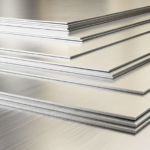


Supportive, Professional, Client-Focused Service
From prototypes to full-scale production, we’ve got you covered.



The public imagination tends to conjure up some rather boring images, but then encumbered, the best among magnesium alloys — the WE43 has burst upon the scene spectacularly within the aerospace sector. Indeed, this bio-inspired composite is giving birth to multiple fresh ways of designing and manufacturing aerospace parts by adding weight reduction and increasing strength and resistance to corrosion.
The following blog post will describe some of the outstanding features of such a WE43 magnesium alloy, the key use of which can be observed in contemporary aeronautical machines and why it is very quickly replacing all other materials for those designing for performance and efficiency first and foremost. Be it an expert interested in the latest technologies or more information on contemporary materials, this feature will reveal why aviation and much more is catching onto the use of WE43.
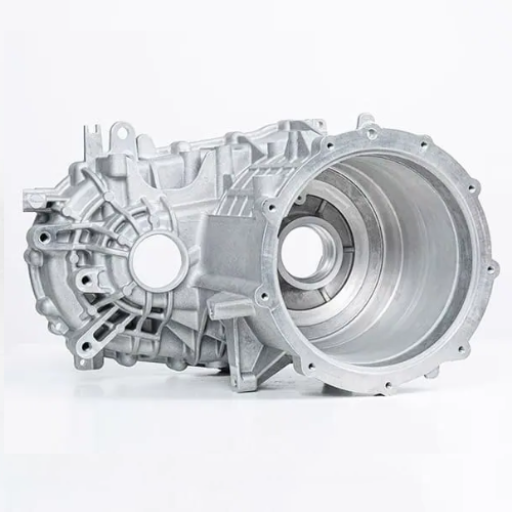
The aeronautics and automotive sectors employ WE43 magnesium alloy, a lightweight material developed for its properties for such applications for which traditional materials are not satisfactory. The reason for its demand by these industries is due to a balance of high strength and light weight, resistance to corrosion and functionality even at elevated temperatures. The raw material is magnesium in which yttrium, neodymium and other rare earth elements are present and it offers outstanding mechanical strength and heat resistance meaning that it is best for parts that do not have a high weight but need a strong material. The distinct characteristics allow more efficiency and better performance of the latest technologies.
WE43 is a premium-grade magnesium alloy, designed for its characteristic light weight, strength, and commendable resistance to wear and corrosion. By employing rare earth elements including yttrium, neodymium and zirconium together with magnesium, this alloy has been achieved such that it boasts extraordinary thermal stability along with nice mechanical properties. This alloy is of particular usefulness to various fields such as aerospace, automobile, and biomedical engineering where it is imperative to cut down on the weight as much as possible, without reducing the strength. In other sectors, the last few years have seen this alloy being used for structural parts, satellite structures, and medical devices because of its high temperature resistance along with biocompatibility. WE43 will continue to be instrumental in the development of contemporary engineering and ecological designs.
WE43 magnesium alloy is a crucial material which finds its application in many industries including aerospace due to the fact that it is light, strong and heat-resistant. This material is advantageous in terms of weight, which is the main concern for fuel saving and payload carrying ability of the aircraft or spacecraft. It possesses excellent mechanical features that make it possible to withstand the elevating levels of stresses and heat seen in aerospace applications. Also, WE43 is highly resistant to rust, hence has long-term durability and stability of the components that house the brackets, housings and, for example, satellite frames. The sustainability issues that include biocompatibility and recyclability are also met which include aspects of modern aerospace engineering.
There is a known and profound resistance to corrosion in the WE43 alloy especially in adverse environmental conditions. Thanks to the basic strengthening of magnesium by rare earth metals and alloying with elements as moisture, salt and high humidity have little effect on it. That resistance also minimizes its application in industries, for instance aerospace and marine, where the materials are prone to severe environmental conditions.
One of the most important drivers of WE43’s corrosion behavior is the growth of a passive oxide film on its surface. This film play the role of a wall separating the substrate metal from the aggressive ions. Moreover, the rare metal refinement causes stabilization of the oxide layer making it more effective, thus minimizing the extent of corrosion over time resulting in increased service life.
The evaluation of the alloy has been carried out as justified, by testing it in conditions of operation in a normal mode. WE43 magnesium alloy has been shown to possess more effective corrosion resistant properties than several other magnesium based alloys, reducing failure rates and decreasing the cost of running such parts in service. Its capability in retaining its products structural strength after a long term exposure in ‘hostile’ environments compliments its roles and necessitates utilization in major engineering structures.
Magnesium reinforced and rich in significant phase content including Yttrium, Neodymium is a key constituent of WE43 magnesium alloy. From a mechanical perspective from movement of dislocation, these structures strengthen and enhance the plastic flow strength and creep of the alloy. Grain refinement of WE43 can also be optimed through application of the solidification or heat treatments of the castings. Moreover, the microstructure of the alloy is further modified through the resultant advanced technological deformation, aiming towards its improved ductility and fatigue resistance. This makes WE43, an alloy known for its superior temperature resistance, useful even for applications that require complete protection against temperature changes or deformation at high loads over a long period of time.
Much praise has been bestowed upon WE43 magnesium alloy for its very effective strength to weight ratio aspects and also due to the application even when it is subject to extremely harsh conditions. The tensile strength of this alloy tends to be between 200 and about 300 MPa, while the yield strength tends to fall between 150–230 MPa, dependent on the processing routes used. It’s elongation is normally within 5 to 12%, which indicates its benign ductility. This WE43 is furthermore highly resistant to creep, retaining its shape up until a temperature of 300°C and can be operated in very high tech.
| Property | Value / Range | Note |
|---|---|---|
| Tensile Strength | 200 – 300 MPa | Varies by processing route |
| Yield Strength | 150 – 230 MPa | Dependent on processing |
| Elongation | 5 – 12 % | Indicates benign ductility |
| Max Creep Temperature | Up to 300 °C | Shape retention under heat |
For instance, one of the unique features of WE43 is its extraordinary fatigue resistance, especially in areas where repeatable stress is an important parameter. The enhancement of mechanical properties through the application of heat treatment is also possible increasing the length of operation before failure. Besides, if the given alloy is treated properly, the czar corrosion will not allow use of the product in the sea or air indefinitely. Such characteristics make the WE43 magnesium very appealing to manufacturers dealing with demanding environments that necessitate high strength light materials.
The mechanical performance of WE43 magnesium alloy depends significantly on its microstructural characteristics. Studies and developmental works have emphasized the influence of grain size, precipitates and phase fractions in the enhanced performance of the structural material. In particular, improved grain size, usually obtained after processing and working such as extrusion or hot working, increases hardness and toughness, i.e. yield strength and ductility, respectively, due to the Hall-Petch effect. Furthermore, the presence of RE precipitates in WE43 increases the strength of the material but above all reduces the creep of the alloy in tension at high temperature.
Optimizing the microstructure by enhancing the spatial distribution of precipitates is also achieved, albeit separately, in heat treatment processes, for example, solution heat treatment and aging. The availability of such distribution is interpreted as a better load transfer capacity and improved composite damage tolerance. There are also studies showing that strengthening is directly correlated with the reduction of detrimental phases and more specifically, intermetallics. The above results support even more recent information that gives emphatic assent to the idea that structure control is very important for maximizing the use of WE43 in applications involving aerospace and biomedical implants.
Considering the fact that the mechanical behavior of WE43 magnesium alloy is directly governed by the microstructure, novel techniques of materials processing are required to change mechanical properties accordingly.

50 – 110 W/m·K
Lower than aluminium alloys due to intrinsic microstructure and rare earth alloying elements; varies by processing conditions and temperature application.
Up to 250 °C
WE43 sustains mechanical properties under increased temperatures as a matter of routine — enabled by rare earth element additions that other simple magnesium alloys cannot achieve.
Up to 300 °C
High creep and thermal deformation performance renders WE43 appropriate for lengthy heat applications as viewed in aerospace engine and propulsion systems.
WE43 magnesium, compared to other alloys such as aluminum, has a lower thermal conductivity due to its intrinsic microstructure as well as alloying elements. As a rule of thumb, due to the processing methods and temperature application condition, WE43 has a thermal conductivity of about 50–110 W/m·K. Alloying rare earths also to an extent enhanced the high-temperature stability can also reduce the thermal conductivity due to the lattice distortion. Thus, WE43 becomes an indispensable component that allows intensive application of efficient thermal regulation without compromising on the structural functionality or weight. These factors can change because of several causes including advanced liquid metal treatment and working process, making it therefore necessary to optimize the properties of the material for particular industry needs few of which being automotive and aircraft heat exchangers.
The use of heat treatment is an important aspect of improving the mechanical performance of WE43 magnesium alloy in order to satisfy various manufacturing needs. For instance, solution heat treatment and aging are processes that can be applied to modify the microstructure of WE43 in order to increase its strength and ductility. Experimental results indicated that metastable precipitates are dissolved in the alloy during the solution treatment, after which, the aging process initiates the precipitation of fine and evenly scattered precipitates. Consequently, the strength of the material is augmented without compromising too much elongation for cases where deformation is preferred.
Research has also shown that excessive aging results in over-aging, in which the particles of precipitate start to coarsen and affect the strength. A balance between high mechanical qualities and higher corrosion resistance can be realized through correct adjustment of these parameters, which means the treatment time and temperature. The stated problem of WE43 magnesium heat stabilization with optimization of treatment regimes conducive to its use in aircraft engine and medical implant designs, where the requirement for the mechanical properties is very high, has been considered and resolved.
One important aspect is that the WE43 magnesium alloy is one of the alloys whose thermal stability has been significantly enhanced. Therefore, the alloy sustains mechanical properties even under increased temperatures up to 250 degrees Celsius as a matter of routine. The high creep and thermal deformation performance of this alloy renders it appropriate for lengthy heat applications as viewed in aerospace.
Thermal stability of WE43 is significantly improved by heat treatment because it changes the grains and creates a better structure. In particular, the additional rare earth elements improve the strength of the alloy at high temperatures which other simple types of magnesium alloy might not achieve. This feature enables WE43 to remain effective regardless of the most rigorous conditions such as those found in either jet engines or any component subject to extensive heat loads.
In addition, this magnesium alloy performs well in terms of corrosion under temperature variations which is important in particular for ensuring the long term life and integrity of aerospace structures. Such properties as light weight, heat and wear resistance are especially useful for production, where strength as well as reliability under thermal cycling is desired. Thus such features mitigate any doubts about the feasibility of WE43 magnesium for the aviation industry.

These challenges illustrate how crucial stopping methods are in capitalizing on WE43 magnesium alloys in high usage industries such as aerospace, automotive as well as medical.
As a solid-state processing technique, Friction Stir Processing (FSP) can be performed on alloys such as WE43 in order to improve their microstructural and mechanical characteristics. The technique ensures the formation of fine microstructure and homogeneity in the region where it is performed by subjecting the surface to intensive local plastic deformation and mixture. In the case of WE43, plastic exertion through this method offers significant improvements in the tensile strength, elongation and corrosion resistance. Some experiments have proven that FSP could also minimize casting imperfections such as reducing porosity and increasing fatigue strength for the alloy, thereby meaning that the technique is hugely ideal for aerospace and biomedical applications. The microstructure after FSP also enables the utilization of the material with a better wear resistance and ensures reliability working at harsh conditions, thus extending this properties useful in the designed use of the alloy in the crucial industries.
WE43 magnesium alloy, through the means of additive manufacturing (AM) has become an effective way of creating very elaborate designs with great accuracy. It is a step by step production process therefore limits the amount of wasted material and allows production of complicated shapes that are otherwise impossible with traditional methods. WE43 is an ideal candidate for these applications, mainly because it is a light alloy with outstanding mechanical and physical properties. In WE43 processing, AM technologies like laser powder bed fusion (LPBF) also introduced the possibility of modifying the materials properties by good control over the settings. Nevertheless, with using such alloys what remains to be of concern are issues related to porosity, residual stress and oxidation in order to exploit them in these industries.
WE43 magnesium-based alloy is highly recommended in the field of defense aviation because it is lightweight and exhibits very good mechanical qualities. This refers to the fact that, portions of an airplane are constructed using this alloy in order to reduce the mass, and this will result in better fuel consumption and agility of the plane. The high corrosion resistance of the material and its ability to operate at elevated temperatures makes it very useful for engine accessories, housing, mounts and gearbox cases in particular. Enhanced resistance of the alloy to fatigue loading guarantees performance as well as durability of the components and yet allows use under the flight conditions, hence making the alloy preferred within the aerospace industry.
Magnesium WE43 is extensively used in aerospace engine and propulsion systems since it possesses a rare set of properties which are absolutely crucial for such systems. It is an extremely light material that is strong which renders engines very light thereby enhancing the amount of fuel consumed by the engine as well as extent of deflection that the engine can produce in its thrust. Entitlement performance of the alloy is also excellent, such that even at temperatures generated as engines operate, it can still hold up its structure.
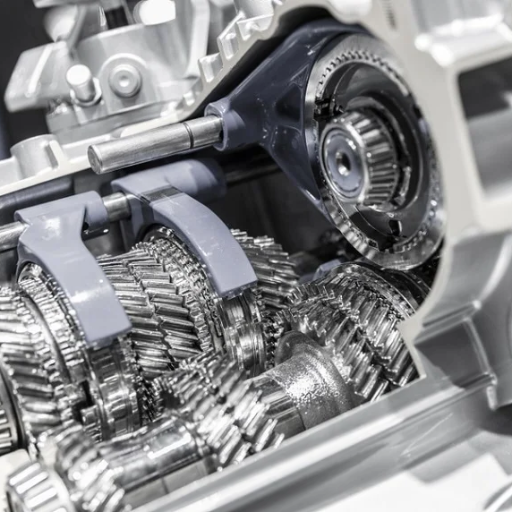
One particular example is its application in the housings of engines. There WE43 magnesium as a lighter material within such structures does not burden or overload other areas but is still tough. This is especially so when it is applied in gearboxes’ casings and in gearboxes themselves to combat immense loading intensities which often arise because of the very property of the material’s fatigue strength. In addition to this, there is an inbuilt feature of WE43 that ensures that it makes its easy to use in the manufacturing of parts that face extreme environmental changes thrust control parts. It is everything these uses that reemphasizes why the alloy enhances the effectiveness and dependability of aerospace engineering through the ages.
Consideration of WE43 magnesium where critical aerospace parts are in use highlights its advantageous properties such as high component strength with low mass, high-performance heat resistance, and remarkable fatigue life performance. This magnesium based alloy has outstanding mechanical properties within the high temperature range, which makes it promising for use in engine casings, turbine frames, and certain outer sections of the aircraft construction. Some studies have attested to the fact that WE43 can resist creep under persistent heat stress, hence protecting the structure against high-level loading without defect.
Additionally, the average stability of a WE43 alloy and its restrained corrosion adds quite a lot to its pad-aviation analogy for harsh environments which tend to have only minor moisture but a lot of salt, temperature, wind pressure and other factors. These components can also be made durable because they can be covered with surface and special coatings. Given the harsh conditions in which the magnesium alloy WE43 operates, it typically surpasses most lightweight materials in structure, while others will fail when loaded. While WE43 magnesium allows fluctuations, support this application in dynamic aerospace systems.
Testing in laboratories and operations evidence the assertion that WE43 magnesium enhances work productivity and lightens the weight of components, thereby reducing fuel consumption and increasing carrying ability. Additionally, the material supports innovative production techniques such as 3D printing that facilitate the creation of intricate, optimized shapes which are, in addition, aerodynamic performance enhancing and system efficiency improving. The relentless application of WE43 draws closer the objectives set out within the contemporary aerospace engineering solutions, more specifically sustainability and operational stability.
| Application Area | Key Components | Primary Benefit |
|---|---|---|
| Structural Airframe | Brackets, housings, satellite frames | Mass reduction, improved fuel economy |
| Engine Systems | Engine casings, gearbox housings | High-temp stability, fatigue resistance |
| Propulsion / Thrust | Thrust control components | Lightweight, extreme-condition durability |
| Turbine Frames | Turbine frame sections, outer casing | Creep resistance under persistent stress |
| Biomedical | Medical implants, biodegradable devices | Biocompatibility, recyclability |
Microstructure of WE43 Casting Magnesium Alloys – Discusses the microstructure of WE43 magnesium alloy and its practical applications in the aircraft industry.
WE43 Magnesium Alloy – Material for Challenging Applications – Explores the mechanical properties of WE43 alloy and its use in military aircraft, sports cars, and missiles.
Microstructure and Mechanical Properties of WE43 Magnesium Alloy Fabricated by Wire-Arc Additive Manufacturing – Examines the fabrication of WE43 magnesium alloy using advanced manufacturing techniques, highlighting its potential in aerospace components.