

Supportive, Professional, Client-Focused Service
From prototypes to full-scale production, we’ve got you covered.



Among CNC machining materials, brass alloys are a long standing popular choice for several reasons. They are easy to cut, very strong and appeal to the eyes. Brass alloys meet all the functional and aesthetic requirements properly. Whether the material is known or it is alien to a particular manufacturer, it is how this trait called brass function works that ensures a exciting level of if penetration in the projects done. In this context we will examine the features of brass alloys and the other benefits they provide when one deals with CNC machining and why these metals are so popular that practically penetrate every industry. With a focus on the practices of this material usage, starting from the selection of a proper grade of brass and looking at the most frequent problems while working with the material, the focus of the article will be how to work with CNC machining using brass compactly and efficiently.

Brass, an alloy mostly made up of copper and zinc, has a number of features such as flexibility, non-rusting and good heat transfer that make it suitable for several uses. Shifting the content of each of these metals gives rise to different brass alloys, each with a unique combination of desired properties such as strength and machinability and many more. Due to these benefits, its usage is quite in demand in the industrial sectors like manufacturing equipment, electronic devices and still other artistic works.
The proportions of copper and zinc in the alloy can be changed to produce desired characteristics and this is a category of copper alloy where zinc is the principal addition. Accurate vivid golden color describes it very well, but these properties do not speak true poverty, as brass is famous for its resistance to damage and rust, and high thermal and electrical conductivities. The extent of its range of uses enables its usage in e.g. water pipes, some musical instruments, electrical contacts, trinkets etc. More so, brass does not contain any metallic compound which can sustain a magnet, thus can be used in areas where the presence of magnetic substances can be unacceptable. Of great importance also is the fact that due to its inherent antimicrobial characteristic this metal has found a wide application in the health sector especially in contact areas and fixtures of public places in order to control the spread of germs. Brass has been used for centuries, expansion and improvement over time, and remains a key component in many industries today.
Brass alloys are a mixture of copper and zinc with different proportions to provide certain mechanical, chemical and physical properties. This is a particularly useful property of brass alloys, giving manufacturers the opportunity to produce brass alloys with desired properties in all sorts of applications, from high strength fittings to those that are resistant to corrosion. For instance, the question always asked is ‘what affects the colouration and character of the brass’ or ‘what affects the color of a brass alloy’? That’s due to the percentage of zinc and copper. The more copper present, the more the color will be reddish or golden, and better the drafts can bear intrusion otherwise the dark matter’s top layer will serve due to this hindrance. Furthermore, a large percentage of zinc will generally make the alloy appear lighter and silvery, with a strength level being higher and being harder perceive dully. Also, with modern technology and desire to do more than previously expected, additional elements like aluminium, tin or nickel, used in the production of brass alloys as to enable it useful in more than just brass alloy selection guide, but also includes aerospace, marine, and electrical engineering.
When comparing brass alloys to steel, aluminum alloys, bronze, and titanium alloys, it is based on the factors compared materials such as their strength, corrosion resistance, cost, weight, machinability, among others.
| Parameter | Brass | Steel | Aluminum | Bronze | Titanium |
|---|---|---|---|---|---|
| Strength | Moderate | High | Moderate | Moderate | Very High |
| Corrosion Res. | High | Moderate | High | Very High | Very High |
| Cost | Moderate | Low | Moderate | High | Very High |
| Weight | Moderate | High | Very Low | Moderate | Low |
| Machinability | Excellent | Moderate | High | Moderate | Low |

According to the Brass Alloy Selection Guide, there are several types of brass alloys available in the market such as yellow brass, red brass, cartridge brass, admiralty brass, naval brass and leaded brass.
| Alloy Type | Color | Primary Use | Strength | Corrosion Res. | Machinability | Cost |
|---|---|---|---|---|---|---|
| Yellow Brass | Yellow | Plumbing, Locks | Moderate | High | Excellent | Moderate |
| Red Brass | Reddish | Architectural | Moderate | Very High | High | High |
| Cartridge Brass | Yellow | Ammunition Cases | High | High | High | Moderate |
| Admiralty Brass | Yellow | Marine Use | Moderate | Very High | Moderate | High |
| Naval Brass | Yellow | Ship Components | High | Very High | High | High |
| Leaded Brass | Yellow | Valves, Fittings | Moderate | High | Very High | Low |
Brass alloys are used largely because of their strength, resistance to corrosion, and versatility. A few conventional kinds are as follows:
Yellow brass, particularly fitting for domestic, industrial, and ornamental item usage, presents satisfactory strength and excellent corrosion resistance for uses like locks and plumbing.
Beautiful in reddish hues, it is well-known for its beauty and strength, mainly used for non-industrial buildings and monuments.
Cartridge brass is strong enough for cases for ammunition and other uses needing that measure of durability.
Admiralty brass excels against marine corrosion and is popular in many ship-related uses.
Strong with corrosion resistance against seawater, naval brass is particularly known for its widespread ship component applications.
In many instances of use in applications in relation to valves and fittings, leaded brass combines superior workability and very high distortion resistance as compared to other alloys which do possess corrosion resistance of another order.
These alloys are chosen on the basis of their individual properties, like resistance to corrosion or strength or workability, so that they stand up to different applications.
Brass in different grades is developed to serve different industrial and commercial applications. Below are included some brass grades and its notable properties:
Distinguished for its high ductility and strength, this grade is commonly used in bullet casing, automotive cooling tubes, and ornamental use.
This alloy is well known for its superior free-machining qualities and is regularly used in the field to fabricate small precision components such as gears, valves, and fittings.
Resistant to saltwater corrosion, C464 can work hand in hand with marine projects, which include propeller shafts or seawater pump components.
Having an attractive reddish glow and notable corrosion resistance, C230 sees uses in a broad range of architectural features and niche articles like plumbing pipes and electrical connectors.
These now-renowned classes are quite consciously chosen for their respective peculiar strength, corrosion resistance and workability to make brass an all-inclusive commodity for many different applications.
Brass is quite set apart from other modern alloys in terms of strength, corrosion resistance, workability, and workability for cost. Here is an overview of key points at a glance:
| Property | Solid Brass | Bronze | Stainless | Aluminum | Copper |
|---|---|---|---|---|---|
| Strength | Moderate | High | Very High | Moderate | Moderate |
| Corrosion Res | High | Very High | High | Moderate | High |
| Workability | Easy | Moderate | Difficult | Easy | Easy |
| Cost | Moderate | High | High | Low | High |
This analysis shows that brass offers a balanced blend of qualities in terms of corrosion resistance and workability at an affordable price for general applications whereas some other alloys focus on excelling in specific areas.
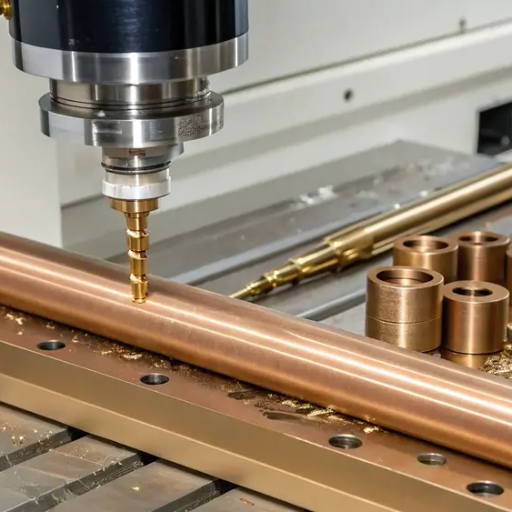
Brass alloy materials have a distinctive range of mechanical properties which enables them to be used in many ways. They are characterized by moderate to high strength, an excellent resistance to corrosion and above all, ease in working with the material. Moreover, they provide a suitable balance between cost and reinforcement, which makes them an attractive solution in many projects where the use of more expensive and less rigid materials is needed. Even though some brass alloys contain peculiar characteristics, they tend to be optimal for both load-bearing and non-load bearing applications due to their balanced properties.
Brass, as an alloy, had gained prominence for its magnificent hardness. It is greatly suited in many arenas due to its ability to stretch out incredibly without breaking, bearing in mind the fact that even extreme tensile stress is not a concern since the materials can resist such mechanical work. Additionally, these non-ferrous alloys characterized with a naturally present inert and corrosion free surface serve for a longer term, unlike many other alloys, in service under severe and even aggressive operating conditions. There is information that this type of brass is most appreciated in the possible services like ref essential systems of pipes and wiring of aircrafts and ships, whereby these materials come into contact with not only air but also water or chemicals which makes them wear out. Such additions to alloys’ composition also lead to a boost in their toughness which allows them to find performance even under high temperatures or pressure. Due to the presence of such factors including reusability of such alloys, brass alloys remain in use due to its utility in contemporary engineering applications.
Brass, among the alloys, has been quite effective in terms of its machinability and workability, which makes it an easy-to-use alloy for many industries owing to its demand. Such properties of the alloy in question are instrumental when the metals are supposed to be sectioned, and shaped easily without wearing of the tools, thus bringing down the cost and saving a lot of time in production. It is, as per the statistics available of late, one of the easiest and most efficient methods to machine metal alloys, and hence producers can effectively carry out various complex and delicate designs in the materials that they use. Such properties which allow the alloys to be either hot-forged or cold-worked mean that components of various shapes and sizes can be made using this technology. That is why brass alloys cannot be excluded from applications demanding accuracy and high quality.
Brass alloys are those alloys that are valuable for their ability to conduct electricity and heat efficiently. The degree of that ability ultimately depends on the composition of the brass alloy. Most of the time, the electrical conductivity of brass is less than that of pure copper; however, it is still adequate for applications that involve electrical contacts, such as connectors and terminals. And since it also has a good rate of heat conductivity, it works well in heat exchangers and other thermal working units. Given these characteristics along with its strength, brass alloy certainly works both for electrical and thermal applications.
The versatility of brass alloys renders them desirable in a multitude of industries. For instance, many plumbing products are made of brass particularly because of its condusive properties. It is also a common material for manufacturing musical instruments thanks to structural acoustics. Such material is also robust and easy to machine, hence manufacturers use this for precise instruments, gears, and bearing. As for the electrical connecters, terminals, and electric conduction, brass plays an adulatory role and its heat properties manage to make it useful for applications that deal with heat exchange and distribution. Furthermore the aesthetics of this metal, and in particular its golden color, makes it preferred in architecture and cross bond areas. A few more shortcut links have been added to the Brass Alloy Selection Guide.
Applications of brass cut across very many fields because of its numerous functional qualities. It is mostly applied in specific sectors, such as:
All of these industries take advantage of the good conductivity, assured permanence, and attractive qualities that are provided by brass.
A number of niche applications make use of brass alloys because of their specific characteristics. In marine environments, they are often used to make components such as propellers and ship fittings because of their good corrosion resistance. The major uses of brass include precision instruments, such as clocks and compasses, owing to its strength and lack of wear. Brass alloys can also be used in architectural applications, structural and decoration to ensure function and beauty at the same time.

Application-specific use cases will always determine the appropriate brass alloy to apply. For water works or environmental hazards, you might consider using tin containing alloys, which have increased zinc levels resulting in additional protection. In a case of music players and mechanical equipment where precision and performance is required, one can choose those which are evenly balanced and possess high strength with less functional drag. Where the aim is decoration or a physical structure, consider constructive and materials qualities with the right design. Mechanistic, anti-rust and aesthetic features suited for the application’s purpose must always come first.
Analyze the several factors such as strength, hardness and malleability required for the user to make sure the alloy is fit for its intended purpose.
Try to figure out mesgism, exposure time, temperatures and chemical composition among others since these will impact the sitiation on making a choice.
Perform a cost evaluation of the alloy to restrict within the budget, however consider its quality as well as the possibility of acquiring it at the appropriate time.
Evaluate the ease with which the alloy can be welded, cast or machined in line with design or production requirements.
If images need to be incorporated, an alloy that allows the right kind of finish, color, or texture should be selected.
In general, added zinc brasses such as the yellow brasses are sufficiently corrosion resistant in oxygenated fresh water or minor corrosive environments. In severe environments, on the other hand, such as exposure to sea water, chemicals or other forms of industrial corrosive system, either naval brass or aluminium brass spring to mind due to the relatively higher resistance to dezincification and stress reliance corrosion failure. Never make a wrong choice of alloy in a particular climatic region or a particular durability for the particular purpose of any application.
While choosing a good brass alloy, weighing the issues of cost-benefit and availability can bring about a rational decision. The price of brass alloys varies according to their formulations: those with a higher content of zinc or any other special additive generally cost more. Some alloys, typically yellow brass, are available almost everywhere and are cheaper, making them a cost-effective option for general uses. In contrast, more specialized alloys-e.g., naval brass or aluminum brass-are the expensive stuff, because they are higher in value because of some for-fighting properties like corrosion resistance in harsh or demanding environments.
Based on fresh research, it looks like the worldwide brass market remains in good shape, with dependable access to general and specialty alloys by main-region suppliers. On the flip side, regional demand can go up or down, while manufacturing, transportation, and other logistics costs can significantly determine selling price or supply disruptions. It is expedient to analyze closely some of the exact requirements that will best balance costs and performance against them while restrictive access to high-quality materials is maintained by the suppliers. One model would be to think about future availability trends as a major consideration for not putting long-term projects at potential risk.
Machinable Leaded and Eco-Friendly Brass Alloys for High-Performance Manufacturing Processes: A Critical Review: Reviews the machinability and performance of leaded and eco-friendly brass alloys in CNC machining processes.
Investigation of the Effect of Machining Parameters on the Surface Quality of Machined Brass (60/40) in CNC End Milling—ANFIS Modeling: Explores the impact of machining parameters on brass alloys, focusing on surface quality and optimization techniques.
Comparative Study on the Machinability of Lead-Free Brass: Analyzes the machinability of lead-free brass alloys, comparing them to conventional leaded brass in machining applications.
Copper, Brass, and Bronze Surfaces: A Guide to Alloys, Finishes, Fabrication, and Maintenance in Architecture and Art: Provides a comprehensive guide to brass alloys, including their properties, applications, and maintenance.