

Supportive, Professional, Client-Focused Service
From prototypes to full-scale production, we’ve got you covered.



Current manufacturing practices require high precision and flexible production methods to create advanced modern components. 5-axis CNC machining has become a revolutionary method which enables manufacturers to produce complex carbon fiber components through its advanced capabilities. Aerospace and automotive industries prefer carbon fiber because of its durable lightweight characteristics and its ability to resist damage. The material requires advanced machining methods because of its complicated nature.
The blog demonstrates how 5-axis CNC machining has transformed carbon fiber part manufacturing through its superior accuracy and efficient production methods and design capabilities. The article demonstrates how this powerful combination provides innovative manufacturing solutions for industrial production and advanced materials research to both manufacturers and engineering professionals.
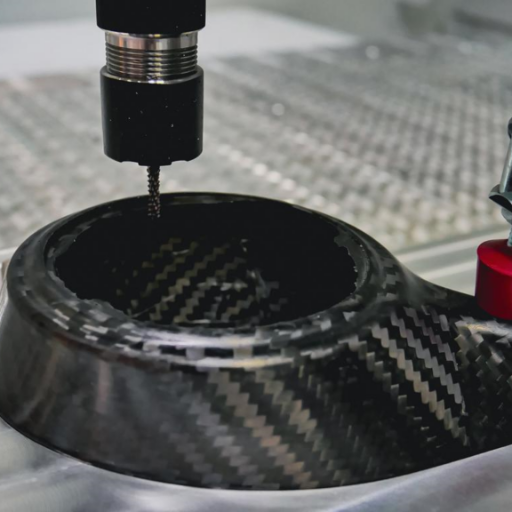
5-axis CNC machining represents an advanced manufacturing technique which enables precise material cutting and shaping through simultaneous tool movement across five operational axes. The system provides advanced flexibility which enables operators to create complex three-dimensional shapes without needing multiple machine setups. This technology enhances operational efficiency by decreasing mistakes and enabling manufacturers to create intricate components which aerospace automotive and medical industries utilize. The system functions as an essential manufacturing instrument because of its precise performance and its capacity to handle multiple applications in production of carbon fiber components and high-performance materials.
X Axis
Linear
Y Axis
Linear
Z Axis
Linear
A Axis
Rotary
B Axis
Rotary
5-Axis CNC Machining is considered as an advanced manufacturing process where a cutting tool simultaneously moves along five different axes to cut the material or the workpiece. The five-axis movement system works by controlling the movement of the three linear axes (X, Y, Z) along with the two rotary axes (A, B) to achieve precise results. This method is supposed to enhance the capability of the manufacturing operations by significantly reducing the necessity for operators to move equipment while putting in place error limits in the precision allowed in the work the machine operators accomplish.
The latest data shows that 5-axis machining has become common in high-demand industries which include aerospace and automotive and medical fields that require exacting design standards. It facilitates the production of components like turbine blades medical implants and intricate molds. The development of software and hardware integration for CAD/CAM systems has created technology that manufacturers can use to meet project deadlines while producing higher quality products. 5-Axis CNC machining serves as the standard for modern manufacturing because it enables operators to process titanium and carbon fiber materials.
5-axis CNC machining represents an advanced manufacturing technique which enables precise material cutting and shaping through simultaneous tool movement across five operational axes. The system provides advanced flexibility which enables operators to create complex three-dimensional shapes without needing multiple machine setups. This technology enhances operational efficiency by decreasing mistakes and enabling manufacturers to create intricate components which aerospace automotive and medical industries utilize. The system functions as an essential manufacturing instrument because of its precise performance and its capacity to handle multiple applications in production of carbon fiber components and high-performance materials.
The carbon fiber lightweight material base consists of thin carbon threads which manufacturers weave together to create composite materials that contain resin. Its strength-to-weight ratio is one of the highest among materials, making it ideal for applications in aerospace, automotive, sports equipment, and construction industries. The material exhibits outstanding tensile strength together with chemical resistance and thermal stability properties. The material shows resistance to corrosion while maintaining its integrity during exposure to severe environmental conditions.
The production process involves carbonizing polymers like polyacrylonitrile (PAN) at extremely high temperatures, which aligns the carbon atoms into a strong crystalline lattice. The high production costs and recycling difficulties of carbon fiber material limit its application in multiple fields despite its various benefits. The ongoing advancements in manufacturing techniques enable wider access to products while the products maintain their exceptional characteristics.

The material has achieved this due to a weight-to-strength ratio that is incomparable in its industry. The tensile strength remains very high as yet the weight of the structure is 5 times less than that of steel, while the modulus property is the highest. Thus the material can perform to its best potential under extreme circumstances of temperature or weather because of its resistance to heat and corrosion.
These composites also represent various limitations. The materials have great brittleness and hence will suddenly shatter when subjected to otherwise abnormal pressure; at the same time, their conductivity necessitates great care in integration into precise electronic systems, finally avoiding interference in those systems. Handling carbon fibers demands control of the abrasive properties of the material, which promote significant breakdown of tools and the kind of dust that poses severe health risks and also needs to be handled with utmost caution.
In terms of the development of new materials, scientists are coming up with recent innovations so as to address existing constraints. Consequently, researchers initiate a study on the hybrid composites combined with advanced chemicals to host carbon fibers that maintain their mechanical properties and give carbon fiber better flexibility and recyclability. These types of advances are expected to enhance the adaptability and environmental balance of carbon fiber down the line.
The process of machining carbon fiber presents multiple major difficulties. The material’s high strength and abrasive nature lead to rapid tool wear which results in more frequent tool replacements and higher operational costs. The brittle nature of carbon fiber makes the material susceptible to delamination and cracking during machining when operators use improper techniques. The material experiences additional degradation during cutting operations when the generated heat exceeds the controlled limits. The existing problems require specialized equipment and accurate procedures to deliver optimal results while achieving efficient operation.
Carbon fiber is often compared to materials like aluminum, steel, titanium, and fiberglass based on factors such as strength, weight, cost, and durability.
| Material | Strength | Weight | Cost | Durability |
|---|---|---|---|---|
| Carbon Fiber | High | Very Low | High | Moderate |
| Aluminum | Moderate | Low | Low | High |
| Steel | Very High | High | Low | Very High |
| Titanium | High | Low | Very High | Very High |
| Fiberglass | Moderate | Moderate | Low | Moderate |

The 5-axis CNC works mechanically by obtaining its desired functionalities from operating through multiple core components.
This block holds the cutting ends where they are required to rotate or provide some other form of motion to work on several tasks like cutting, drilling, or milling.
These are the additional sets of axes that help move or rotate the tools or parts in different directions, thereby increasing the flexibility and complexity of the machining process itself.
The control unit operates the entire system, through its interpretation of software instructions, to let the machine perform with high accuracy.
The table is for support as well as working to secure the material, and is rotated and tilted such that complex angles can be machined.
This unit indeed drives the axes on the machine to move through room around the five axes while gliding.
This equipment allows for the swift-changing of cutting tools when they are required, promoting production efficiency and reducing equipment downtime.
5-axis CNC machines depend on these components to work together to produce precise and flexible movements needed to make detailed, complex parts.
Cutting carbon fiber involves specialized tooling that considers its specific properties. The primary tooling considerations are as follows:
The requirements will propose a structure to ensure that correct practices, efficient methods and highly reliable schemes become prevalent for carbon-fiber components machining operations.
In selecting a gearing apparatus for the working of carbon-fibers, certain key points require to be surveyed to have optimum operational efficiencies and precise results. Motion requirement, which is the first point to be taken care of, reflects that the machines should remain stable in their build and free of vibration. This makes it obligatory for owners to choose a machine that is made of strong structural material as well as robust vibration damping material while aiming at spindle speeds and power requirements of carbon-fiber cutting operations. All of these can only become possible by installing high-frequency spindles capable of producing extra-powerful, sharp-cutting jobs with much lower heat output. Carbon-fiber cutting applications are known for generating innumerable small, chopped fiber particles that must be trapped to conserve equipment from wear and tear. With this extremely tough and resistant-to-cut material, further development of the CNC system involves an eye on adaptive toolpaths, tool-wear monitoring, and the potentially successful machining of carbon fiber. All the factors, therefore, must be taken care of before choosing which CNC machines best suits the manufacture of high-quality carbon fiber parts.
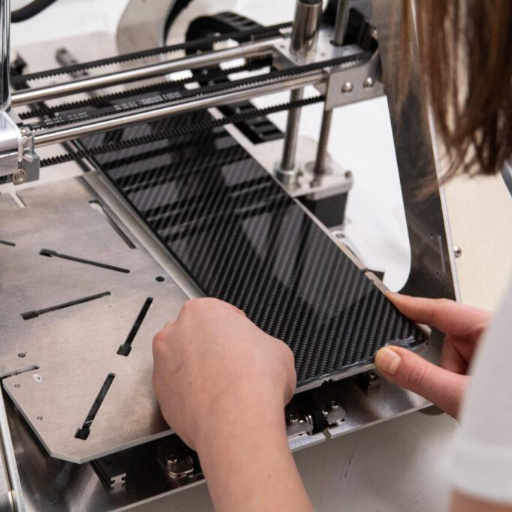
CAD/CAM Integration · Adaptive Paths · Simulation
The process of creating 5-axis toolpaths for carbon fiber machining requires precise execution and thorough preparatory work because these two elements determine material usage and machine protection. The first step requires you to choose cutting tools which work with carbon fiber materials while selecting carbide and diamond-coated tools because they reduce tool degradation and prevent material damage. The application of smaller stepovers together with slower feed rates establishes better protection for the material’s surface.
Accurate toolpath strategies are critical in 5-axis machining to avoid unnecessary strain on the material. The use of adaptive or trochoidal toolpaths helps to minimize cutting forces through their design which maintains consistent force distribution throughout the cutting process. Simulation software should be used to verify toolpaths and find potential collisions which will help maintain safe and accurate machining operations.
The machining process requires duct systems to operate together with dust extraction systems because carbon fiber machining produces small particles which pose health risks and create equipment hazards when they build up. The implementation of best practices enables efficient machining operations which produce high-quality results while protecting both the work environment and the safety of workers who handle carbon fiber components.
Vacuum Fixtures · Custom Supports · Alignment
Using proper methods of workholding becomes an absolute necessity when it comes to machining carbon fiber so that the accuracy of results is protected, and any damage to the material is minimized. The purpose here is categorically allocated towards vacuum fixtures due to the fact that they impart a solid base to prevent material distortion in an excessively high mechanical clamp. The theory of proper approach includes the essential amount of care in carbon fiber encompassed specifics of the range of clamping requirements due to concerns about pushing their weakest frontiers. The vacuum system could work only if properly configured and sealed to accomplish operational clamping strength.
Soft jaws or specialized fixturing solutions may also be employed for more complex or irregularly shaped components. The custom supports work to distribute pressure across the material, which helps prevent any potential deformation. The workholding interface must not include any hard or abrasive materials because these materials would damage the carbon fiber surface and produce undesired marks.
The component must remain stable throughout the machining process because this stability ensures both accurate results and safe operations. The use of additional supports, which include locating pins and side stops, allows for better alignment maintenance throughout the entire process. The manufacturers can achieve high-quality results through proper workholding solution preparation and selection while maintaining the structural integrity of carbon fiber materials.
PPE · Ventilation · Temperature · Disposal

In creating lightweight and strong structures within the aviation industry, 5-axis carbon fiber machining has been very pivotal. The capability of this advanced machining, so that complex shapes including airframe, wings, and turbine components which are fundamental for aircraft today can be manufactured, cannot be compared to any other methods. When machined in one set-up, the time of production is cut down and the consistency of the manufactured parts is increased resulting in high precision perfect for their use and protection from failures. In addition, carbon fiber 5-axis machining is eco-friendly and effective due to its specific characteristics of handling fiber without excessive fray, shattering or breaking. It is capable of hard machining and thus compliant with the aviation industries high hardwearing and weight-limiting standards as well as other machined material. This method boosts the productivity, optimizes the consumption of materials and meets the expectations of an innovative and sustainable industry.
5-axis carbon fiber machining is a game-changer for automobile manufacturing having given the ability of manufacturing light-weight materials having high durability. The auto market is always on the lookout for ways of enhancing fuel economy and vehicle operation and carbon fiber is a very satisfactory option working much like any other element present in an equipment with the advantage of being extremely lightweight. Thanks to 5-axis machining, complicatedly shaped parts including chassis parts and body parts and suspension systems can be easily and more accurately made which are structurally aerodynamic. It is widely known in the automobile industry today, with much emphasis being placed on sustainability and economy, waste saving is possible due to the use of this modern machining method. Thanks to the use of said solutions, the sector innovates without jeopardizing the structures or environment.
Due to their light weight and remarkable strength, custom fabricated carbon fiber components make up several markets. The aerospace market benefits from these characteristics as these structures ensure better fuel efficiency. In automotive industries, weight reduction adds a significant advantage to speed and fuel consumption and systems into which carbon fiber is employed. The equipment used in this industry also includes bicycles and tennis rackets that are made of carbon fiber because of its strength and accuracy. The same layer’s properties are also used in other industries like the architectural industry and clean energy as well. Carbon fiber designs with 5-axis carbon fiber machining or applications are ways in which carbon fiber encompasses the demand of different sectors continuously.
Services provided in this unique niche of carbon fiber machining would involve the machining of 5-axis components on equipment fitted with 5-axis CNC machining technology, 3- and 4-axis trimming and drilling, 5-axis milling, and high-precision finishing. The machine shops that offer carbon fiber machining also employ advanced 5-axis machine tools in use with specialized machining tools to supply composite parts, prototype components, and precision parts with the capability for repeatability, high-tolerance control, and little vibration. The services could also incorporate CNC cutting and tool path optimization and secondary operations like sanding or inspection in compliance with AS9100 or other quality standard.
Carbon machining services take into account factors before they run their CNC programs: bondcoat conditions, hand layup parts produced and cured by both systems, ceramic matrix composite grinding, porous SiC foam, graphite machining, component fabrication using Mg Superplastic casting, separation, and reactions in High Ku Machining. High Ku Machining with PLDCs minimizes wear and increases material efficiently. Onset Ts offers machining services in the following materials: Graphite molds, graphite electrodes, alloys, and soft ceramics.
Opting for 5-axis over 3-axis in machining allows for completion of complex geometries, hence eliminating multiple setups for complex composite parts. Utilizing advanced 5-axis machining increases productivity and repeatability by maintaining continuous tool contact, thus having a more refined surface finish and less requirement for multiple fixtures. Whereas 3-axis machining is hands-down a perfect fit for simpler parts, 5-axis delivers tighter-tolerance results in respect of multi-axis features as well as trimming and drilling operations, followed by undercuts or contoured surfaces.
Special machining tools of PCD or diamond are used to protect carbon fiber composites from damage, and spindle speeds and feeds are closely controlled to limit vibrations, as are clamping or vacuum fixturing methods. 5-axis CNC machines perform advanced tool path strategies to minimize delamination and thermal expansion. Proper coolant selection or dry cutting methods, together with cautious trimming and finishing, ensures material integrity and perfect surface quality in composite structures.
Yes, these machines can produce composite parts with different abstruse designs, which they can develop with the help of a five-axis machine and composite prototype. Multi-axis machines can single-setup hectic geometry machining to shorten lead time and enhance the accuracy in dimensions. Shops specializing in composite machining will include toolpath simulations, material-specific cutting feed and trimming strategies to achieve a precision-tolerance part for environments where accuracy and repeatability are paramount.
Quality standards for machining carbon fiber composites primarily include AS9100, internal inspection processes, and NDT methods. This type of machining may go through inspection, with dimensional validation of precision parts, examination and good roughness checking, and the assurance that there is no delamination or fiber pull-out at less obvious places. No customer would want a part that comes back with fiber endings sticking out. The application of CMM, optical inspection, and 5-axis machining on-process controls ensures that the tolerances and machining requirements are met by the machining departments.