

Supportive, Professional, Client-Focused Service
From prototypes to full-scale production, we’ve got you covered.



There are few industries more harsh than oil and gas. To survive in this industry, one must be as accurate, efficient and reliable as possible in every piece of equipment. From the most intricate or complex drill to high-pressure pipes, everything used in this business must be built to exacting standards. This is why CNC solutions are so valuable. Let this article introduce you to the reasons why CNC solutions reverse engineer the oil gas machining requirements. Learn more about the benefits, issues and the key technological advancement of the precision manufacturing industry in this key area. How does it work? This article will benefit practitioners as well as others who are just interested in how the energy sector is driven by the latest technologies.

Making precise parts for the components used in extraction, transportation and processing of oil and gas is known as precision machining. These processes are imperative for the fact that these components operate under extreme environmental conditions and high pressure demands. Machining may be employed to ensure that dills, valves and pumps, practice basic safety, and protection among other basic equipment. As CNC machines are modified for versatility and these allow for tolerance to be reduced, standards have been raised by the industry while, functionality of the noise machineries has been improved.
The oil and gas machining industry remains an essential driver of the world economy, including the activities of researching, drilling, refining, and vending of oil and gas-derived products. It should be more precise and include three divisions: upstream, midstream and downstream. The upstream encompasses the raw tools research and extraction. The midstream involves the distribution and storage whereas the downstream is the refining and marketing of the fuels, lubricants and petrochemicals to the end users. This sector is indispensable for transportation, industry and power generation worldwide. However, the problems it has to overcome are also numerous: price instability, the environment and the increasing focus on alternative energy. Nevertheless, the industry management keeps building advanced strategies to improve provincial strengths, business processes and relations, production, and customer services in the face of the dynamic market and legislative needs.
The usage of machining in the oil and gas industry is extensive because it is highly critical that particular parts meant for exploration, drilling, and production are manufactured accurately. It is imperative to note that such machines include pipes, valves, pumps and a multitude of custom build tools which can be used at pressures and temperatures that are far above any level encountered in operations. As the level of automation and CNC equipment usage increases there is a reduction in the time required to manufacture the components and this presents an opportunity to boost safety.
From recent findings, as industries continue to embark on deep-water drilling and explorations – and other unconventional means of energy production – a growing need for durable or lasting parts has been noted. Sometimes advanced machining is associated with tight to what are relatively close tolerances, and the quality of surfaces improved, which all tend to, in turn, maximize the longevity and performance of equipment. Furthermore, although failures can never be guaranteed out of the scope, it is usually minimized by ensuring continuous enhancement of the machine components using data and tools for predictive maintenance. Machining is a critical requirement for its innovation and improvement and accuracy and efficiency, hence a lot of attention is paid to this aspect of oil gas machining.
When machining another approach is adopted. This technology utilizes computer software that is pre instructed to control tools as well as machinery with high accuracy.
These are allowable deviations from the physical dimension which are essential in making sure all parts can be assembled and function as expected.
Machines parts comprises of drill collars, vindicators and rotary subs of which they are involved.
It is the winding of cylindrical objects in the form of spirals; this is more evident in threads used in pipes and tools connections.
This is a procedure basis of which labor material designed in such a way property to be enhanced by strength
In order to prolong the use of a particular component in conditions promoting the use of abrasive and corrosive processes or substances, the surface of the component can be covered using hard faced materials.
It includes the use of procedures such as magnetic particle or ultrasonic and visual testing procedures for of the purpose of machined components without causing any harm.
It would be necessary first to clarify what these terms mean in terms of efficiency, longevity, and expectations for oil and gas machining.
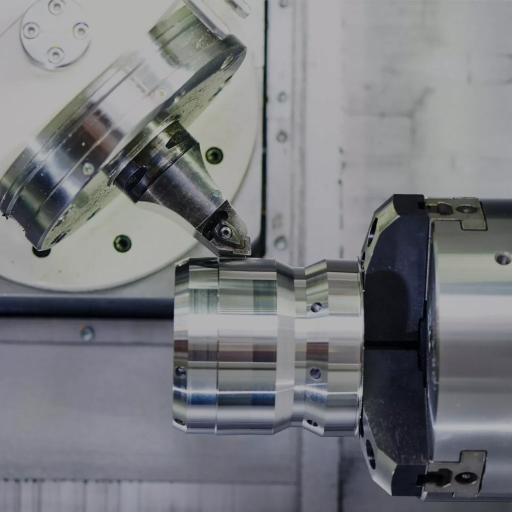
Precision teachers’ machining is frequently involved in the oil gas industry since its’ prime objective is to avoid any tolerance variance or function degradation. This technology is used for the manufacture of critical pieces including the complex valve, the drill bits and the connectors which can withstand high pressure and temperature as well as radiation. It is through the use of up-to-date machining and newest technology that manufacturers are able to obtain the necessary precision and endurance in compliance with the industry rules and regulations.
Having controlled movement of factory tools and machines using pre-programmed computers and software is what CNC machining, known long form as Computer Numerical Control Machining, is all about. This type of automation ensures efficiency and precision is the manufacture of complex shapes. Machines that use CNC receive orders from software such as CAD, computer-aided design, or CAM, computer-aided machining, and also help transform virtual designs into precise physical forms. This process is commonplace in operations such as aerospace, paper printing, and mechanical designs and the parts used support materials such as byproducts of oil gas machining or even three dimensional polymers with the aid of bronzes and other unusual sheets. Equally presenting forms that are highly tolerable and create voycom any of the arts meet their cnc machines here thanks to tolerances and tolerances it made in those precise and near impossible designs of operating equipment which targets policy as the new user requires such tolerances that call for 6 sigma improvements.
Basic as well as complex features and components with minute tolerances can be produced through precision CNC machining avoiding any possible errors and thus enhancing the quality of resultant products.
Where the available material resources are conserved and efficient ways in executing manufacturing processes, CNC machining reduces or lowers the cost of manufacturing over a period of time.
Whether a prototype is to be produced or the required quantity is more without the provision of quality control, CNC machining is performed with ease.
This system is capable of working with a wide range of metals, plastics, composites, among others, this is evidence of how CNC equipment can be applied in many areas.
CNC machining considerably reduces cycle time of production in comparison to conventional manufacturing due to automated operation and improved productivity.
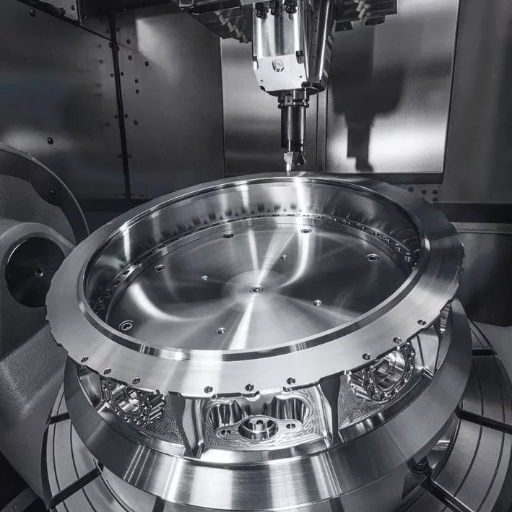
| Component | Function |
|---|---|
| Valves | Their primary function is to facilitate the flow of fluid or gas within the piping system. |
| Flanges | Maintain the joint between the piping and valves, as well as other equipment, such that there is no leakage under high pressure. |
| Bearings | These lessen the friction between surfaces in relative motion, thus enhancing the performance of a machine. |
| Couplings | Are useful for connecting two racks or other parts revolving, which helps in transmitting power, even with a minor deviation of shafts. |
| Seals and Gaskets | Used between two meeting interfaces to eliminate any leakages of fluids that may exist even in the most extreme situations of pressure. |
| Bolts and Fasteners | The Various hardware elements, used to clamp together the parts of a structure, ensuring their stability and resistance to stress. |
They are also especially important for the functional integrity of oil and gas processing equipment which are subjected to hostile oil gas machining conditions.
Precision medical parts play an integral role in sectors like oil gas and machining, thanks to the application’s complexity. In other words, such components fulfill operational needs where standard or universal parts of the highest tolerances are limited or non-functional. With custom parts, complex forms can be brought together while ensuring that custom fitted parts work within the given system or location.
With CNC (Computer Numerical Control) advancement, there is an increased need for custom-milled parts. It allows greater productivity, increased accuracy of components, as well as short lead time. Furthermore, industries have started to appreciate the benefits of applying design solutions that enhance the reliability of the work of the systems, minimizing downtimes, and improving the operation of the systems in difficult conditions.
Machining is an essential process of manufactured components that are used in the industry of oil and gas, where nike a range and in fact the main criteria. In most cases, it involves operation-bearing components such as valves, pumps, even seel, working at very high temperatures, under pressure. Barring corrosion. Using precision machining allows for manufacturing of such parts in compliance with the specifications and functioning criteria that ensure that any business is conducted in a safe and cost effective manner. Furthermore, the availability of custom machined components enhances the involved equipment by addressing the sector’s specific requirements and improving the system performance by reducing the downtime.

Precision machining plays a significant role in oil and gas equipment fabrication by ensuring that the components are produced to precision measures, which enhances the functionality and longevity of the equipment. It facilitates the manufacture of crucial components such as valves, pumps and seals that can stand up to the harsh working environment of the industry. By application of advanced technology and tailoring, oil gas machining addresses these requirements without complication by reducing the amount of breakdowns and running down, and optimizing the performance of the systems as necessary.
It is essential for machining solutions to provide precision workmanship of components that are engineered according to a certain industrial application. It entails the implementation of modern manufacturing techniques like CNC machining, turning, and milling for making high tolerance components. The solutions avail capability in the use of different materials, be it metals, plastics or composites. In oil gas industries, machining is used to improve equipment dependability, minimize downtime and increase productivity. Such laconic precision and focus on the specification of the needs, that is customization, is what the elements within machining should meet and perform to the required levels which helps in the industrial systems optimization.
Precision manufacturing technologies for the oil and gas industry such as EDM; Electrical Discharge Machining has enabled the production of numerous components that are very accurate as well as meeting all the requirements of the sector. EDM applies the use of electric discharges in order to machine bits of geometry into the component and because of that process, it is especially suitable for producing intricate parts of titanium and superalloys where conventional processes are prohibitive. Epecially thanks to the machines rather than pressure release valves, the processes of nozzles, valves and complex molds for oil gas machining operations which are subjected to very high pressures and temperatures become possible.
One the key benefits of EDM is its presentation of superb accuracy without relying on physical interaction with the work piece; this suits fine or complicated shapes. With this accuracy, the oil and gas industries are able to improve their equipment reliability, increase the parts’ service longevity, and avoid the possibility of operational risks. Along, with interactions between automatic systems and analytical based optimization, EDM keeps driving innovations and improvement in the sector, catering for the increasing demands of precision oil gas machining in the industry.
CNC machining manufacturing offers innovative services of great consistency and precision while producing parts within various sectors. This comprises the use of high technology, computer operated machinery into production of create very tightly toleranced and geometrically complex parts. The use of CNC technology eliminates wastage of materials and ensures precision high quality output. For oil gas machining industries, these services offer flexible, trustworthy, and efficient manufacturing approaches.
A major concern regarding oil gas machining is working with hard and heat- resistant, high- impact materials used by this industry, especially titanium and superalloys. Such materials tend to cause quick wear on the tooling, which results in enhanced production costs and decreased throughput. Not to mention that it is a task to keep dimensions accurate while performing under adverse environmental conditions and the presence of corrosive fluids, which makes the task more difficult. High quality standards and exacting requirements of the sector can only be attained with latest technology machinery, an experienced workforce and constant developments, changes and upgradation.
Supply chain disruptions have significantly affected operations in the oil and gas tooling sectors with upstream delays, costs going sky-high, and inefficiencies across the board. These have been further magnified by challenges related to international supply chain hindrances, political instabilities, and erratic flow of raw materials. For instance, materials such as high-end steel or titanium alloys can go missing, important parts for production, meaning that production schedules shall be obliterated and then morbid search for alternative suppliers at even higher costs ensue. Similarly, delays in shipping and congestion at harbors hinder the timely recovery of tooling machinery. It is, therefore, important that a fraction of the measures to undertake stress the improvement of their suppliers, lean-down their warehouses, and localize its development schemes to minimize the risks and sustain production.
Promoting quality assurance in oil and gas machining is very significant owing to the highly unfavourable conditions in which these machine components operate and the fact that they help perform very strategic functions. Normal difficulties include tight dimensions, toughness of materials, and the presence of even tiny flaws which may cause parts to fail when used under high pressure and/or high temperature. Differences in material quality and machine equipment deterioration could further lead to quality inconsistency. Manufacturers use novel evaluative techniques that include non-destructive evaluation (NDE) techniques as well as precise evaluating equipment and strict conformity to applicable standards in controlling this.v These processes work to enhance reliability and safety as well as conformance with the relevant regulations in gas and oil industries.
Environmental issues stand out as one of the most prominent problems concerning oil gas machining processes. The environmental problems here are energy consumption, machine emissions, and waste out of metal chips with cutting oils. Soil and water can be contaminated if these wastes are not managed properly. Hence, the installation of environmentally friendly technology whereby the consumption of materials predominately recyclable, energy-saving apparatus systems, and appropriate arrangements for safe disposal of by-products entails all the producer industries. In addition, such regulation mandates machining processes are respectfully environmentally friendly.
A Systematic Review of Data Science and Machine Learning Applications to the Oil and Gas Industry – This review highlights the requirements and advancements in tools and techniques, including precision machining, within the oil and gas sector.
Application of Machine Learning and Artificial Intelligence in Oil and Gas Industry – A comprehensive review of how advanced technologies, including precision solutions, are applied to solve challenges in the oil and gas industry.
Designing and Manufacturing an Automated Lubrication Control System in CNC Machine Tool Guideways – This study focuses on precision CNC machining and its applications, including reducing oil consumption and enhancing machining accuracy.
Machine Learning in the Oil and Gas Industry – A detailed exploration of how machine learning and precision tools are integrated into oil and gas operations.
Precision machining for the oil and gas industries means manufacturing precise parts and components, which include things like valves, fittings, and drilling parts, by utilizing CNC equipment for machining, such as turning centers, milling machines, and vertical machining centers. These components in particular, typically demand high degrees of surface finish control, quality assurance management that is ISO certified, and capability to fabricate large as well as thin detailed components like those made by swiss machining or CNC swiss machining. Companies involved in manufacturing such parts and machine shops dealing in oil gas machining; advancements appropriately combine machining techniques skills along with material knowledge to best serve the needs of oil by generating functional oil and gas parts.
The CNC machine solutions offer consistent and repeatable manufacture of active parts and materials used in the oilfield services industry. With the help of cnc turning centers, lathe machines, and multi-axis milling machines, the shops are able to machine corrosion resistant materials, high tolerance and intricate parts for drill components and gas components. When it comes to oil services, profiles often have to be hardened, coated and surveyed, to satisfy the requirement of the oil and gas industry as well as ISO norms which gas companies and their oil and gas partners consider.
Oil and gas consumer goods require CNC machining for its precision, quality assurance, traceability, and shorter lead times compared with manual methods, which often take longer to produce the final milled parts. Oil gas machining provides consistent surface finishes and dimensional tolerance control for connectors, seals, customized components, and other oil and gas components. Oil and gas projects always seek the contribution of a manufacturer who possesses CNC machining, CNC tools and experienced people for machining of specific parts and finishing surfaces.
A service provider in the mechanical field which deals with machining for the gas or any other similar industry shall have to be adequately equipped with basic and advanced machining infrastructure, such as horizontal turning centers with bar feed, screw machining with sliding head sophistication, vertical milling centers with full five axes of movement, cylindrical grinding and/or slotting machines. Other capabilities include but are not limited to the following: positioning, clamping and handling of long work pieces, multi axis CNC machining to produce the most complex shapes, inspections and tests carried out to international ISO standards and offer specialized services to oil and gas industries such as coating, assembly and inspection. In order to ensure good quality production and usefulness of the produced gas components and oil and gas parts, some of these functional features are very crucial at the time of their production.
ISO certified quality systems, extensive process documentation, first article inspection, material traceability, and non-destructive testing as necessary are some of the procedures used in CNC machining for the oil and gas industries. Shops enhance the level of compliance with CNC machines during heavy oil application projects by ensuring that the equipment is in their hands, the jigs and tools are in place to do the job repeatedly, and proper surface finish and dimensional accuracy are ensured. That can mitigate the risk and will be effective in overcoming issues that may be encountered in such a hostile environment while manufacturing parts and components.