

Supportive, Professional, Client-Focused Service
From prototypes to full-scale production, we’ve got you covered.


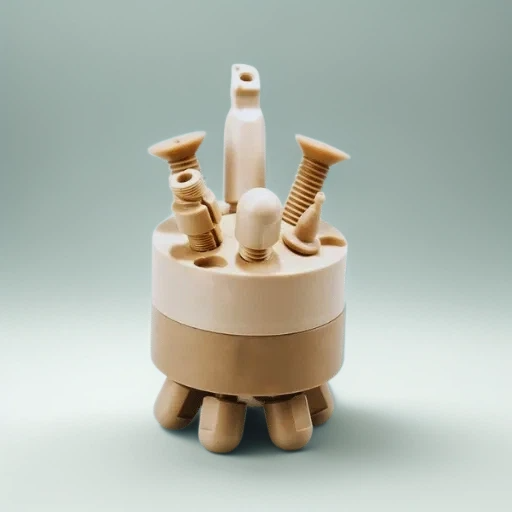
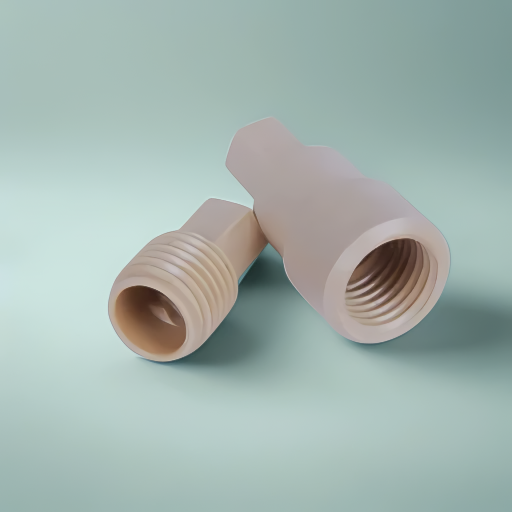
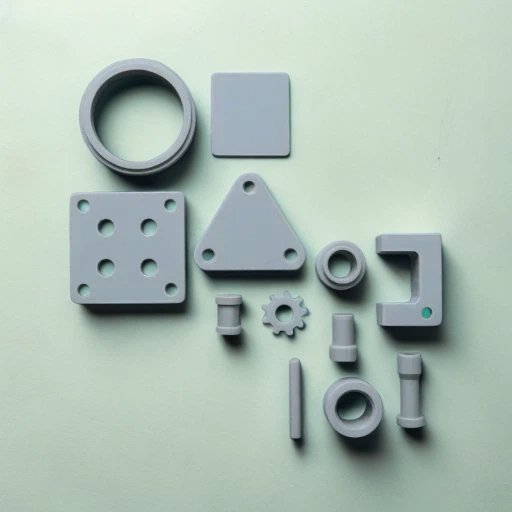
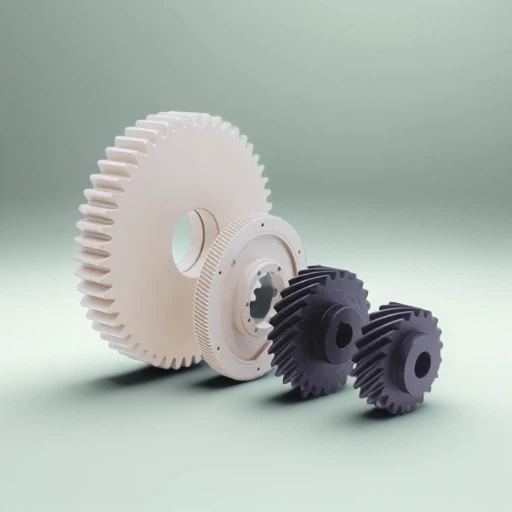
Discover our broad portfolio of custom CNC machining peek parts- Precisely engineered parts able to meet the highest demands in industries across the spectrum.
Professional tools for optimal PEEK grade selection and machining cost estimation
Answer questions about your application to receive personalized PEEK grade recommendations
Understand how tolerance specifications affect your PEEK part pricing
A: Peek cnc machining and machining peek plastic on a cnc machine actually mean the same thing: cutting polyetheretherketone on CNC machines. While one focuses on how to manufacture, the second type reviews what is done to choose the right material. Both require dedicated tools, proper feed and speed controls, thermal behavior because PEEK is not good at heat dissipation, and a few-times annealing for lowering the internal stress. Thereby, the dimensional stability, surface finish can be obtained.
A: The attributes of the Peek material, namely resistance to high temperatures up to 260°C, pseudo-thermoplastic structure, high chemical resistance, superior mechanical properties, resistance to wear, are suited to cnc CNC-machined Peek parts. These characteristics impose use of very sharp cutting tools, perfectly controlled machining parameters, consideration of cooling use (which generally is, at best, minimal or even dry), and strategies for proper utilization to meet tight or very tight tolerances, a smooth surface finish, and possible elimination of deformation or thermal damage.
A: The preferred machining approach consists of choosing the right peek grade (unfilled or glass fiber or carbon fiber reinforced), roughing with a moderate feed to remove bulk material, finish passes with lighter cut for accurate dimensions, possible annealing to relax internal stress, and final finishing for the surface finish. Cutting teeth with the carbide or diamond-coated material, together with optimizing feed-speed-thermoplastic behavior, must be designed while fixture design avoids part movement. Regarding a tighter tolerance than naturally a given would become, in other industries, metal materials are used.
A: For aerospace applications in high-temperature operation, for medical-grade PEEK implants and instruments (including the USP Class VI PEEK for biocompatibility), and for automotive applications requiring the performance quality, PEEK has been a high-performance, high-thermal-polymer-based chemical resistance and dimensional stability material. CNC machining applications cover custom parts, precision cnc parts, and components where reinforced PEEK components or natural PEEK provide a sturdy, low-wear resistant part that performs well under conditions of high temperature.
A: Reinforced PEEK increases modulus of elasticity, wear resistance, and thermal conductivity while making PEEK stiffer, but it can be difficult to machine as it is more abrasive to tools and may produce different finishes. Medical grade peek and usp class vi peek also have biocompatibility as a reason for selection since they will be used in an implant/medical scenario, these grades require contamination control, machining services compatible with cleanroom environments, and medical standard compliance due to the control of the processes in question. Grade is selection is also a contributor to the increases in feeds and speeds, and decreases in cutting tool life, and part performance.
A: The expected surface finish is generally a function of the use of the part. For a number of parts, a smooth surface is necessary and can be done in a few ways, such as a fine finish pass, polishing, or light sanding. Depending on the use of the parts, post-machining processes such as annealing to relieve internal stresses, deburring, ultrasonic cleaning for medical parts, and inspection for dimensional stability may be a factor. To achieve surfaces that are more aesthetically pleasing, optimized machining and tool selection such that they do not produce a lot of melt, chatter, and tool marks.
A: CNC machining of Peek parts is advantageous for the manufacture of low-volume custom designed items, tight tolerances, complex geometries without any tooling costs, and rapid prototyping. Machining from a block of PEEK maintains material homogeneity and it would be possible to select specific grades (medical-grade PEEK, industrial-grade PEEK). Better control dimensions for CNC machined compared to injection molding are crucial for precision applications and rapid iterations are required for custom CNC and machining services.
A: Best machining parameters should be, say, moderate spindle speeds and appropriate feed and a light depth of cut for the finish pass and here the preference must go to carbide and diamond-coated cutting tools. Coolant is not recommended because for Peek, its cooling characteristics are different from that of metal; if used, it could be forced-air blast or low-pressure coolant; nozzle temperature control may be considered. Pre-annealing internally relieves stress, while the dimensionally stable condition of the PEEK material will ensure linearity. Watching chips, preventing rubbing, and tuning to proper feed and speed as per the material quality (unfilled PEEK vs. GF/CF filled) must be checked regularly to prohibit melting or get the best results.