Fraud Blocker

Get in touch with Lecreator Company

Contact Form 在用

PTFE CNC Machining

Precision PTFE CNC Machining Services

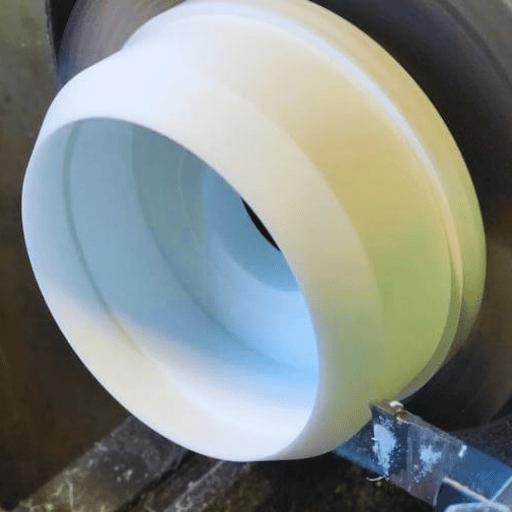
Our state-of-the-art PTFE CNC machining services cater to your every need for custom Teflon parts and precision fluoropolymer components. We solve machining challenges inherent in PTFEs (e.g., dimensional instability, thermal expansion, and cold flow) by maintaining the temperature-controlled environment to 68-72°F, stress-relief annealing, and specialized work-holding fixturing. Achieving ±0.001″ tolerances on seals, bushings, bearings, valve seats, insulators, and complex machined parts.
ISO 9001:2015 Certified
AS9100D Aerospace
±0.001" Tolerances
ISO 9001
AS9100D
ISO 13485
ITAR

Why Choose PTFE (Teflon) For CNC Machining?

PTFE (Polytetrafluoro-ethylene), commercially marketed under the DuPont brand name Teflon®, is a special kind of high-performance polymer that has been known for its excellent qualities, which makes it an ideal material for uses in the expanding aerospace, medical, semiconductor, and chemical-processing industries.

Lowest Friction Coefficient

It has the lowest coefficient of friction from possible solid materials (0.04) making it also great for pumps, bushings, seals, parts and products that need to resist wear.

Exceptional Chemical Resistance

Utterly inert to practically all industrial chemicals, acids, bases, and solvents, PTFE becomes the standard material for chemical tanks, valve seats, gaskets, and piping for carrying corrosive fluids.

Wide Temperature Range

Always working from -200°C to +260°C (-328°F to +500°F), PTFE holds up properties in adverse conditions making it desirable for use in aerospace, cryogenics, and high-temperature sealing applications.

Superb Electrical Insulating Properties

With high dielectric strength and low dissipation factor, PTFE is used predominantly as an electrical insulator in high-frequency rectifiers, HF connectors, RF components, as well as to provide cable insulation for the telecommunication industry.

FDA & Biocompatible

PTFE is FDA-approved and biocompatible, making it compliant and suitable for surgical implants, medical equipment, pharmaceutical manufacturing, and food processing applications.

Non-Stick & Non-Wetting

The inherent quality in PTFE that makes it non-stick is in the hydrophobic properties, preventing adhesion or buildup of sticky materials, an ideal characteristic for food-processing equipment, applications for coating, and mold-release parts.

Gallery of Custom Precision PTFE Machined Parts

Check out our image gallery displaying custom PTFE Machined Precision Parts, machined to specification and performance standards with expert craftsmanship.
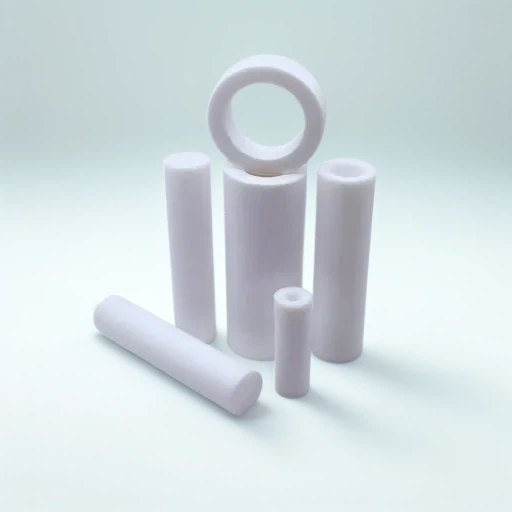
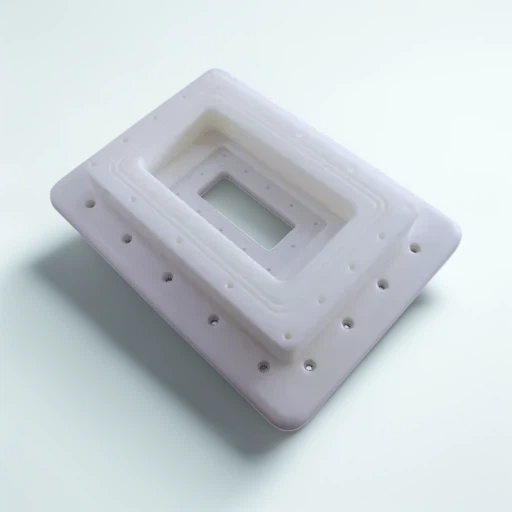
CNC turned PTFE electrical insulators and high voltage standoffs for electronic applications.
Custom CNC machined Teflon manifold block with complex internal channels for chemical handling.
Medical grade virgin PTFE CNC machined parts for laboratory and surgical devices.
Micro CNC machined PTFE seals, bushings, and washers with burr-free finish.

Common PTFE Prototype Machining Challenges & Our Solutions

PTFE has some unique properties, meaning it comes with distinct challenges for machining. Luckily, with over 15 years of experience, we have solved your problem thousands of times before.

Dimensional Instability & Measurement Drift

The Problem

"This is the third time we have had issues with our PTFE parts measuring differently. The dimensions shift, and we fail QC inspections for the third time."

Our Solution

PTFE has an extremely high thermal expansion coefficient (100 - 200 x 10⁻⁶/°C). We machine at a temperature controlled environment and stabilize the parts before doing the final measurement. We also take into account the 65 - 77 °F thermal transition zone, wherein the expansion of PTFE is 5 times greater.

Part Warping & Post-Machining Deformation

The Problem

"After the parts have been machined and look good, we come in the next day to see warped parts that have been sitting. We have had to scrap entire batches of parts due to the distortion."

Our Solution

Before and after each of the machining operations, we do stress-relief annealing. We have a custom soft-jaw fixture that is designed to contour to the part to eliminate any clamping deformation.

Challenges Understanding Tight Tolerances

The Challenges

“There is no way to achieve the ±0.001” tolerances that we require given how PTFE is made and supplied''

Our Solutions

With the use of cryogenic tooling and temperature regulation during machining and inspection CMM tolerances of ±.001” (±0.025mm) can be achieved. We assist you in determining the tolerances required for the functionality of the part(s).

Burned Burrs and Edge Quality

The Challenges

“There is little to no way of getting the stringy burrs PTFE jobs come back with and without damaging the parts.”

Our Solutions

The use of cryogenic deburring tool and controlled feed rates during machining of PTFE parts to minimize burrs, and thermal coupled borders will improve the edge quality of the parts without stringy burrs. Each part to be delivered will pass a burr-free edge deburring inspection.

Inspection of Threads, Failed Gauges Results

The Challenges

“Right after machining, PTFE parts will be visually OK without much defects. PTFE stringy threads easily fail. PTFE parts attributes. Threads screw them out almost immediately.”

Our Solutions

The use of a form tap threads are installed by displacing PTFE, thus forming a thread instead of a cutting tap that will produce a weaker thread. Using a torque. Thread engagement is also optimized to form correct and desired threads. There will also be no part that will exceed the required maximum torque for the screws.

Creep, Cold Flow & Seal Relaxation

The Problem

"Our PTFE seals lose sealing force over time. Parts slowly deform under constant pressure and fail in service."

Our Solution

We can recommend filled PTFE grades, such as glass, carbon, and/or bronze, as they tend to have superior performance in regards to creep. Moreover, we design for creep with adequate wall thickness and recommend spring-energized seal designs for cases where continuous sealing force is a must.

High Costs from Material Waste

The Problem

"We're machining from solid rod and wasting 70% of the expensive PTFE material. Costs are out of control."

Our Solution

We can offer near-net-shape compression molding as a primary processing technique to deliver blanks, minimizing machine stock. In cases of high-volume orders, we can improve layout for the blanks, minimizing material and time consumed in machining, while we also optimize the volume of the layout for blanks.

Long Lead Times & Delivery Delays

The Problem

"Suppliers quote 6-8 weeks for PTFE parts. We need them in days, not months, to meet our production schedule."

Our Solution

Thanks to our in-stock PTFE materials, dedicated PTFE machining cells, and streamlined processes, we can deliver prototypes in 5-7 days and production parts in 2-3 weeks. For critical needs, we can offer expedited options.
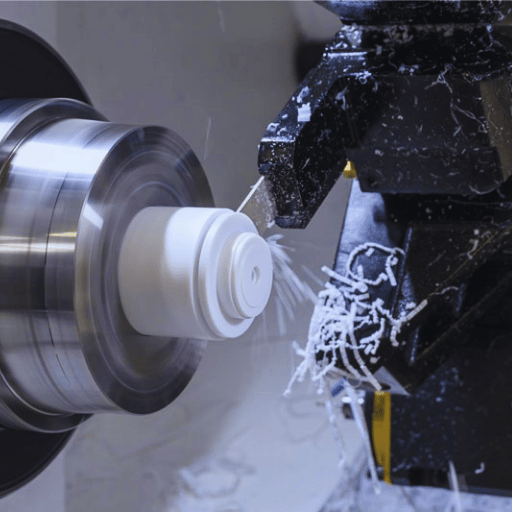
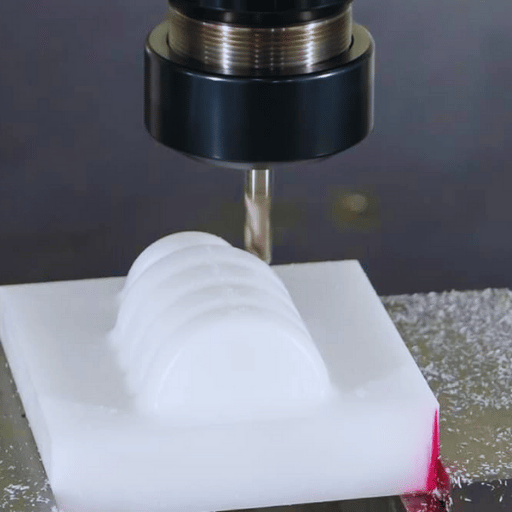
PTFE CNC Machining Services | PTFE Material Properties for Machining

Our state-of-the-art equipment and experienced team are capable of catering to all your PTFE and Teflon machining needs starting from simple turned parts to complex 5-axis machined components.
CNC Turning for PTFE
🔄

CNC Turning For PTFE

Max diameter: 24" (600 mm)
Length capacity: Up to 48"
Live tooling for milling features
Swiss-type for small precision parts
Internal & external threading
CNC Milling for PTFE
⚙️

CNC Milling For PTFE

3- and 5-axis capabilities
Work envelope: 40" x 20" x 20"
Complex geometries & contours
Pocket milling & drilling
High-speed machining
Secondary Operations
🔧

Secondary Operations

Stress-relief annealing
Cryogenic deburring
Surface etching for bonding
CMM inspection and documentation
Assembly services

PTFE Machining Tolerances & Specifications

Specification
Standard
Precision
Notes

Linear Tolerance

±0.13mm (±0.005")
±0.05mm (±0.002")
Tighter with temperature control

Diameter Tolerance

±0.10mm (±0.004")
±0.05mm (±0.002")
Dependent on part size

Surface Finish (Ra)

1.6-3.2 μm
0.8 μm
Polishing for finer finishes

Minimum Wall Thickness

1.5mm
0.8mm
Depends on geometry

Maximum Part Size

Turning: Ø300mm × 500mm
Milling: 600 × 400 × 300mm
Larger on request

Choosing the Right PTFE Grade for Machining

From virgin PTFE for high-purity applications to filled grades for enhanced mechanical performance—all Teflon variants.

Virgin PTFE

The purest type, virgin PTFE has no leachables, and has superior chemical resistant, and electrically insulative properties. FDA compliant for food and medical contact.

Glass Filled PTFE (15-40%)

This grade has enhanced compressive strength, improves resistance to creep, and has better dimensional stability. This grade also maintains chemical resistance.

Carbon Filled PTFE

with superior wear resistance, and has thermal conductivity 3.5× higher than virgin PTFE. Also has static dissipative properties.

Bronze Filled PTFE (40-60%)

This grade has the maximum load capacity, excellent thermal conductivity, and the lowest creep of all the grades.

Graphite Filled PTFE

This grade has self-lubricating properties, good initial wear characteristics, and dries and wet applications.

Modified PTFE (TFM)

This grade has lower porosity, and better weldability. This also has improved flex life compared to virgin PTFE, and ultra-high purity is possible.

Custom PTFE Parts and Components | High-Quality PTFE Manufacturing

Precision PTFE machining in manufacturing simple washers or in giving shape to a complex multi-featured component.
🔘

PTFE Seals & Gaskets

Static and dynamic seals, face seals, flange gaskets

PTFE Bushings & Bearings

Sleeve bearings, thrust washers, flanged bushings
💧

PTFE Valve Components

Valve seats, plugs, balls, diaphragms
🔌

PTFE Electrical Insulators

Standoffs, spacers, connector bodies
🔩

PTFE Fittings & Connectors

Tube fittings, adapters, couplings
📏

PTFE Spacers & Washers

Precision spacers, shims, custom shapes
🎯

PTFE Piston Rings

Compressor rings, guide rings, wear bands
🏭

Custom PTFE Components

Complex geometries, multi-feature parts
Industries We Serve with PTFE Machining
PTFE components made to tolerance for the most rigorous applications from certified and experienced suppliers are regarded as the best.
✈️
Aerospace & Defense
Seals, gaskets, bearings, wire insulation
AS9100D
🏥
Medical Devices
Catheters, implant components, surgical instruments
ISO 13485
💾
Semiconductor
Wafer carriers, chemical handling, ultra-pure parts
Cleanroom
⚗️
Chemical Processing
Valve components, pump parts, reactor linings
ISO 9001
🍽️
Food & Beverage
FDA-compliant components, conveyor parts
FDA / 3-A
Why Choose Us for PTFE Machining Services?
PTFE CNC Machining Factory
🏅 ISO 9001
✈️ AS9100D
🏥 ISO 13485
🔒 ITAR
🏭

20+ Years PTFE Specialization

PTFE and high-performance polymers are the core of our capabilities with over 50,000 components turning out every year.

🌡️

Temperature-Controlled Facility

Temperature is held at 68±2°F to control thermal expansion. Utilizing the same temperature for inspection is synonymous with accuracy.

🏆

Triple-Certified Quality

ISO 9001:2015, AS9100D (aerospace) and ISO 13485 (medical) certified. Full traceability and documentation available.

📋

Free DFM Analysis

The feedback on suggestions for improving your PTFE design such as the Design for Manufacturability is provided in every quote.

🚀

Prototype to Production

5-day prototypes and scaled productions from a single item to tens of thousands, all of the exact spec and the assured same standard of quality.

How to Get Your PTFE Parts Made
One smooth trail follows from design to your footsteps, with expert assistance to help clear the way for you every inch of the way. No complications, no surprises.
1
Upload CAD Designs
Upload your CAD files (STEP, IGES) or engineering drawings (PDF).
Instant Upload
2
Obtain a Quote + DFM
Receive a detailed quote that could include Design for Manufacturability feedback.
Within 24 Hours
3
Production
Parts undergo precision machining with in-process quality checks.
Standard: 2-3 Weeks
4
Delivery
Inspected parts are shipped with appropriate documentation and COC.
Expedited Available

PTFE Engineering Tools

Material selection, comparison, and thermal expansion calculations for precision PTFE machining.

PTFE Grade Selection Wizard

1. Primary Application
2. Mechanical Load
3. Purity Requirement
--
--
--
CTE (μm/m·°C)
--
Max Temp
--
Wear Resist.

Side-by-Side Comparison

Property
Material A
Material B

Thermal Expansion Calculator

--
Change (mm)
--
Final Dim (mm)
--
Change (%)
Case Studies: PTFE CNC Machining Excellence
Case Study 1: Aerospace PTFE Seals with ±0.001” Tolerances
Client Profile
Industry: Aerospace & Defense
Application: Commercial aircraft hydraulic system seals
Volume: 2,500 units/year
Certifications: AS9100D, full material traceability
The Challenge
A Tier 1 aerospace supplier faced critical challenges with their existing vendors; they could not achieve ±0.001” (±0.025 mm) tolerances consistently with their PTFE hydraulic seals. The seals were being rejected with a 23% failure inspection rate, resulting in production delays, and jeopardizing their delivery commitments with one of their major aircraft manufacturers.
Some of the major technical challenges included:
  • PTFE (polytetrafluoroethylene) has a high thermal expansion coefficient (100-200 x 10⁻⁶/°C) resulting in dimensional instability during and post machining
  • The seals have internal grooves with complex geometry, necessitating the use of multi-axis machining.
  • Strict and detailed AS9100 document and adherence in aerospace traceability
  • An initial lead time of 3 weeks was required to validate the prototype
Our Solution
A comprehensive plan was created by our engineering team in response to the required PTFE machining tolerances.
1. Temperature Controlled Machining Environment
All of our machining operations were carried out in our climate-controlled facility, maintained at 68°F ± 2°F (20°C ±1°C) for the duration of machining. This greatly reduced the dimensional variances caused by PTFE's transition temperature zone of 65-77°F where the material has a crystalline structure change resulting in expansion in an unpredictable manner.
2. Multi-Stage Machining with Intermediate Stress Relief
Instead of machining to completion all at once, we adopted a three-step approach where we do rough machining to +0.020”, followed by a stress relief annealing at 300°F for 4 hours with a controlled cooled, and finishing with machining to final tolerances. This PTFE annealing process relieved internal stresses that would result in warping.
3. Optimized Cutting Parameters
From our extensive experience on machining PTFE, we used 500 SFM surface speed, 0.003 IPR feed rate for finishing passes, sharp carbide tools with 15° positive rake angle, and employed compressed air for cooling to minimize excessive heat.
4. Custom Soft-Jaw Fixturing
Custom designed aluminum soft jaws were made that evened out the clamping pressure across the seal's outer diameter, thus preventing the deformation that caused out-of-round conditions when machining on the previous supplier's parts.
Results & Impact
Rejection rate
Reduced from 23% to 0.8%
Dimensional Accuracy
Consistently within ±0.0008" (better than spec)
Lead Time
Prototype delivered in 2.5 weeks
Cost savings
18% reduction in total cost of quality
“They not only met our specifications, they exceeded them. Their understanding of PTFE material behavior along with aerospace quality requirements made them an invaluable partner to us.” - Senior Quality Engineer, Aerospace Tier 1 Supplier
Case Study 2: Medical-Grade PTFE Components for Surgical Instruments
Client Profile
Industry: Medical Devices
Application: Bushings and guide components for minimally invasive surgical tools
Material: Virgin PTFE (USP Class VI compliant)
Certifications: ISO 13485, FDA 21 CFR Part 820 compliance
The Challenge
A medical device manufacturer developing next-generation laparoscopic surgical instruments needed precision PTFE bushings that would provide smooth, low-friction movement while withstanding repeated autoclave sterilization cycles at 134°C.
The project presented several critical challenges:
  • Virgin PTFE material requirement for biocompatibility—no fillers permitted
  • Surface finish requirement of Ra 16 μin or better for biological compatibility
  • Parts must maintain dimensional stability after 500+ sterilization cycles
  • Complete documentation package for FDA submission
  • Previous supplier had 15% scrap rate due to surface defects and dimensional issues
Our Solution
1. Certified Virgin PTFE Stock Selection
We sourced USP Class VI certified virgin PTFE rod stock with full lot traceability from a qualified supplier. Each material lot underwent incoming inspection including FTIR analysis to verify purity and certificates of conformance review.
2. Ultra-Clean Manufacturing Protocol
All medical-grade PTFE machining took place in our ISO Class 7 cleanroom-adjacent area with specialized tooling which does not touch any other materials. To minimize any potential contaminations, operators followed our gowning protocols and used lint-free gloves.
3. Optimized Surface Finish Process
In developing a specific finishing sequencing – diamond-coated carbide tools used for semi-finish cuts, and a finishing pass at 800 SFM with 0.001 IPR feed – we reached our desired Ra 16 µin surface finish. The mirror-finish was achieved with no further polishing required.
4. Sterilization Validation Testing
In addition to our standard QC, we offered the customers study 50 sample parts for their sterilization validation. To streamline the dimensional inspection process, our engineer partnered with their quality to design adaptable protocols to account for PTFE's thermal behavior during measurement.
Results & Impact
Surface Finish
Consistently Ra 12-14 μin (exceeded spec)
Scrap Rate
Reduced from 15% to 1.2%
Sterilization Stability
Passed 750-cycle validation with zero failures
FDA Submission
510(k) cleared with zero supplier-related questions
"The ISO 13485 quality system produced by them and their comprehension of medical devices requirements saved us months of back-and-forth. The documentation package was ready for the FDA from the start." - Director of Manufacturing, Medical Devices Startup
Case Study 3: High Purity PTFE Parts for Semiconductor Manufacturing
Client Profile
Industry: Manufacturing Semiconductor Equipment
Application: Components for Wafer Handling and Chemical Delivery Manifolds
Materials: Virgin PTFE and Modified PTFE (TFM)
Volume: High Mix/Low Volume (50+ Part Numbers)
The Challenge
A leading manufacturer of semiconductor equipment began to encounter problems with particle contamination relating to PTFE components within their plasma etch chambers. Defects were being created on wafers due to particles shedding from the machined PTFE surfaces. This was causing the end customers, semiconductor fabricators, to experience considerable yield losses on their chips.
The technical specifications were to remain extremely stringent.
  • Particle count generation to remain under 100 particles/cm² for 0.3 μm and larger.
  • There must be chemical compatibility with the aggressive plasma-based chemistries that use fluorine.
  • 5-Axis CNC milling was needed to complete the complex geometry of the internal flow channels.
  • There was a time constraint because the parts were needed in order to stay within the 4-week window of the tool build schedule.
Our Solution
1. Material Selection of Modified PTFE (TFM)
In regard to the plasma-facing components, we recommended TFM versus virgin standard PTFE. In addition to improved machinability, TFM has a denser molecular structure which significantly reduces permeation and outgassing. We obtained TFM rod material that is high purity with a metallic ion content of under 10 ppb.
2. Advanced 5-Axis Machining Strategies
The internal channels had to be designed to ensure proper finishing of the surface along with their machining guides to ensure consistent surface finishing and proper chip removal. Our programmers optimized 5 axis PTFE simultaneous motion to maintain consistent tool micromachining cut PTFE
3. Cleanroom-Level Post-Processing
After machining, all semiconductor PTFE components underwent our proprietary cleanroom protocol: ultrasonic cleaning in high-IPA followed by DI water rinse, nitrogen blow dry, and double bagging cleanroom packaging. This process was validated to achieve sub 100 particle counts.
4. Surface Analysis Partnership
ESCA/XPS surface analysis was performed by our third party analytical lab on the sample components. This analysis showed that there was no metallic contamination and that the surface chemistry was declared to meet the semiconductor cleanliness standards.
Results & Impact
Particle Count Achieved
50 < 50 particles cm2 counts were < 50 (50 improved spec)
Customer Wafer Yield Improved
2.3% Yield improvement at end customer fabs
Delivery
All 50+ part numbers shipped In 3.5 weeks
Ongoing Relationship
Suppliers Qualified 3 additional tool platforms
"Most machine shops don't realize that the semiconductor cleanliness demands The Team not only understood those demands, but also helped us optimize our designs for manufacturable without purity compromise." - Process Engineering Manager, Semiconductor Equipment OEM

PTFE CNC Machining FAQs

Q: How are PTFE (teflon) precision parts milled with a CNC machine?

A: PTFE operations done by machines entail using sharp tools and ensuring the feeds are at the right rate. Apart from that, the correct spindle settings will produce machined parts with close tolerances from Teflon. Since the material is quite soft and exhibits minimal frictional resistance, PTFE also exhibits a feature of stickiness in its consistency when worked upon. Thus minimal firmholds should be considered, optimizing a suitable path with good machinery. Determining the cutting and cutting processing parameters will directly influence surface-finishes and burr denial. Estimation of maximum extravasation, as well as venous unwind upon polymetric extensional flow of raw edge plastic, will contribute to a quality precise teflon machining and custom ptfe parts.

Q: Could the key PTFE material properties that are associated with the machining operation be listed?

A: Material properties that include the chemical integrity; a low friction coefficient; a high thermal stability, and excellent insulation properties form an influential role for ptfe materials in cnc machining. Compared to metals, ptfe has sharp thermal properties, and it may adversely react towards excessive temperature over long milling times. Furthermore, its softness causes it to deform; therefore, presentation with sharp tools should assist in avoiding burrs, leading to specific mechanical properties in a machined part of ptfe.

Q: What are some of the commonly pursued CNC machining processes for fabricating PTFE/ Teflon parts?

A: There are many different ways that polycrystalline diamond (PCD) tool inserts are made. Multiple manufacturing techniques can produce a PCD tool' however, despite the variances in their specifics, Symons always uses them precisely to meet the desired result.

Q: Why is PTFE used more compared to other plastics in industrial and medical fields?

A: PTFE is selected for its distinctive features: chemically inert behavior, excellent thermal resistance, low friction, and insulation. These advantages make ptfe ideal for medical devices and equipment used in processing chemicals, as well as in electrical insulation. Its non-stick surface and temperature stability make ptfe useful in seals and gaskets, as well as in custom ptfe parts for various industries that need chemically inert and low friction materials.

Q: How do tolerances and surface finishes impact cnc machined PTFE parts?

A: Achieving tight tolerances and finish surface is more dependent on machining parameters and tooling with ptfe. Even though PTFE is easy to machine with CNC, it tends to elastically deform, so shops are encouraged to use sharp carbide or diamond coated tools, and controlled feeds with finishing passes to reduce burr formation. Proper fixturing and temperature of machining are essential in holding tolerance to surface finishes of sealing surfaces and precision teflon machining.

Q: What difficulties may CNC machining services come across when dealing with PTFE?

A: Challenges dealing with CNC machining PTFE involve dealing with the material’s softness, the potential for galling and smearing, and the issue of thermal expansion when cutting. A machining shop will need to ensure that the right tooling and machining materials are used and that effective cutting techniques are chosen to reduce the chance of a burr being created by the cutting tool. These cutting techniques may involve the use of a climbing mill or pecking cycles. Because PTFE is chemically inert and has a slippery surface, proper fixturing is important in order to avoid any loss of control of the material when machining PTFE as the machining process requires considerable CNC movements and torque to maintain the required tolerances in CNC machining.

Q: What are the common ptfe applications that CNC machining and milling plastics shops manufacture?

A: Typical applications of PTFE include the manufacture of insulation components, medical device components, seals, valve parts, bearing and bushing assemblies. PTFE is used extensively in the aerospace, food processing, chemical, and electronic industries. PTFE’s use is the result of its unmatched chemical resistance with a wide range of low friction, and superior thermal stability. This broad range of use, versatility of materials, and the ability to machine PTFE to manufacture complex components with precision encourages CNC machining and milling plastics shops to manufacture custom PTFE components.

Q: How do you select the right grade of PTFE and the right machining strategy for a project?

A: Choosing the right grade of PTFE and CNC machining strategy relies a lot on the mechanical and thermal properties and the resistance and exposure of the part to chemicals and the wear surfaces. Standard virgin PTFE is excellent for a low coefficient of friction and chemical inertness; however, filled grades (glass-filled or carbon-filled) increase wear resistance and lower cold flow. A good CNC machining service will take the customer through the materials selection for CNC machining as well as the proper turning and milling methods and possible design modifications to achieve the required tolerances and surface finishes for the intended applications of the finished machined PTFE parts.